
Kistler Instruments
Between analog and digital
When measuring with piezoelectric sensors, the charge amplifier is an indispensable link in the measuring chain. As automation progresses, this component undergoes its own evolution from analog to digital.
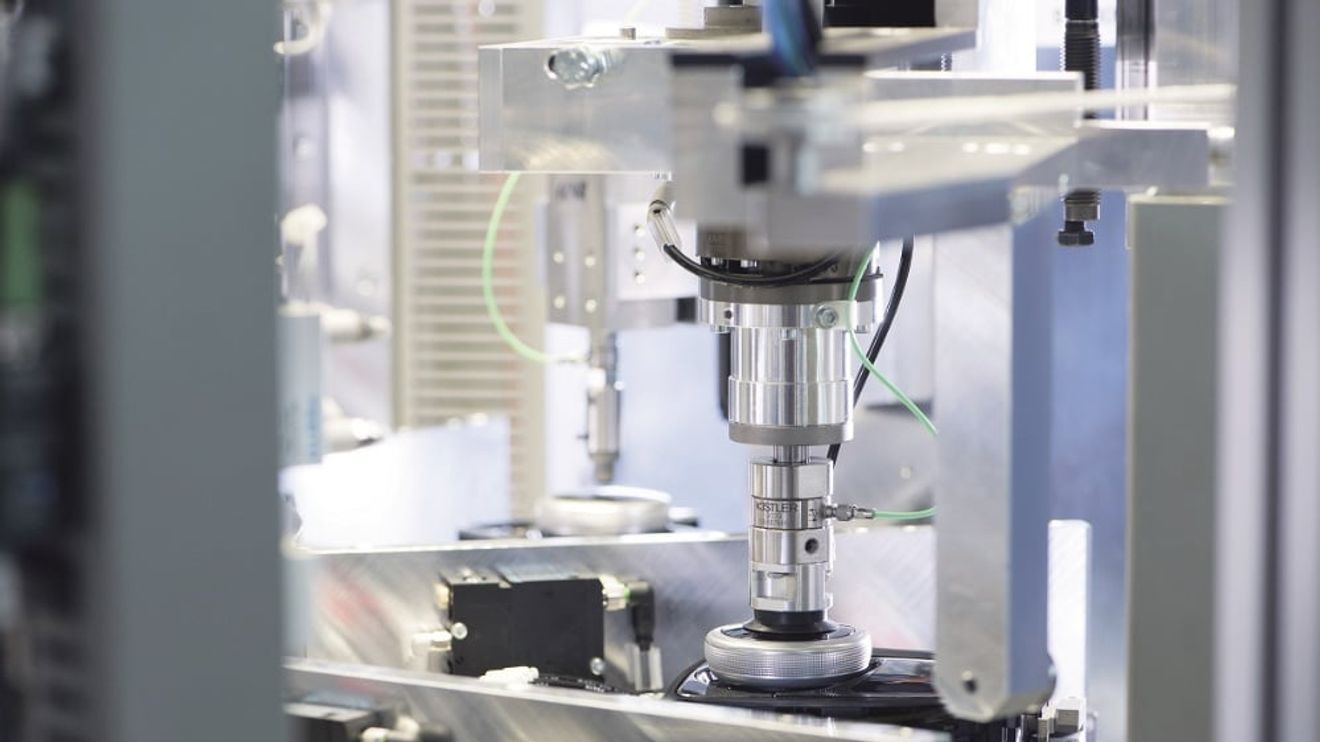
When it comes to precisely measuring pressure, force, torque or acceleration, highly sensitive piezoelectric sensors are the technology of choice in many industries. The invention of the analog charge amplifier in 1950 laid the foundation for the success of the quartz sensor. It was the charge amplifier that translated the minimal electrical charge emitted by the quartz crystals into common measurement variables. With increasing automation and digitalization, sensors are becoming more and more important in production, as they are essential for reliable data in Industry 4.0.
As a central component of the measuring chain, charge amplifiers must also be adapted to new conditions and requirements. This is why the first digital charge amplifiers are now available alongside purely analog solutions. The direct translation of analog measurement signals into digital data is an important step on the way to a consistently smart measurement chain.
However, while some applications require a wide measuring range, in other areas fundamental parameters such as the size or weight of the component are decisive factors - and all require reliable measurement results. Digital solutions usually achieve significant improvements here compared to analog technology. However, with the advances in speed and precision, particularly in recent years, users' demands on digital solutions have also continued to grow. Digitized processes should be completed as accurately as possible and in a fraction of the time that purely analogue technology would have required.
Digital solutions also have advantages over analog technology when it comes to charge amplifiers: For one thing, they enable continuous data exchange with higher-level systems with less hardware. On the other hand, digital signals eliminate the usual disturbance variables caused by inductive or capacitive coupling in analogue operation, as the analogue raw signal is already digitized in the amplifier.
However, many users are hardly aware that digitization also entails special challenges. One such challenge faced by measurement engineers concerns the data transmission rate. The key question here is: How fast does it have to be? Is speed the focus of the application?
The transmission rate challenge

Analog, digital and digital with IO-Link technology and with the option of analog operation, the charge amplifiers from Kistler are designed for different requirements.
© KistlerIn fact, it is difficult to beat analog technology when it comes to the transmission speed category - nothing can be transmitted as quickly as an analog measurement signal.
The problem is that sacrificing speed is not an option in some areas - for example, when it comes to the transmission rate for process control. An example from plastic injection moulding to illustrate this: if users want to analyze and optimize the switchover point, they must be able to monitor processes in real time. This is because the optimum switchover point from speed-controlled to pressure-controlled injection is important because it can sustainably improve the quality of the components produced. However, this requires the ability to determine this point precisely and intervene in the process without delay.
Time is also a key factor in the event of faults in the measuring channel. The faster the system recognizes critical parameters, the faster it can take corrective action.
Given the key factor of speed in the first digital charge amplifier, it was important to the developers at Kistler that their solution was in no way inferior to analog transmission in industrial systems. In addition, the digital charge amplifier had to be flexible in use and capable of handling as many different measurement tasks as possible.
The result is called 'Type 5074 dICA' (digital Industrial Charge Amplifier). The digital charge amplifier is Industrial Ethernet compatible and has a wide measuring range from 20 to 1,000,000 picocoulombs (pC). Thanks to protection class IP67, it is also suitable for harsh environments. Multiple channels give users maximum control. The channels can be controlled individually and precisely in terms of time so that different processes can run in parallel via a single charge amplifier. Above all, however, the charge amplifier offers a transmission rate of 50 kSps per channel - real-time transmission of measurement data is possible with cycle times of up to a minimum of 100 μs.
Connection via IO-Link

Stefan Affeltranger is Product Manager in the Production Monitoring division at Kistler Instrumente, Winterthur.
© KistlerParticularly when sensors are used on moving automation technology such as robot arms, the size and weight of each additional component is important in order not to hinder the robot. Small and lightweight digital charge amplifiers are therefore in demand here, all the more so as they require less hardware than analog amplifiers. In contrast to plastic injection molding, very high transmission rates and the wide measuring ranges with many channels tend to take a back seat. The 'Type 5074 dICA' is therefore rather oversized here - both in terms of technical features and in terms of size and weight. Alternatively, Kistler offers the 'Type 5028' charge amplifier for such applications, which only has one measuring channel, making it smaller and lighter. It can be attached directly to weight-sensitive technology.
This amplifier communicates using IO-Link technology and can therefore be integrated into digitalization concepts. It has both analog and digital interfaces; it can be controlled directly via the digital interface and allows data access. If the IO-Link component is replaced, the new parameters are automatically adopted. The only thing to note is that the cycle of the amplifier must match that of the system so that the system does not falsely distort the measurement curve.
The IO-Link amplifier supports cycle times from 0.6 ms in digital mode and is therefore fast enough for most industrial applications. However, it does not come close to the speed of analog operation. However, if the user needs to measure extremely fast processes precisely, analog operation can provide this. When operated as an analog charge amplifier, the IO-Link Amplifier has a reset and operate input. This makes it possible to digitize the measuring chain in many areas where this previously seemed technically or economically unviable.


You might also be interested in
Taking IO-Link further
Automatically detecting all IO-Link devices in a machine, automatically downloading their device descriptions and parameterizing and monitoring them over their entire life cycle independently of the control system and fieldbus - a software tool...
 read more...
Calculated leakages
Using calculation to generate compressed air leaks in a system was an unusual requirement for the compressed air and pneumatics specialist Mader, which commissioned Fraunhofer IPA to visualize the effects of compressed air leaks live.
read more...The smartphone as a role model
Bosch Rexroth has designed a new automation platform and taken a lot of inspiration from smartphone technology. - But what is different about ctrlX Automation compared to conventional control systems?
read more...For optical compartment fine positioning
With the IPS 400i camera-based positioning sensor for storage and retrieval machines, Leuze electronic is expanding its 'IPS' series with a variant for optical compartment fine positioning.
read more...Step towards the Smart Factory
Viastore Software's Viadat warehouse software is a warehouse management system (WMS) that supports manufacturing companies in managing and controlling their material flows.
read more...AI on the machine tool
Siemens is expanding its Industrial Edge offering for the machine tool-related 'Sinumerik Edge' with additional applications. The Edge application 'Analyze MyWorkpiece/Vision' is based on artificial intelligence.
read more...You can't do without IoT platforms!
IoT platforms are already available today in very usable versions. But what building blocks do the platforms actually consist of and what should you look out for if you want to use a platform?
read more...Simply monitored
Basic knowledge of industrial IoT applications is available in many companies today - but they often lack the know-how to implement them independently. A solution that can be integrated quickly should help to easily monitor the status of...
read more...Simple implementation of IO-Link devices
How can the integration of IO-Link devices into control systems be simplified? An open software-based service for all IO-Link device manufacturers automatically creates function blocks and thus significantly reduces the implementation effort.
read more...