
Industry 4.0
Why predictive maintenance?
Investments in predictive maintenance systems are worthwhile in order to proactively detect damage. Not only does this increase the service life of a machine, it also opens up new business models for machine manufacturers.
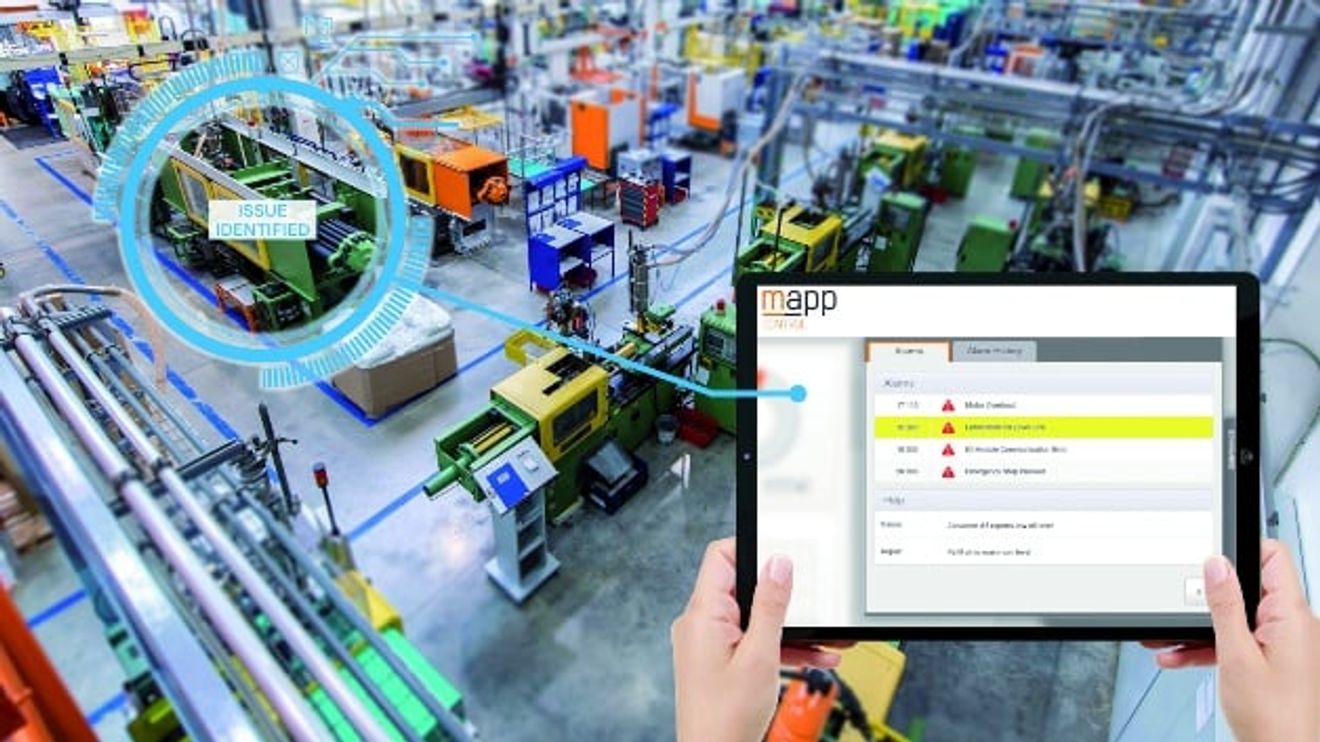
Machines with continuous webs, such as printing or packaging machines, can have complex web guides with countless rollers. If damage occurs to a roller, for example in the form of a mechanical imbalance or increased bearing friction, this induces uncontrolled vibrations and impairs the web tension of the machine. This has a negative impact on product quality and, in the worst case, can even lead to machine downtime. Predictive maintenance systems are ideal for preventing this. These systems detect potential defects before they actually occur. Imbalances or worn bearings are detected in good time and the necessary repairs can be carried out. This prevents the roller from failing and the entire machine from coming to a standstill.
Avoid downtimes
The basis for predictive maintenance is the evaluation of various machine data. Permanent condition monitoring records, analyzes and evaluates this data. Based on this evaluation, predictive maintenance systems can precisely calculate the probability of certain events occurring. "With predictive maintenance, an upcoming repair can not only be carried out with maximum cost efficiency, but also with maximum performance efficiency - in other words, just in time before the machine is at risk of losing performance," explains Martin Staudecker, software development expert in the field of control technology at B&R.
However, predictive maintenance can do much more than simply monitor the behavior of an individual roller. Rather, it provides an overall picture of the condition of the entire machine and forecasts the likelihood of component failure. In this way, speeds, noises or temperatures of motors are recorded and unusual vibrations or imbalances are detected at an early stage. Precise vibration analyses of components at risk of wear are also possible.
Intelligent analysis algorithms
In order to make a reliable statement about the condition of a machine, it is important to collect as much machine data as possible and evaluate it using intelligent analysis algorithms. The more data the system can use, the better it can detect damage before it occurs. "However, this means finding systems that can both store this large amount of data and analyze it," says Staudecker. In addition to the condition data of the machine itself, parameters from the machine's environment, such as temperature or humidity, also play a role in predictive maintenance. This data must also be integrated into the analysis process in order to obtain a reliable forecast.

The I/O modules for condition monitoring detect possible maintenance cases precisely and are easy to configure.
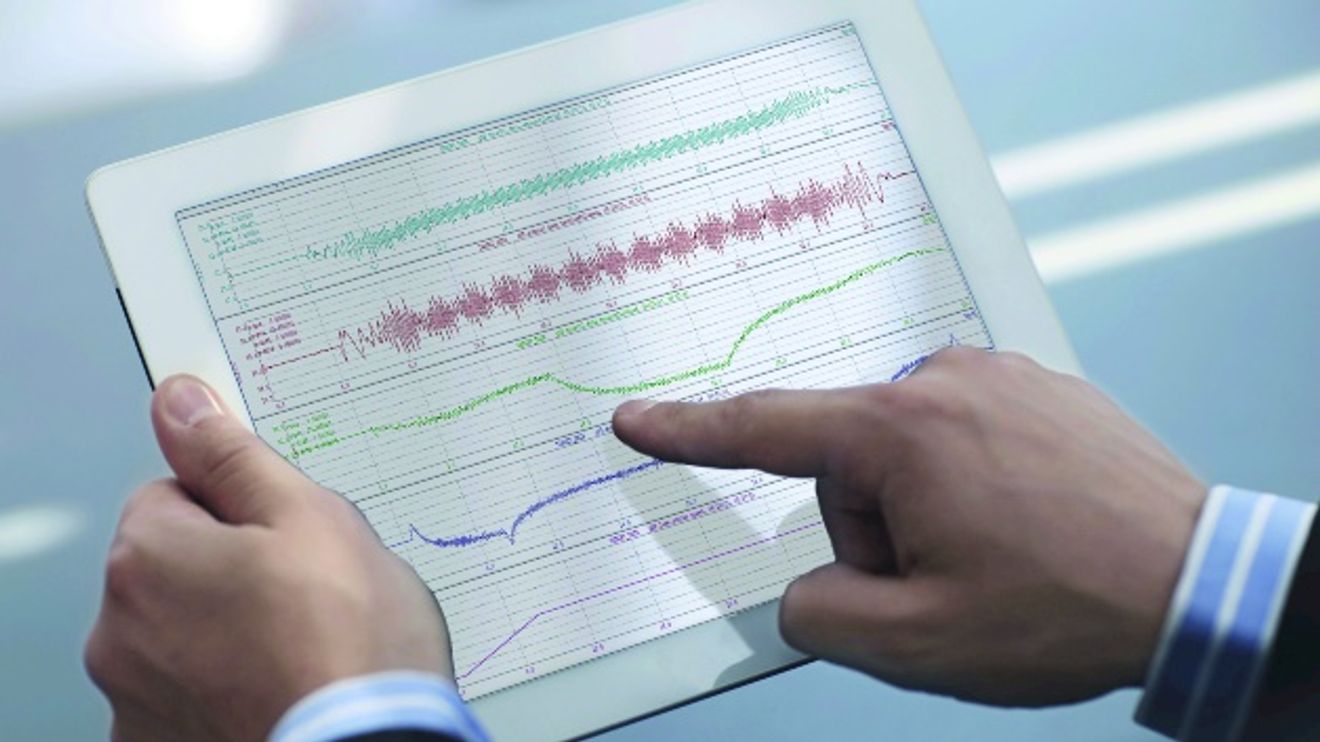
© B&RFor predictive maintenance, B&R uses I/O modules for condition monitoring on the one hand and sophisticated analysis algorithms from B&R's mapp Technology software on the other. The condition monitoring modules precisely detect possible maintenance cases and are very easy to configure. The special feature of the B&R modules is the vibration analysis, which is performed locally in the modules. As a rule, acceleration sensors are used for this purpose. For example, the frequency spectrum of the vibrations - calculated locally using a Fast Fourier Transformation (FFT) directly on the module - is available as a data source. The module configuration is then used to define the frequency spectra to be evaluated, for example for a rolling bearing. The condition of the rolling bearing can be determined by observing the corresponding amplitude of the frequency spectrum. In addition to the local calculation directly in the module, it is also possible to evaluate the raw data from the acceleration sensor directly in the application using a separate analysis algorithm.
The data from the condition monitoring modules can be easily processed, enabling efficient optimization of existing processes. In addition, all modules are part of B&R's X20 controller family and can therefore be used without restriction in control topologies.
Process data in a results-oriented way
The collected data can be evaluated using the analysis algorithms from the mapp Control software package. "For data analysis, it is important to process the data with high performance in a results-oriented manner," says Staudecker. In other words, the majority of the analyses are carried out directly on the controller; only the evaluated results are transferred to a higher-level instance - thus significantly reducing the amount of data to be transferred. Tuning procedures can also be used to detect errors at an early stage.
mapp Technology
The mapps are as easy to use as smartphone apps. Instead of programming user/role systems, alarm systems or the control of axes line by line, the developer of the machine software simply parameterizes the finished mapps. Complex algorithms can thus be easily mastered. The programmer can concentrate fully on the machine process.
With mapp Control, for example, all control functions - from simple PID controllers to highly complex crane and hydraulic controls - are available via a standardized interface. Adaptive controllers, auto-tuning and virtual sensors help to optimally parameterize control loops and adapt them during operation.

Error prediction through auto-tuning
"Our software provides model-based methods that identify the system behavior and design a suitable controller based on this," says Staudecker. Particularly with repeated tuning at regular intervals, the controller parameters are updated and changes in the system behavior of a machine become apparent. This can, for example, affect the steady-state behavior, the system dynamics or the resonance frequency. Based on these comparative values, conclusions can be drawn about processes in the machine process and wear or leaks can be detected.
From wear detection to heating current monitoring
The range of condition monitoring modules is extensive. The 'Hydraulics' software package, for example, includes a module for the early detection of signs of wear on hydraulic valves. Although valve wear occurs slowly, it has a negative impact on the control of hydraulic axes, among other things. "The module automatically and precisely measures the valve characteristic curve, which describes the relationship between valve opening and oil flow. This determines the actual characteristic curve, which not only makes the wear visible, but also results in the best possible control quality," explains Staudecker.
Another example: a typical sub-process in the production of plastic is extrusion. If a heating element fails in an extruder, this can bring the entire production plant to a standstill. B&R uses the 'Temperature' software package to monitor heating elements. Defective heating elements are detected at an early stage. The heating currents are compared with the reference currents in freely configurable cycles. Changes in the heating circuit and impending damage to the heating element or relays can thus be detected.

New business models
Predictive maintenance can open up additional business models for machine manufacturers. There are many opportunities in the service sector in particular. For example, the machine data collected over a longer period of time can be used to predict maintenance cycles more precisely. On this basis, machine manufacturers can offer their customers a customized maintenance service. The existing machines in the field are thus maintained in the optimum cycles, avoiding unnecessary service calls.
"The data can also be used to optimize the machine itself," says Staudecker. "With predictive maintenance, machine manufacturers can not only offer a comprehensive service package, but also incorporate the findings from the field into the further development of the machines."
Author:
Carola Schwankner is a corporate editor at B&R.


You might also be interested in
The first steps towards digitization
Real-time transparency in the material flow: this was the goal set by Miba when it set out to digitalize its internal logistics processes. But how successful was the close link between ERP and MES in the end? - A field report.
 read more...
How will the IoT change companies in 2020?
How will network technology in companies change in 2020? Axel Simon, Chief Technologist at HPE Aruba, takes a look into the crystal ball
read more...Digital twin revolutionizes maintenance
As virtual representatives of real machines, digital twins open up new possibilities for maintaining and servicing complex industrial plants and systems. A project report.
read more...You can't do without Edge and Swarm
The IoT has changed the requirements for processing data provided by machine sensors and actuators. This needs to happen as quickly as possible - preferably where the data is generated. Edge nodes and swarm computing systems take on this task.
read more...Online machine data under control
Turning huge amounts of data into valuable information - how can this smart industry approach be implemented? Linking PC-based controllers with Matlab and a cloud-based IoT analytics service can be a viable approach.
read more...From modeling directly into the PLC
Despite digitalization and I4.0, the technical functions in a process plant do not become simpler if you break them down to the smallest detail. Nevertheless, the high level of difficulty can be overcome by combining the right tools in the right way.
read more...Where are the new business models?
The necessary new business models are repeatedly cited as the hallmark of an Industry 4.0 environment. But to date, very few companies have seen any of this. Schneider Electric now has a few models up and running.
read more...First customer projects via BaSys 4.0
The BMBF project 'Basissystem Industrie 4.0' expired at the end of June 2019. Together with NetApp and Objective Partner, Fraunhofer IESE now offers Industry 4.0 solutions with support and adaptation to customer systems on the basis of this project....
read more...The multi-cloud under control
German companies have been hesitant about the cloud for a long time, but now things are really taking off. More and more manufacturers are using multiple cloud providers - whether strategically or due to shadow IT. But how can the complexity of the...
read more...