
Interview with Martin Dibold, Hy-Line
Voice control - operating without touching
What are the advantages of voice control? What about the acceptance of the technology in the industry? Is it also suitable for safety applications? Martin Dibold from Hy-Line provides insights into voice control in an industrial environment.
Why are you focusing on the topic of voice control?
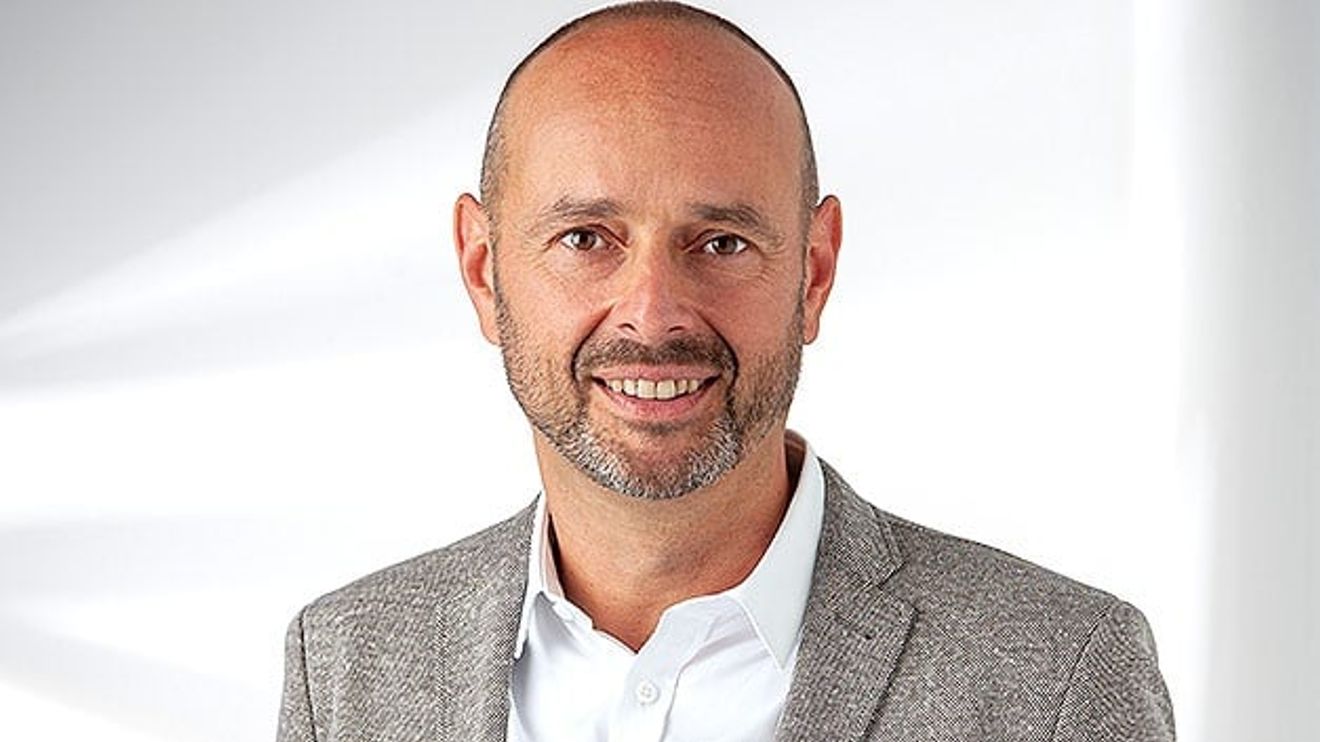
Martin Dibold: With the HMI 5.0 strategy, Hy-Line is pursuing the intention of offering the user exactly the right interaction with the device. The traditional configuration of display and touchscreen is sufficient for many cases. Where hands are not free or must not be used - think of sterile medical applications or food production - voice control can play to its strengths because it works without touching. With the specialists from Voice Inter Connect in Dresden, the spoken word is included as an input and output medium.
What are the main advantages and where do they come into play?
Dibold: Customers are more sensitive to contactless communication. In addition to our holographic terminal, we are seeing more and more areas of application for voice control in industrial automation and especially in medical technology. The independence from the speaker and the processing of the audio signals makes the input very robust. Speech synthesis also means that there are virtually no limits to the output of variable texts.
What's next for voice control? What comes next?
Dibold: We are far from finished with voice control. There are still additional functions in the audio sector that are being transferred from research to application. The starter kit that we presented at Embedded World helps interested parties to quickly achieve a presentable result in their environment.
What will become more important for operating systems in the future?
Dibold: We see that our customers appreciate the holistic approach. We don't just sell terminals, but the solution that fits perfectly - with voice control, gesture control or a touchscreen that is perfectly matched to the application.
How do you rate the chances of voice control being accepted in the industry?
Dibold: Voice control has been recognized as an operating option by the industry. Its use is being considered where it brings real benefits and added value. It is therefore less a question of acceptance and more a question of efficiency, for example faster, simpler operation by voice, or added value, for example you don't have a hand free or the distance for "close-up operation" is too great.
Can voice control also be used in safe applications, for example in the safety sector?
Dibold: As incorrect entries, including unintentional ones by the operator, can never be completely ruled out in safety-relevant applications, appropriate precautions such as two-button operation, key switches or safety queries in the software must be taken, i.e. "Are you really safe?". In a figurative sense, this also applies to voice control: where the effects of incorrect input could lead to damage or injury, a safety query must be provided. This can be done verbally, i.e. with the question "Are you really sure?", or on another level, such as an additional switch to be operated manually. It is also possible to combine the best of both worlds by entering long parameter chains by voice and only triggering the command when a button is pressed.


You might also be interested in
Hello machine tool! - Voice control in the industry
Voice control has arrived in our everyday lives, whether in the car, for operating smartphones or home systems. The technology is also becoming increasingly important in the professional environment. Its use is less complicated than expected.
 read more...
Human Machine Interfaces - Glossary and application examples
A glossary of common abbreviations and a list of various examples of voice control applications in practice.
read more...Interview: Martin Dibold, Hy-Line
"An 'okay' is not enough"
Hy-Line has gradually built up expertise in the field of HMI and touch displays. Managing Director Martin Dibold explains the benefits of this step for the distributor's customers and how an eye for detail becomes a competitive advantage.
read more...Please do not touch!
The operation of devices and machines without direct physical contact has attracted increased interest during the coronavirus pandemic. One option for contactless operation is holographic input.
read more...Products of the year - The e-paper special
"Products of the Year 2023" goes interactive: the new e-paper including video news is here! The winners of the readers' poll have been chosen and in our interactive special edition you will find all the winning products at a glance and exclusive...
read more...Operating & monitoring - The winners
Voice control, smart glasses and safe HMI were convincing in the 'Operating & monitoring' category.
read more...Products of the year 2023 - your vote counts!
96 products in 12 categories are up for election for the "Products of the Year 2023"! Take part and win Saturn vouchers worth €500, among other things!
read more...The top articles in September 2022
The top articles in September are characterized by typos, tensions between IT and OT, anticipation, opportunities through self-sufficiency and an absolute revolution in automation technology!
read more...Hello machine tool! - Voice control in the industry
Voice control has arrived in our everyday lives, whether in the car, for operating smartphones or home systems. The technology is also becoming increasingly important in the professional environment. Its use is less complicated than expected.
read more...