
Pepperl+Fuchs
The digitalization of Ex zones
True predictive maintenance is only possible in fully networked production - including Ex zones. However, there is often a digitalization gap in hazardous areas. Intrinsically safe mobile devices promise a remedy here.
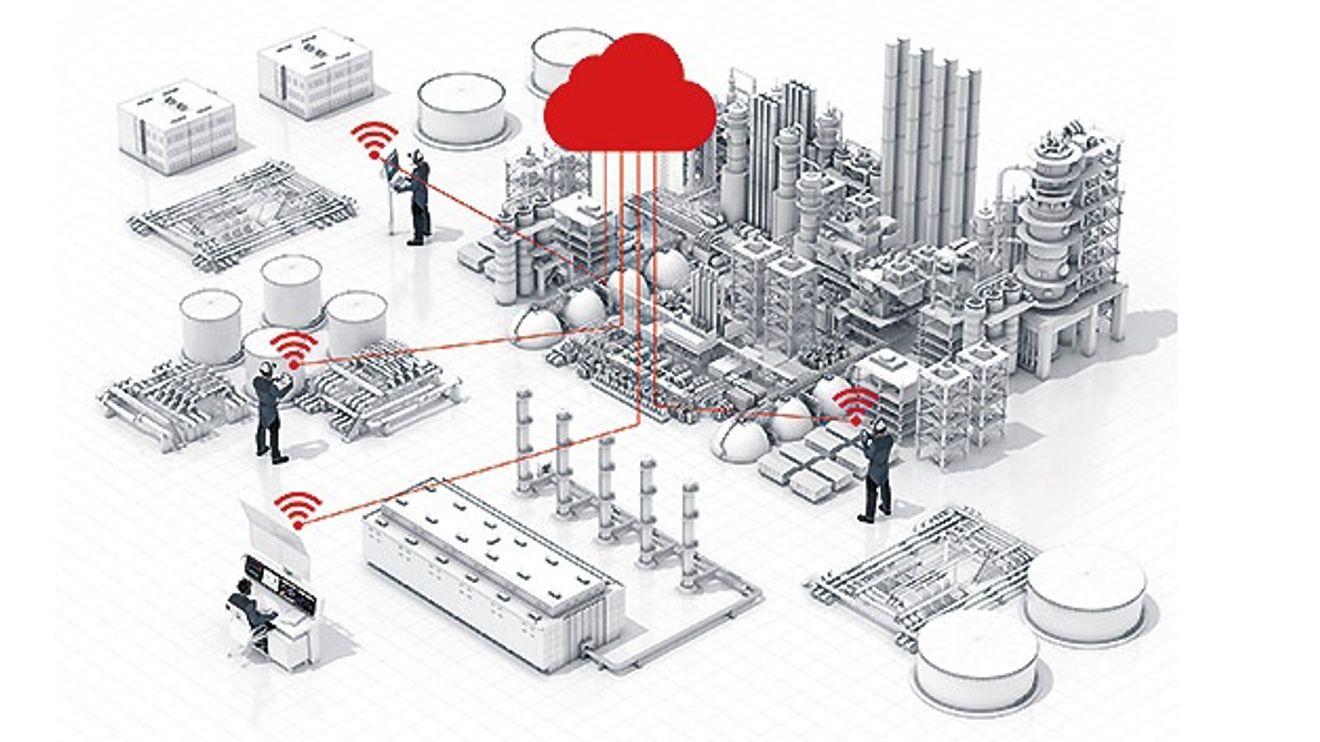
The end-to-end digitalization of all areas of production is a fundamental prerequisite for predictive maintenance in the smart factory. This is the only way to collect, aggregate, analyze and exchange the data that serves as the basis for decision-making processes in maintenance and repair. This means that plant operators not only need real-time transparency about the status of all systems, but must also be able to communicate and act in real time in order to detect critical situations or even failures at an early stage using various indicators and counteract them proactively.
The digitalization of the Ex zone
In view of the long distances in extensive plants, data harvesting and communication should also be able to be decentralized. In this context, intelligent mobile devices give technicians the greatest possible freedom of movement: they provide users with all the information and documents they need for an operation and can also be used to feed the results of an operation directly back into the system. In tricky situations, support technicians from the head office or the manufacturer of a specific component can connect to the site in real time and support or instruct the mobile worker. This shortens maintenance assignments and significantly reduces sources of error.
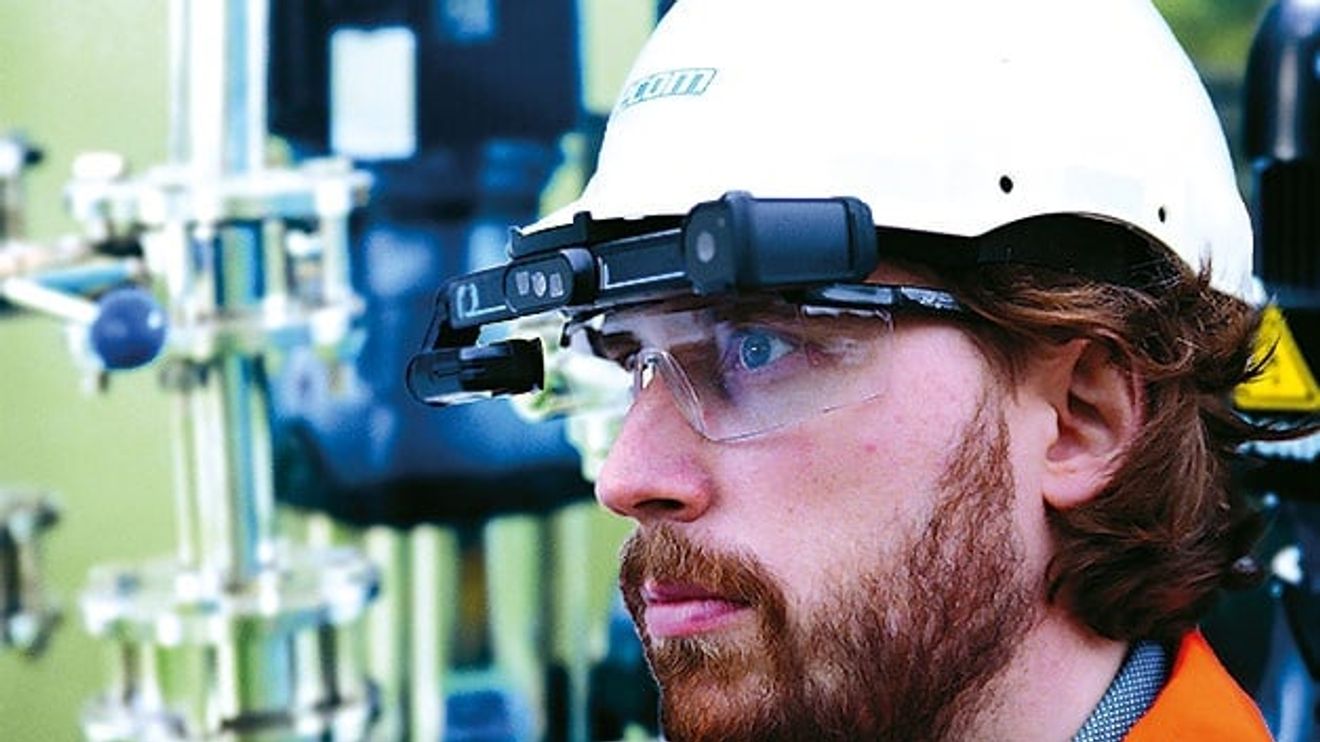
With the 'Visor-Ex 01' smart glasses, mobile workers have a companion for all tasks that require hands-free use and continuous communication.
© Pepperl+FuchsHowever, these advantages of digitalization have so far mostly stopped at the boundaries of Ex zones - areas in which flammable materials such as gases, vapours or dust particles occur permanently or temporarily. Due to the strict safety requirements of explosion protection, only a few smart devices that are certified for use in potentially explosive atmospheres and also meet the requirements of the user can be considered in this area. Until now, employees had to remove all non-intrinsically safe devices before entering an Ex area and often had to make do with analog workflows in the Ex zones. However, this 'media discontinuity' is not only a source of errors, but also slows down response times in complex systems.

All information 'at your fingertips'
The Pepperl+Fuchs brand Ecom Instruments is now bringing the digital transformation with intrinsically safe smart devices to the Ex area, as demonstrated by the intrinsically safe 'Tab-Ex' tablet series. The tablets with Android 12 operating system accompany mobile workers on maintenance and repair assignments. The technological basis for the Tab-Ex 03 tablet, for example, is the Samsung Galaxy Tab Active3, which is Android Enterprise Recommended certified. The tablet's data and device security is ensured by the latest Enterprise Edition of Samsung Knox.
Mobile workers can view detailed information such as design drawings on the display with a resolution of 1920 x 1200 pixels. Two cameras are available for photo and video recording: a back camera with a resolution of 13 megapixels and a front camera with a resolution of 5 megapixels. This allows technicians to enrich the documentation of their assignments with image or video material, from which mobile workers can benefit on their next assignment.
It is particularly important for the harsh environmental conditions in the Ex zone that the tablet's touchscreen can be operated with gloves. Users can make precise entries, create notes, highlight text or digitally sign documents using the stylus. Thanks to its high pressure sensitivity, the IP68-certified 'S Pen' writes like a real pen. When it's time to go back to the office, the tablet can be connected to a monitor using the Samsung DeX function, turning it into a fully-fledged workstation.
Hands-free working thanks to smart glasses
Mobile workers sometimes need information and instructions during maintenance work, but do not have their hands free to work with a tablet. For such scenarios, Ecom Instruments has developed 'Visor-Ex 01', an intelligent ecosystem consisting of smart glasses, smartphone and pocket unit for power supply. The distribution of functions across the individual system components minimizes the weight of the head unit without sacrificing performance, connectivity or battery life. The intrinsically safe smart glasses are the first concept of their kind to be certified in accordance with ATEX and IECEx.

Christian Uhl is Head of Communication | Global Marketing at Pepperl+Fuchs in Mannheim.
© Pepperl+FuchsThe modular design of the system gives mobile workers the greatest possible flexibility for their jobs: They can switch seamlessly between tasks on the smartphone display and hands-free work. For example, employees can view job-relevant documents such as checklists via the 'Smart-Ex 02' and then switch to hands-free mode. The OLED display of the 'Visor-Ex 01' only shows the information required for the task directly in the field of vision.
| Interview: The intrinsically safe "lightweight" |
|---|
|
Smart devices in the Ex area? Christian Uhl, Head of Communication / Global Marketing, outlines Pepperl+Fuchs' path with smart glasses for use in hazardous areas. |
The mobile worker can use the integrated microphone to send commands to the device or communicate with remote support experts in real time. If necessary, the display of the smart glasses can be folded completely out of the field of vision. Once the work has been completed, the technician can carry out the associated documentation directly on the smartphone and add photos or video recordings if required.
Two 16-megapixel cameras, which are positioned centrally in the smart glasses, are used to capture the wearer's natural field of vision. Live streams based on the 'See what I see' principle are also possible. A secondary camera with a six-fold optical zoom enables barcodes and QR codes to be scanned, for example to retrieve identification or diagnostic data for individual machines.


You might also be interested in
Operating several machines with one device
ACD Antriebstechnik presents the Mobile Safety Panel SP2000.
 read more...
Platform with pre-validated combinations
bMotion is the name of the newly developed drive platform from Bühler Motor. It consists of DC motors, gearboxes, brakes and encoders.
read more...Safety switch with 'FlexFunction'
The CTS safety switch from Euchner can be used for swing or sliding doors or for the smallest door radii.
read more...Grossenbacher systems at the SPS 2022
Smart Panels with Soft PLC under Linux
Grossenbacher Systeme presents a new generation of compact operating panels with soft PLC under Linux.
read more...Residual current monitoring device for earthed systems
With the Linetraxx SmartDetect RCMS410, Bender offers a residual current monitoring device for earthed systems.
read more...Flexible wire assembly
At SPS 2022, Rittal presented the 'Wire Terminal WT C5' and 'C10' fully automatic wire assembly machines, with which wires can be assembled ten times faster than by hand with individual wire printing (black, white and light blue) and order picking,...
read more...C. Uhl, Pepperl+Fuchs, in an interview
The intrinsically safe "lightweight"
Smart devices in the Ex area? Christian Uhl, Head of Communication / Global Marketing, outlines Pepperl+Fuchs' path with smart glasses that can be used in hazardous areas.
read more...Predictive maintenance in electrical systems
Together with Twingz, Doepke presented e.Guard at SPS 2022, a modular system consisting of smart hardware and flexible software components for intelligent residual current monitoring of electrical systems.
read more...360° inclination measurement of the horizontal position
The IMU F99 inclination sensor from Pepperl+Fuchs provides stable inclination values for dynamic applications such as construction, agricultural and forestry machinery, wind turbines and AGVs.
read more...