
Counterfeit products
Product counterfeiters denounced with 'Plagiarius 2019'
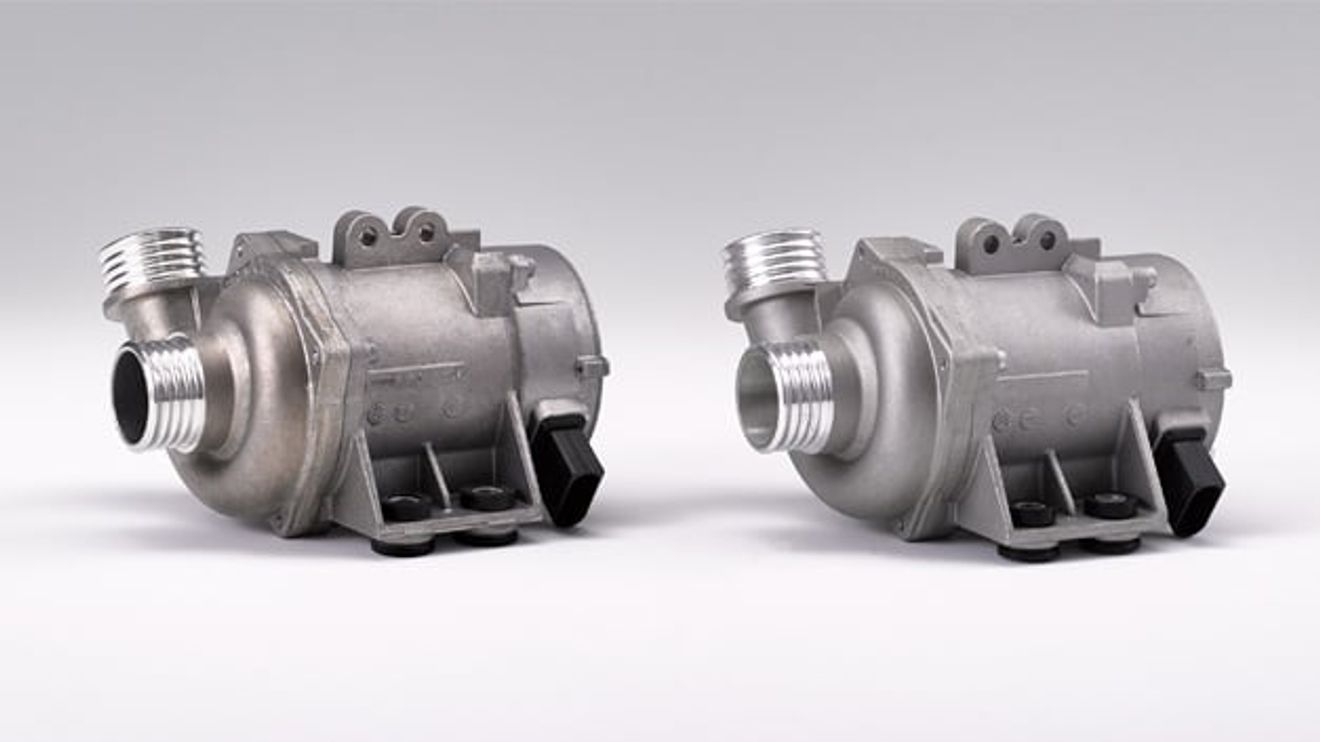
On February 8, 2019, Aktion Plagiarius e.V. "awarded" the negative "Plagiarius" prize to brazen counterfeiters and their sales partners for the 43rd time. The counterfeit products include consumer goods as well as two industrial components.
Aktion Plagiarius e.V. has been awarding the Schmäh Prize to manufacturers and retailers of particularly brazen counterfeits and fakes since 1977. The aim is to raise public awareness of the clumsy and unscrupulous business practices of product and brand pirates and to sensitize industry, politics and consumers to the problem. At the same time, the association emphasizes the importance and effectiveness of industrial property rights. From a total of 37 entries, the jury awarded three main prizes, one special prize and six equally prestigious awards.
According to the campaign, the 'Plagiarius' award should say nothing about whether a counterfeit product is permitted or illegal in the legal sense. The Plagiarius campaign does not want to pronounce justice, but to draw attention to injustice. Before the annually changing jury selects the winners, the alleged plagiarists are informed of their nomination and given the opportunity to comment. In addition to case-related information, these reactions, if any, are included in the assessment. The jury is not interested in branding legal competitor products that are visually and technically unique. Rather, the intention is to focus on clumsy 1:1 imitations that deliberately look confusingly similar to the original product and have no creative or constructive merit of their own. Fortunately, numerous imitators have already sought an agreement with the original manufacturer for fear of being awarded the 'Plagiarius' and have, for example, withdrawn remaining stocks of the counterfeit products from the market, signed cease-and-desist declarations or disclosed suppliers.
In its exhibition, the Museum Plagiarius in Solingen is showing over 350 Plagiarius award winners from a wide range of industries - with a direct comparison of the original and the plagiarized product. Also on display: typical counterfeit brands confiscated by customs.
European customs figures
According to the European Commission, in 2017 alone, European customs authorities seized more than 31 million infringing products with a total value of over 580 million euros at the EU's external borders - and that is just the tip of the iceberg. The fact that the proportion of counterfeit, potentially dangerous goods is increasing is alarming. Customs and Interpol have already withdrawn the following products from circulation in recent years: Contaminated perfumes and cosmetics, technical products with faulty electronics, adulterated food, faulty or contaminant-rich children's toys, incorrectly dosed or not dosed at all medicines.
China as the main country of origin of counterfeits
According to the Plagiarius campaign, customs statistics clearly show that China is still by far the main country of origin of counterfeit goods. Against this backdrop, politicians from all industrialized nations discuss the problems of Western companies with regard to product piracy and unfair market access barriers at every meeting with Chinese government representatives.
At the same time, however, China has been vigorously pursuing its ambitious ten-year plan "Made in China 2025" for years, investing billions in the process: The country wants to catch up with the technologically leading industrialized countries. It wants to move away from being the West's extended workbench and become a serious competitor on the global markets. China's strategy also includes the targeted takeover of Western companies that occupy key future-oriented technologies. Western governments and companies are slowly realizing the danger that this development poses to their own competitiveness on the global markets and are beginning to take countermeasures.
Imitations also from industrialized countries
According to the Plagiarius campaign, customs statistics only take into account goods that should be imported into the respective territory from third countries (such as the EU or USA); they do not record infringements within this region. The fact is, however, that unfair imitations are often also produced, distributed or even commissioned in industrialized countries. Often by competitors with few ideas or former production or distribution partners. Competitors very specifically check the existence of industrial property rights. According to the campaign, if none have been registered, they throw their sense of entitlement and scruples overboard and pass off third-party design and technology solutions as their own work. This is confirmed by the experience of both the Plagiarius campaign and the VDMA industry association. In the latest VDMA product piracy report, China was clearly the No. 1 country of origin for counterfeit products. Nevertheless, Germany once again followed in second place with 19% and Italy in third place with 18%.


You might also be interested in
Starting signal for 'Plagiarius' competition 2020
Once again this year, entrepreneurs, designers and inventors have the opportunity to submit their original products and alleged imitations to the 'Plagiarius' competition and nominate the plagiarist as the winner of the negative prize.
 read more...
Production in mechanical engineering
Growth well below the VDMA's expectations
According to preliminary calculations by the Federal Statistical Office, production in the mechanical engineering sector in Germany rose by 2% in 2018. This fell well short of the VDMA's forecast of 5% growth.
read more...7.3 billion euros in losses due to product piracy
Product piracy and know-how theft continue to cause considerable damage to German machine and plant manufacturers. China remains the biggest counterfeiter by a wide margin. The VDMA presented the latest figures on this at the Hannover Messe 2018.
read more...Strategic investment in the microfluidics sector
On June 1, 2023, Bürkert Fluid Control Systems from Ingelfingen acquired a majority stake in the Swiss start-up ReseaTech from Burgdorf. The two companies have been working successfully on joint projects since 2021.
read more...New products at the industrial trade fair
'Industrial Intelligence' - this is the guiding theme of the Hannover Messe 2019. Computer&AUTOMATION shows an excerpt of the products that can be seen in Hanover in a picture gallery.
read more...Control up to four valves simultaneously
Precise dosing, for example for adhesive or liquid applications, requires equally precise control of valves. The 'S-Dias' CO 041 module from Sigmatek offers four current-controlled PWM outputs for this purpose.
read more...Flow rates up to 3300 l/min
SMC has revised the VEX3 3/3-way valve series. The valves are designed for flow rates of up to 3300 l/min and have three switching positions.
read more...Mechanical and plant engineering
Control and regulate in the tightest of spaces
Austrian manufacturer Binder+Co has integrated almost 900 high-speed valves into its latest generation of machines for sorting used glass. As space is at a premium here, the blow-out valves and their controls had to be extremely compact.
read more...The top articles in March 2023
The most-read articles in March are characterized by technical innovations in digitalization, practical application examples and tips on HMI as well as award winners in the field of embedded solutions. Also included for the second time: brazen...
read more...