
Artificial intelligence
Still a long way from world domination
The fact that computers could possibly become more intelligent than humans is as fascinating as it is frightening. What technology can and cannot do today.
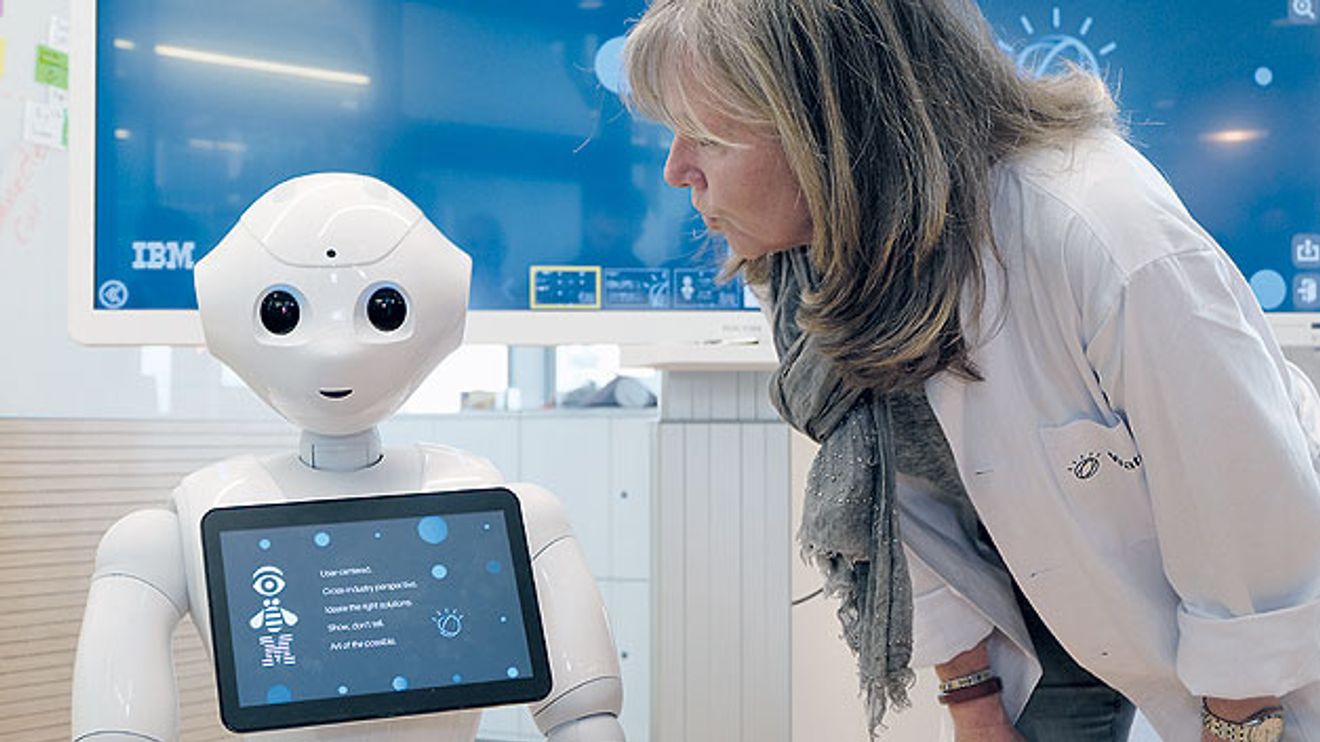
After years of languishing in universities and research laboratories, artificial intelligence is experiencing a turning point and is making the leap into more and more applications at breathtaking speed. The first generation of AI systems was still geared towards the enrichment and sorting of knowledge and the fulfillment of very specific tasks. Characteristic of the AI systems of this generation is that they solve tasks for which there are fixed calculation rules.
Even the more modern AI systems currently in use are still limited to narrowly defined tasks: recognizing certain patterns or deviations in images, recognizing language, extracting information, searching for data patterns. However, these systems are already characterized by the fact that there are no fixed rules and possibly no clear results. Take image recognition in medicine, for example: every person's organs look different and when analyzing X-ray images there are recurring principles, but never exact repetitions. Similarly, deviations from the norm can indicate a tumor, but do not necessarily have to be one. Image recognition takes the strain out of tedious routine. The result has tolerances that the doctor must interpret as the final authority. The situation is supposedly different with image recognition in a moving car: a round traffic sign with a red border and the "60" on a white background leaves no room for interpretation - but is it really on the side of the road, or is it perhaps depicted on an advertising poster?
Artificial Intelligence Forum on May 17, 2018
On May 17, WEKA-Fachmedien will be hosting the Artificial Intelligence Forum in Stuttgart. The event is aimed at developers and managers of electronic systems who are developing machine learning, deep learning or neural network techniques now or in the future.
After three keynote speeches by high-ranking industry representatives, there will be three parallel sessions:
- AI in Embedded Systems deals with cross-industry basic techniques of artificial intelligence.
- AI in Automotive and Telematics is dedicated to autonomous driving, the associated safety issues and intelligent vehicles.
- AI in the factory shows how automation and machine control can be improved with AI technologies.

Figure 1: Gartner Hype Cycle for Emerging Technologies, 2017. Machine learning is expected to reach the productivity plateau in two to five years, while universal AI systems and autonomous driving 'are further away'.
© Gartner - July 2017These examples are intended to show this: Current AI systems do not make strictly algorithmic decisions, but are trained on the principle of problem solving in order to classify the data input and derive a decision from it.
Future AI systems will become increasingly universal and more and more similar to human thinking. This is referred to as "general artificial intelligence". Market researchers at Gartner believe that these systems are still some way off, while machine learning and deep learning are currently at the peak of exaggerated expectations(Fig. 1).
The myth of the human robot
Since the invention of integrated circuits, the development of computer technology has been characterized by a steady, even exponential increase in computing power. Computers can calculate at unimaginably fast speeds and store an unimaginable amount of data. When artificial intelligence comes into play, many people associate it with computers becoming more and more human-like and fear that machines could one day take over the world. This myth is fueled by the fact that robots in human form serve drinks or answer questions, for example. However, a robot or any kind of autonomous machine will always be powered by electricity, so you can switch it off or remove the battery at any time.
Or not? - Theoretically, you could also pull the plug on the Internet immediately. In practice, however, we are so dependent on the network that all communication links would be cut, information would no longer be accessible, transactions could no longer be carried out and business processes would come to a standstill. In an increasingly digitized economy, not only Amazon, Ebay and Google would be affected, but all industries, from railroads to health insurance companies, from software developers to factories. Artificial intelligence is likely to behave in a similar way over time: Without us realizing it, it will penetrate more and more areas of our lives and one day we will no longer be able to do without it.
Even if artificial intelligence makes very rapid progress and conquers more and more applications, even producing disruptive developments, it will not be a revolution from one day to the next. This can be illustrated quite well using the example of autonomous driving.
It's amazing what driver assistance systems can already do today: Recognize traffic signs, keep in lane, park. Pleasant comfort functions that no one who has ever benefited from them would want to do without. At the same time, however, these assistance systems are still limited to narrowly defined standard situations. Fully autonomous driving will come, but probably also initially in a standardized environment such as the freeway and only later on country roads and in the city.
Because they don't know what they are doing
Conclusion: pulling the plug or switching off is not an alternative. But even if the systems become ever more powerful, intelligence will remain artificial and the systems will never develop their own consciousness, will never really understand what they are doing and will never have their own goals or interests.
Nevertheless, skepticism is warranted, because the transition from procedural to cognitive computing is accompanied by a paradigmatic break. Traditional software development is based on algorithms, i.e. a fixed set of rules consisting of mathematical operations and if-then decisions. Artificial intelligence is based on other principles. In this case, the core technology is machine learning: the computer receives sample data from which it derives statistical regularities, forms a model and calculates a result. In a training phase, the calculation is compared with existing training data. The difference to the desired result is fed back as feedback in order to adjust the parameters of the calculation. In this way, the calculation process is constantly improved and the computer learns more the more it is fed with training data.
However, things can also go wrong: Microsoft had to withdraw its chatbot Tai from Twitter after hours because it had learned racist behavior from other users. Amazon's Alexa was not trained to deal with children and willingly ordered everything they wanted.
Chatbots can respond to simple questions and complete tasks, such as adding an appointment to a calendar, but they can't weigh arguments or compromise. Facebook designed an AI algorithm to teach a chatbot to negotiate with a conversation partner. During training, they had the chatbots talk to each other as well as to human partners. When the artificial intelligences communicated with each other, they began to deviate from the understandable language and developed their own dialect over time. To humans, this sounded like gibberish, but served to negotiate more effectively. However, the researchers could no longer understand the "train of thought" and the language, which is why they ended the experiment [2]. What was sometimes portrayed in the tabloid press as if the researchers had lost control of their creatures only goes to show that the use of artificial intelligence often leads to results that the developers cannot fully comprehend.
Machine learning requires enormous computing power
Currently, the keyword "deep learning" appears in many presentations in connection with artificial intelligence. Deep learning is an advanced form of machine learning with neural networks. While the early networks only consisted of an input layer, an invisible intermediate layer and an output layer, deep learning networks contain many intermediate layers and can classify the input data better and better. One problem, however, is the high computing power required for the learning process. Here is a brief example: a neural network is supposed to classify images; there are 1000 classes. Images with a resolution of 224 × 224 are analyzed, which corresponds to approx. 50,000 pixels, resulting in 150,000 input values with three color channels. The neural network itself has eight layers and 650,000 neurons; the output layer alone has 1,000 neurons (one for each class). In such a network, there are around 60 million possible parameters that need to be optimized during training. One can already guess that even the most powerful computers cannot try out all the possibilities. Therefore, a major focus of current research is the reduction of the amount of data, the optimal balance between learning ability and the depth of the network as well as the control of the parameters so that the result approaches an optimum.
Another problem with neural networks is that it has so far been almost impossible to understand how such networks carry out their classification. However, this would be necessary in order to avoid the undesirable developments outlined above (e.g. racism) in machine learning. In the case of autonomous vehicles, it will also be essential for the clarification of liability issues that a manufacturer can prove how and why an accident occurred in this way and not otherwise. The Fraunhofer Heinrich Hertz Institute, for example, has developed analysis software to make complex learning processes, such as deep neural networks, comprehensible. As a demonstration, the HHI researchers have developed an application that automatically recognizes faces from a camera signal in order to determine the age and gender of the person. The software then displays bar charts showing the probability with which the person was assigned to the various age categories and the certainty with which the gender was determined. A kind of "heat map" shows which regions of the face are used to make the decision.
Too complex for people
There are various motivations for using artificial intelligence. The most obvious may be the increase in comfort. This is often cited for autonomous driving, for example. Much more important in this context, however, is "Vision Zero", i.e. accident-free driving. By eliminating human error, road traffic could be made much safer. Another reason for the triumphant advance of artificial intelligence are systems that can only be realized economically with AI.
For example, the idea of Industry 4.0 to manufacture customizable products as automatically as mass-produced goods requires production systems that can adapt autonomously to changing requirements. The manual conversion of production machines by humans would probably make mass-individualized production uneconomical.
Face recognition in a self-experiment

Image: Gender and age determination by an artificial neural network. The software visualizes in the right part which parts of the face were used for the decision. Graphic: The score for age classification.
© ElectronicsDuring a demonstration by the Fraunhofer Heinrich Hertz Institute, I was able to have my age and gender determined by an AI application. Analysis software shows the criteria on which the determination is based.
Thanks to my largely hairless "hairstyle", the gender assignment worked reliably and without a doubt. Determining my age, on the other hand, was nowhere near as accurate.
In a first attempt, the software estimated me to be around 80 years old. This was probably due to the fact that there was only the age category "80" above 50. The heat map clearly marked my bare head and my glasses, which had led to the classification.
A second attempt from a different perspective yielded the result "early 40s". That is very flattering. In this case, the neural network had obviously recognized the slender shape of the face and also included the mouth and nose in the decision.
The visualization showed quite well the ambiguous character of the age classification: in the second case, quite high probabilities were consistently calculated in the areas "25", "40" and "50", so that the final result more or less corresponded to the mean value.
Hope for predictive maintenance
The much-cited predictive maintenance is also experiencing a boost in quality and productivity with AI processes. The Fraunhofer Institute for Integrated Circuits IIS is researching a self-learning process for condition monitoring. The processes and the data collected are often too complex for users to be able to link them to the actual machine conditions. The machine learning method from Fraunhofer IIS/EAS makes it possible to quickly identify relevant correlations even in very large amounts of data and to increase the productivity of systems and machines. For example, the condition monitoring system feeds sound data into a self-learning classification and must automatically make settings such as limit values. This is achieved with the help of algorithms that evaluate the known operating states of a system. Changes to this "fingerprint" can then be automatically detected and assigned to specific operating states(Fig. 2).
With the first signs of wear, the shape and position of these data clusters change so that the system can send a message if certain limits are exceeded.

More and more training data thanks to IoT
Artificial intelligence is still at the very beginning of what is likely to be a stormy development. Currently, monsters of computers are still needed to train artificial neural networks. The learning repertoire of these networks is still very limited. However, today's universal processors are already sufficient for the application of a trained neural network - as demonstrated by numerous robots and driver assistance systems. Artificial intelligence will gradually take over more and more assistance functions. Future generations of autonomous systems will be able to independently expand their perceptions, interpretations, actions and cooperation options and exchange information with other systems [2].
The extensive spread of the Internet of Things creates the conditions for an accumulation of training data that was previously not possible. Regardless of whether it is physical data from sensors in the environment or statistical data: Artificial intelligence can uncover correlations that remain hidden from human reasoning. Nevertheless, this intelligence will always remain artificial. This is why the fear that AI systems could one day get out of control is unfounded.
Technology requires political design
However, it is important to remember that AI adds another level of complexity to digitalization. Of course, AI will require new specialists and create additional jobs. However, AI also has the potential to destroy jobs. In some sectors, there is talk of up to 80 percent. If digitization is followed by "intelligentization", then these rationalization effects, which previously mainly affected manual activities, could trigger a wave of unemployment among academics for the first time. This poses even greater challenges than the technology of AI: many people already feel overwhelmed and threatened in their existence by digitalization. It will be important to create compensatory mechanisms so that even broader sections of the population are not left behind by developments. If even leading industry managers are talking about a robot tax or, like Siemens CEO Joe Kaeser, thinking about an unconditional basic income, then this should be reason enough to take these warnings seriously.
Literature
[1] Kühl, E.: One language does not a terminator make, Zeit Online, August 2, 2017.
[2] Damm, W.; Kalmar R.: Autonomous systems. Capabilities and requirements. In: Springer-Verlag, Informatik Spektrum, Vol. 40, H. 5, October 2017.
[3] Fraunhofer Big Data Alliance (ed.): Future Market Artificial Intelligence. Potentials and applications. Leipzig and St. Augustin, 2017.
Link tip: How does a neural network work?
In 25 minutes on YouTube, data scientist Brandon Rohrer explains how a neural network classifies an "image" consisting of four pixels. It determines whether the black and white pixels are arranged diagonally, vertically or horizontally or whether only one color occurs.


You might also be interested in
Voice assistant / artificial intelligence
Google expert to make 'Siri' smarter
Apple has appointed an artificial intelligence expert from Google to a management position: John Giannandrea will head up the development of artificial intelligence at the iPhone company in future, according to Apple CEO Tim Cook in an email to his...
 read more...
How artificial intelligence is changing our lives
Numerous managers and media decision-makers from the electronics industry met again this year for the traditional Media Summit at embedded world.
read more...Germany's first training course for 'AI managers'
The Bitkom Academy, together with the German Research Center for Artificial Intelligence (DFKI), is now offering Germany's first certificate course 'Training as an AI Manager'.
read more...AI - the impact on production
How will AI affect automation technology - both directly in the machine and in the cloud? These and other questions will be explored at the 'Artificial Intelligence Forum', which will take place in Stuttgart on May 17.
read more...Edge AI HPCs for Vision AI and GenAI
Advantech has announced the 'AIR-410' and 'AIR-420', next-generation compact Edge AI high performance computers (HPCs). Combining AMD Ryzen 7000/8000/9000 series processors, scalable GPU support and Advantech's 'Edge AI SDK' software, the systems...
read more...Siemens presents technologies to accelerate industrial AI
At CES, Siemens presented technologies to accelerate industrial AI: new digital twins, AI co-pilots, an Industrial AI Operating System and applications in manufacturing, energy and life sciences.
read more...Hitachi takes over Synvert
Hitachi Group has signed an agreement to acquire Synvert, a Germany-based company, as a wholly owned subsidiary of its US subsidiary GlobalLogic from Maxburg, a private equity fund focused on founder-led technology companies in the German-speaking...
read more...Proalpha takes over Insiders Technologies
The Proalpha Group, provider of business applications for SMEs, acquires Insiders Technologies and significantly expands its 'Industrial AI Platform' with AI applications and services for digital document processing.
read more...Industrial AI at SPS | Endress+Hauser
"AI will become a natural functional component"
Industrial AI is also becoming increasingly relevant in process automation: although field devices themselves still make little use of it, it is already proving helpful in evaluation and peripheral devices as well as control systems. Christian...
read more...