
Eplan
More collaboration thanks to the cloud
Eplan goes Cloud - under this motto, the company is presenting not just a module, but a comprehensive cloud concept for generating and using design data.
Around 130 employees are currently working at Eplan to develop cloud-based solutions and services and thus bring electrical engineering into the cloud. The development began almost two years ago with a strategy project. Thomas Michels, Senior Director Cloud Business Software: "We asked ourselves: What does the future of engineering look like - also against the backdrop of ever-expanding value chains and changing technologies?"
First cloud services are online
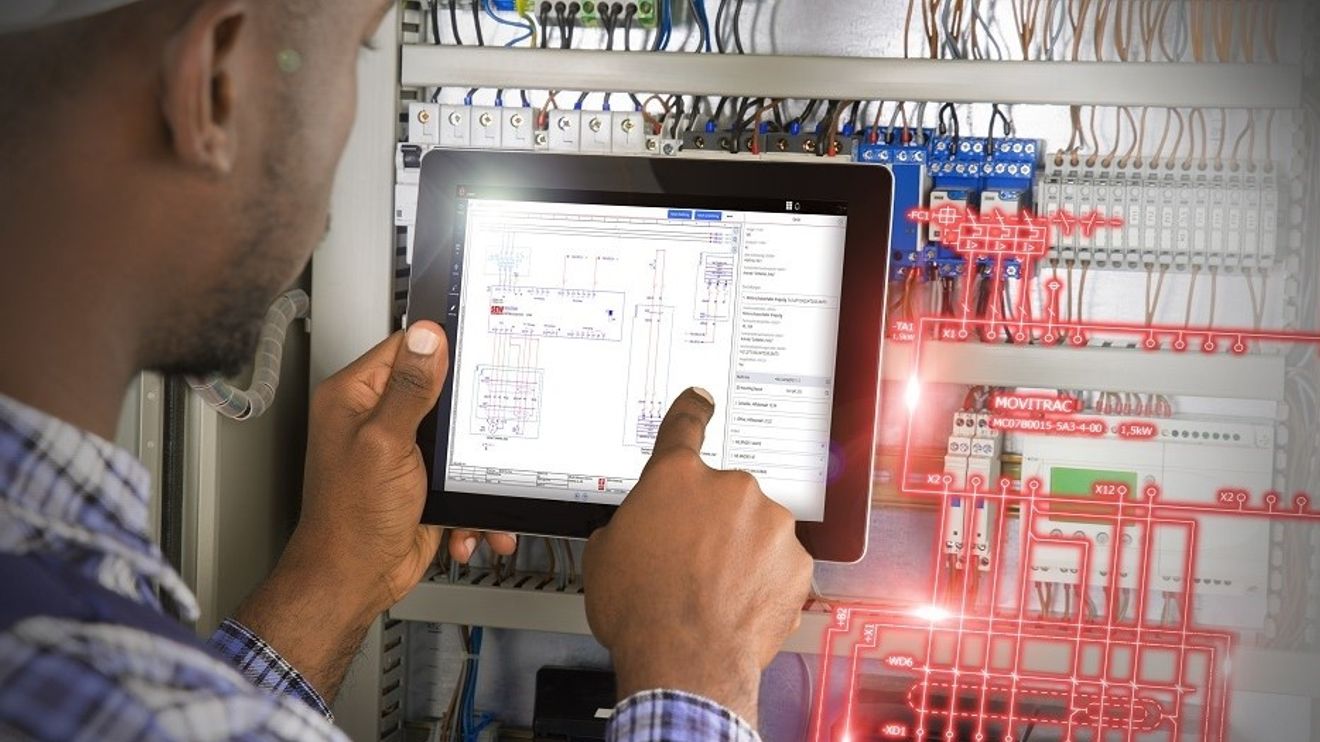
The answer is to provide additional solutions in Eplan's own cloud. It expands the existing engineering options with the Eplan platform and gradually adds workflow-oriented cloud services. This was accompanied by the decision to establish a new 'Cloud Business' division. The services and solutions that this business unit develops - in close contact with users - under the umbrella brand Eplan ePulse are made available to users on a corresponding website. One of the first cloud-based services that users can already take full advantage of today is the cross-location use of ECAD data via Eplan eView. Thomas Michels explains: "The electrical designer uploads the circuit diagrams for a project to the cloud and assigns read authorizations to individual users." These could be colleagues, for example, who are commissioning a machine on site and need access to the automation documentation.
"We provide all users with a shared and secure IT infrastructure in the cloud based on the principle of Software-as-a-Service" - André Beunink

In this way, Eplan simplifies a workflow that frequently occurs in day-to-day operations and at the same time makes it more secure: "Today, the designer has to ask himself whether he passes on the native Eplan project in such cases - for example by e-mail. If he decides to do this, he loses control of the data and files. Instead, they can upload the project to the cloud as its creator and give their colleagues read access. They can also withdraw this access again or limit it in terms of time." In this case, one of the ePulse developers' tasks was to provide this service via an intuitive app that can be used without any knowledge of the Eplan software. It goes without saying that this cloud-based service is location- and device-independent.
Better coordination over the project duration
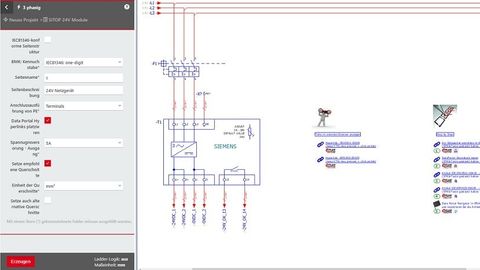
Partial functions, such as the example of a 24 V power supply unit shown here, can be configured with eBuild Free.
© EplanHowever, the advantages of cross-location, cloud-based working go even further, as Thomas Michels explains: "It is often engineering service providers who plan the control cabinets on behalf of a machine manufacturer, for example. Over the course of the project, there are always reviews, coordination with the customer and status reports.
status reports. All these interim results can now be made available on ePulse - in the latest version. This means that everyone involved always has access to the current and standardized status."
The fact that the term 'eView' is, strictly speaking, an understatement, increases the benefits from the user's point of view. With the 'Redlining' and 'Greenlining' functions - again as an example - the fitters can note changes and comments on site, which the electrical designer responsible and authorized to make changes can then incorporate into the project. This creates a structured flow of information between those involved, while the designer retains control over their circuit diagrams and projects. The advantages of the cloud-based solution apply not only to finished projects that are to be assembled on site, but also to coordination cycles during project planning.
"The machine manufacturer would like to provide an enclosure layout in order to obtain the end customer's approval. This is possible with little effort via eView: the digital prototype is available there for viewing" - Thomas Michels

In the last ten months, more than 16,000 Eplan projects have already been placed in the cloud. These projects are stored in so-called organizations - currently around 4,000. Almost 11,000 users are registered and actively working with them - the feedback from customers is consistently positive. eView is therefore already a very good example of the expansion of Eplan engineering solutions through workflow-oriented cloud services. The location and device-independent availability of the circuit diagram projects is only made possible by the cloud technology. In this way, Eplan aims to gradually offer further added value in addition to the existing portfolio
- beyond the pure engineering phase along the customer's entire value chain.
New basis for the design software
The reason why the development of the cloud services presented here involves a great deal of time and effort at Eplan is that a completely new structure of the design software has to be created. This transformation is the responsibility of André Beunink, Director Cloud Business Digital Platform: "Unlike the Eplan platform, the cloud modules are not installed 'on premise' on the users' computers. Instead, we provide all users with a shared, highly reliable and secure IT infrastructure in the cloud based on the principle of software-as-a-service." According to Beunink, Eplan has now overcome these challenges and can already offer users new possibilities in ePulse.
Circuit diagrams from the library

In addition to the viewing and collaboration functions of eView, ePulse can also make it easier for users to get started with automated and standardized circuit diagram creation. Thomas Michels: "This works in a similar way to the Data Portal, but at a higher level. For example, eBuild Free - as the service is called - contains circuit diagram libraries for complete subsystems such as the power supply." Eplan has created these libraries together with companies such as Phoenix Contact, who see themselves as 'early adopters' in this area: "To stay with this example, the user opens a 'power supply' library, enters a few parameters such as current and the number of required channels and consumers. At the touch of a button, they receive the multi-page circuit diagram of the system, which they can then transfer to their project." This saves the planner time and provides a system in which all components are coordinated with each other.
The digital entrance door
As a digital platform, ePulse will be the central 'gateway' to the cloud world in future - with eView and eBuild as important, but not the only service solutions. Thomas Michels: "We are continuously developing new services and also integrating new user groups. We see great potential here for further simplifying electrical design, always in conjunction with the Eplan solutions already available to our customers. Over time, this will give companies the opportunity to gradually migrate to the cloud with dedicated engineering tasks - not always 1:1, but always geared towards the best possible customer benefit based on cloud technology."
Dates: Best rich
How can users prepare for the new way of working? How can they implement their first ePulse project? Thomas Michels: "It is very important that users are open to the new possibilities and actively take the first step. This is possible directly on the basis of the existing Eplan project data. However, the principle also applies here that more data in the Eplan projects also enables more benefits in the further process steps. This also includes comprehensive device data, service documents and maintenance information. In future, both the installer and the operator of the system will be able and want to view all of this on site."
"In addition," says André Beunink, "the machine manufacturer can also generate new business models based on the high-quality, always up-to-date design data - for example, the constant maintenance of the data over the entire service life of the system." From the end customer's perspective, such a service could pay for itself from the very first service call.


You might also be interested in
SPS Connect 24.11. - 11:10 - 11:30 a.m.
Networked engineering in the cloud
Digitalization, data consistency and collaboration are the key topics that offer opportunities to improve engineering processes. OEMs/system integrators, suppliers, service providers and clients work closely together in the industrial automation...
 read more...
SPS Connect 24.11. - 14:00 - 14:20
The future of switch cabinet construction
In this presentation, three experts from Rittal, Eplan and Phoenix Contact will explain how digitalization is changing engineering and manufacturing processes.
read more...Virtual reality in CAx applications
The VR PluraView from Schneider Digital is a passive virtual reality stereo monitor based on the supplier's '3D PluraView' monitor. Equipped with a tracking system, the monitor allows interaction with 3D stereo models and content across all axes.
read more...Automatic 3D comparison of CAD data
DataCAD Software & Services has released an updated version of the 3D CAD viewer Glovius. Glovius is an analysis tool for viewing, measuring, dynamic cutting, comparing and printing 3D CAD models and assemblies.
read more...Construction: QR codes in no time at all
QR codes can be generated directly in Eplan platform version 2.9. Users can store hyperlinks in their documentation, which can then be scanned and opened from mobile devices such as smartphones or tablets using an app.
read more...The benefits of data standards
Fully digitized data is the driver for optimizing engineering in control and switchgear construction on the basis of a digital twin. This means that the corresponding article and device data must be available right at the start of project planning.
read more...Digitization of production
IIoT Building Blocks from iT Engineering Software Innovations is a platform for evaluations and machine learning applications directly in the factory environment.
read more...The Logo! on the cloud
Automation with a cloud connection - a complicated undertaking? Not necessarily: In combination with Logo! 8, implementing simple automation tasks via the cloud can be really fun.
read more...'Digital workers' are ready for industrial use
IFS Loops introduces its new agent-based AI platform that can deploy ten 'digital workers' to accelerate industrial processes.
read more...