
Internet of Things
IoT platforms in use
Data is always at the heart of IoT solutions: it shows customer behavior, provides information about processes in a machine or transmits location information. This makes them the basis for data-based business models in the Internet of Things - as concrete practical examples show.
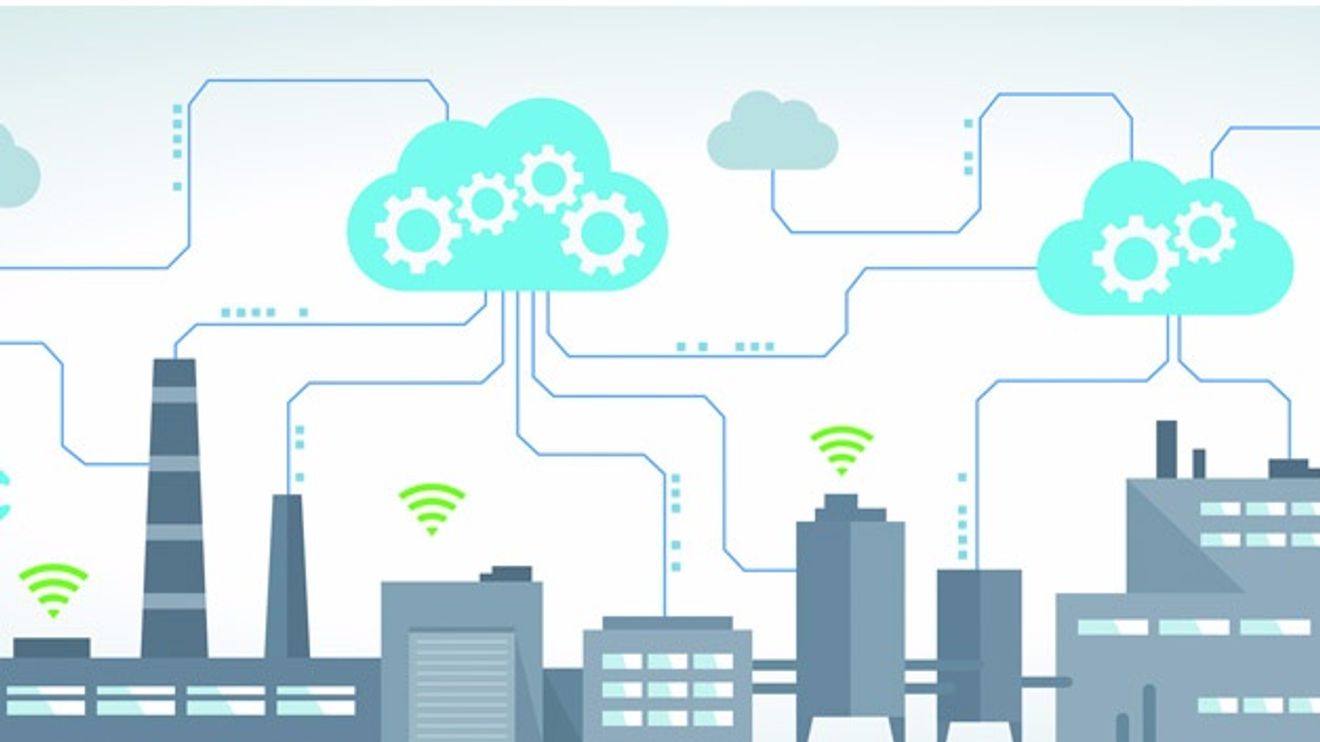
The Internet of Things (IoT) has arrived in practice and more and more companies are focusing on products, services and business models for the IoT. In the middle of last year, the Bitkom association surveyed 553 industrial companies with 100 or more employees on the status of IoT in their companies. One of the results: Four out of ten companies already use an IoT platform, meaning they have recognized its strategic importance for Industry 4.0 and digital transformation.
Such a platform helps companies to master the technical IoT challenges. It combines all components for any projects. This includes the ability to network objects, collect data and evaluate it in real time. It usually offers simple integration into existing systems and processes and supports distributed data processing between cloud, edge and on-premise computing. Preconfigured services for common use cases such as predictive maintenance or track & trace also make it easier to get started.
Predictive maintenance of steam generators
The first medium-sized companies are now launching IoT projects. There are numerous starting points for this, such as networking the company's products in order to develop additional or improved services for customers. This is also the approach taken by Certuss, a traditional medium-sized company from Krefeld.

To ensure the smooth operation of its steam generators, the manufacturer has set up a predictive maintenance service that runs on the 'Cumulocity IoT' platform. This service is also known as predictive maintenance. It ensures that potential faults are detected at an early stage and do not lead to a malfunction in the first place. The prerequisite is a smart product: a networked, intelligent product that is connected to the internet and contains computer functions.
Accordingly, the manufacturer has equipped a range of its steam vending machines with a SIM card and mobile phone electronics. This means they are connected to the IoT platform in the cloud and can transmit status data. The data itself is determined via the electronics already present in the appliances. This involves a total of 60 parameters, including pressure, temperature, combustion status and water level. By analyzing the data, Certuss can make fault predictions with detailed diagnoses. The manufacturer is therefore able to recognize at an early stage when it needs to send a service technician to a customer.
Remote monitoring of buses
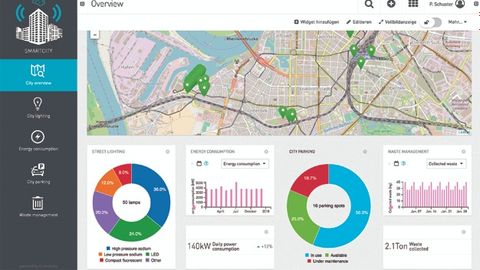
The areas of application for the utilization of data via the cloud in an IoT platform are diverse. For example, telemetry specialist Sensor-Technik Wiedemann (STW) has set up its own IoT platform based on Cumulocity for a project with the Greater London Authority to monitor the emissions of London buses.
As part of the implementation of an Ultra Low Emission Zone (ULEZ), more than 5,000 buses on London's public transport network are to be retrofitted with emissions technology by 2021. The aim is to reduce emissions of soot particles and nitrogen oxides. In order to monitor the emissions of the buses in real time, a special telematics control system from STW will be installed on each individual bus. Remote monitoring of the data obtained is realized on the basis of the IoT platform. Using a web interface on a PC or from a mobile device, it is possible to monitor not only engine emissions, but also technical data, faults, routes, locations and fuel consumption. The collected data can then be visualized in real time and enable the optimization of individual parameters through precise diagnostics.
Safety for offshore energy systems
In the field of offshore energy production, the IoT also provides solutions to increase safety for employees on the high seas. Service providers often take over the transportation of skilled workers to the platforms of wind turbines or tidal power plants. The sensor technology of the company STW, which is also carrying out the project to measure emissions from London buses, also equips offshore transport boats.
The company has developed an IoT platform based on Cumulocity: operating performance and maintenance information, GPS and process data from the boats are recorded by the sensors. In addition to this, data can also be measured that is relevant for monitoring contractual and legal components. For example, the probability of seasickness on the boat due to vibrations can be calculated in accordance with a mandatory ISO standard.
The costs that the service providers charge the contracting companies for transportation are also influenced by the prevailing swell. Maneuvers are more demanding in strong waves - making the journey more expensive. The strength of the heave is recorded by the sensors and flows into the invoicing via the evaluation in the IoT platform.
All sensor data is bundled centrally in the IoT application and can be monitored and controlled via it.
Reduce costs, increase scalability
Amparos is a leading German provider of portable GPS tracking solutions that combines its products with a personalized service. Over the past five years, the market for personal tracking devices has become increasingly competitive as more and more low-cost devices have emerged.
With a growing customer base, Amparos developed its own IoT platform with the help of Cumulocity in order to have more time for value-adding activities such as the further development of functions and devices. The main goal was to reduce development and maintenance costs while increasing scalability and flexibility and maintaining high levels of security and data protection. By increasing efficiency, the company was ultimately even able to improve the interactivity in daily customer contact on its online services that consumers expect today. Amparo's cloud-based consumer tracking solution was launched under the Trackerando brand.
Optimization of the supply chain
The precise evaluation of usage data in real time is an important feature of all IoT solutions. Not only machines can be monitored in this way. Assessments of future developments are also possible in a very similar way, for example in the logistics sector and for external service providers. Logistics companies have been analysing process and telemetry data for many years in order to optimize the supply chain. As the example of the London buses also shows: IoT technologies provide new opportunities to make logistics processes smarter and more efficient. This can also optimize a supply chain and improve service performance.
Lyreco is one of the world's leading providers of office and workplace solutions. Among other things, Lyreco rents out high-quality Nespresso coffee machines to its customers and regularly supplies them with a selection of coffee capsules. The company has implemented an IoT project to improve customer service, avoid machine breakdowns and ensure the timely delivery of coffee supplies. The operation of the coffee machines and consumption of the capsules can be monitored in real time. The result is a predictive model that allows future events to be predicted based on real-time data.
In concrete terms: if the coffee supply runs low, the provider delivers supplies in good time. If there is a technical fault with a coffee machine, Lyreco recognizes this immediately and sends a technician to rectify the problem. In addition, stock management is fully automated, which also saves the provider operating costs.
Data as a source for value creation
These examples show the center of every IoT solution: data. Only through comprehensive data collection will the Internet of Things become the engine for new, digital business models. In the future, data will be one of the most important, if not the most important, source of added value.
Companies from the manufacturing sector, but also manufacturers of machine tools, benefit from the precise evaluation of their own data. An IoT solution provides them with information in real time for the first time - about the use of their machines by the user, about stocks, anomalies or other sensor data. Based on this, completely new opportunities arise to further develop products and construct new business models.
All companies are striving to establish themselves in their target markets and offer their customers added value. The use cases described show that all of the companies mentioned have expanded their business models in order to exploit the potential of digitalization. By integrating IoT into their solutions, medium-sized companies in particular can improve their customer relationships and keep processes lean.
Thanks to forward-looking planning, optimal processes are guaranteed and the integration of technology into the business model strengthens the diversification and competitiveness of every company.
Author:
Bernd Groß is Senior Vice President IoT & Cloud Business at Software AG and CEO at Cumulocity.


You might also be interested in
The first steps towards digitization
Real-time transparency in the material flow: this was the goal set by Miba when it set out to digitalize its internal logistics processes. But how successful was the close link between ERP and MES in the end? - A field report.
 read more...
How will the IoT change companies in 2020?
How will network technology in companies change in 2020? Axel Simon, Chief Technologist at HPE Aruba, takes a look into the crystal ball
read more...Digital twin revolutionizes maintenance
As virtual representatives of real machines, digital twins open up new possibilities for maintaining and servicing complex industrial plants and systems. A project report.
read more...You can't do without Edge and Swarm
The IoT has changed the requirements for processing data provided by machine sensors and actuators. This needs to happen as quickly as possible - preferably where the data is generated. Edge nodes and swarm computing systems take on this task.
read more...Online machine data under control
Turning huge amounts of data into valuable information - how can this smart industry approach be implemented? Linking PC-based controllers with Matlab and a cloud-based IoT analytics service can be a viable approach.
read more...From modeling directly into the PLC
Despite digitalization and I4.0, the technical functions in a process plant do not become simpler if you break them down to the smallest detail. Nevertheless, the high level of difficulty can be overcome by combining the right tools in the right way.
read more...Where are the new business models?
The necessary new business models are repeatedly cited as the hallmark of an Industry 4.0 environment. But to date, very few companies have seen any of this. Schneider Electric now has a few models up and running.
read more...Why predictive maintenance?
Investments in predictive maintenance systems are worthwhile in order to proactively detect damage. Not only does this increase the service life of a machine, it also opens up new business models for machine manufacturers.
read more...First customer projects via BaSys 4.0
The BMBF project 'Basissystem Industrie 4.0' expired at the end of June 2019. Together with NetApp and Objective Partner, Fraunhofer IESE now offers Industry 4.0 solutions with support and adaptation to customer systems on the basis of this project....
read more...