
Digital learning - Part 4
Individual employee training 4.0
Vizendo uses the digital training environment from Siemens to train automotive employees on new models long before the first prototype is produced. This accelerates the time-to-market after product and process changes.
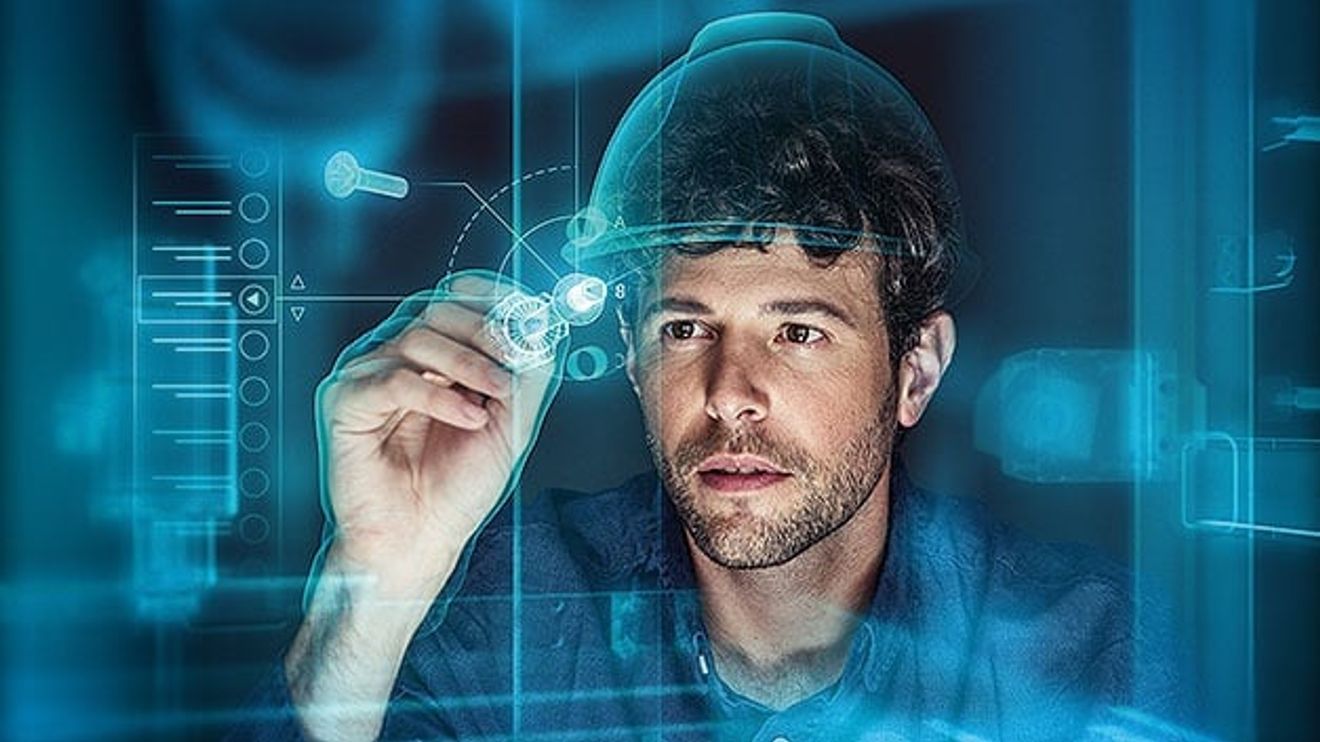
Vizendo uses Siemens' digital training environment to train automotive employees on new models long before the first prototype is produced.
© Siemens/VizendoWhat does a 3D video game have to do with training employees in automotive production halls, for example? Visually, quite a lot, if you look at the Vizendo Virtual Training Solutions from Siemens. The service from the Digital Enterprise Services portfolio enables car manufacturers and other companies in the discrete manufacturing sector to train their employees on new models long before the first prototypes are produced. In addition to the time factor, cost savings and competitiveness also play a decisive role in the virtual and manufacturer-independent service. In the case of product and process changes, the realistic 3D models based on precise data are used for the targeted training of employees. The learning success of training participants can be tracked via personalized access and made available to the training managers.
On average, a car manufacturer launches a new vehicle model every four years and a facelift every two years. This means that production employees assemble new models at very regular intervals and need to be trained for this; depending on the size of the manufacturer, this can involve up to hundreds or thousands of employees. If this assembly training takes place on real prototypes, it is not only time-consuming for the manufacturer, but also cost-intensive. With Vizendo Virtual Training Solutions, Siemens offers an economical alternative - for all industries, but currently with a focus on automotive and aerospace.
Three steps to individual, virtual training
In a nutshell: Vizendo Virtual Training Solutions is a virtual service solution that is customized to the customer's product and allows employees to practice real assembly processes in a 3D environment similar to a video game, for example. The service consists of three modules: Assessment, Creation and Virtual Training.
In the 'Assessment' module, the customer's framework conditions and requirements are recorded. These include, for example, the complexity of the process to be mapped, number of variants, timeline, start of training, possible number of pre-production vehicles and start of production. Existing data is also evaluated. If required, a PoC (proof of concept) can also be carried out together with the customer in advance to determine the return on investment in order to fine-tune the service solution.
In the 'Creation' module, the desired, individual training is developed on the basis of the customer's PML/CAD data and repeatedly compared with the client's specifications in an agile manner.
The final step involves handing over the virtual training course to the customer. From this point on, the customer is responsible for training their own employees, but can rely on Siemens' service and support.
Gamification for employees - rapid learning success
"Our solution is an ideal complement to conventional training," explains Dr. Marina Kinschel, Global Head of Services for Factory Automation at Siemens. "With this new training approach, customers can not only significantly reduce the number of prototypes and time-to-market. They can train more flexibly and also have a precise overview of which employee has already achieved which training level and therefore qualification." Using Siemens' own special gamification approach for employees of all age groups, they can be quickly qualified and internally certified.
The product or process-specific Siemens solution records the progress of each employee within the training environment via a personalized login. The training participants can immediately see whether the work step they have just completed was correct or not by means of colored markings. This immediate feedback facilitates the learning process and ensures rapid learning success. Supervisors and managers receive a corresponding analysis of the respective training results of all employees. This ensures that the assembly steps have been internalized or understood. As a result, training on the prototypes can be shortened in order to guarantee a quick return to production. This immediate feedback facilitates the learning process and ensures rapid learning success.
Manufacturer-independent solution with flexible user interface
As part of the training, employees go through an average of four training levels - from maximum support from the system in Level 1 to no assistance at all with virtual assembly in Level 4. The Siemens solution does not depend on which components from which manufacturers the customer uses. All components and process steps can be integrated into the training solution as long as the corresponding PLM/CAD data is available. The client is equally independent when it comes to choosing the user interface: Siemens delivers the training courses as AR, VR, desktop or mobile versions as agreed.
Faster to market launch
"We usually need ten to twelve weeks to create a training course for a complete production line with different desired equipment variants," says Dr. Kinschel. "Ultimately, the development time depends on the customer's requirements. The more complex the product or the manufacturing process, the more time-consuming the creation is for us." But the effort is worth it. "With Vizendo Virtual Training Solutions, companies can save up to 50 % of training time. Start-up times after product or process changes are also shorter. They also reduce errors in the execution of the practiced work steps by up to 40%. Apart from the measurable reduction in time and errors, we are keeping up with the times with this modern training approach and are also appealing to younger people from Generation Y and Z in particular."
Around 20 car manufacturers from Europe and overseas are currently using the Siemens service solution. The previous focus was on automotive and aerospace, simply because the development of the virtual training started in cooperation with a European car manufacturer. "However, our solution is suitable for many companies from very different industries," emphasizes Dr. Kinschel. "They all benefit from a service that is tailored to their needs and delivered by us as a 'ready-to-use solution'. This means that customers do not have to spend valuable time configuring standard training courses to their requirements. Instead, they can get started straight away."
Virtual training also possible for aftersales, maintenance and pilots
Siemens intends to and will continue to expand the target groups in the future. As already mentioned, manufacturing in the automotive and aerospace sectors are currently the focus of the training offering, but the service can also be used in many other industries. For example, Vizendo Virtual Training Solutions could also be used flexibly and efficiently in the aftersales and maintenance areas of all airlines. After all, it is not only pilots who have to be made fit for their jobs in simulators at the end of the pandemic, but also all aircraft that were 'grounded' during this time. "Mechanics around the world have to be trained at all airports so that air traffic can be resumed on time," says Dr. Kinschel. Ultimately, it makes no difference to Vizendo Virtual Training Solutions which process is simulated as training.
The article series

Sitrain consists of three learning formats: the knowledge database, the digital learning platform and training courses.
© SiemensThis series of articles about the digital learning platform Sitrain from Siemens describes the individual elements of the platform:
- Part 1: Sitrain open - the knowledge database
- Part 2: Sitrain access - the digital learning platform
- Part 3: Sitrain personal - guided training, virtual or on-site.
This article, part 4 of the series, is separate from the learning platform and describes how Siemens' Vizendo Virtual Training Solutions can be used to train employees individually based on a digital training environment.


You might also be interested in
New normality in manufacturing
People are the key to success
Smart manufacturing and companies are often associated with new technologies such as artificial intelligence or robotic process automation. However, many forget that digitalization must first help employees.
 read more...
Portfolio expanded
Siemens is adding new servomotors to its 'Sinamics S210' single-cable servo drive system.
read more...Established learning concepts reinterpreted
Combinable formats and modern training concepts - 'Future of Learning' focuses on sustainable learning success through personal responsibility and flexibility. Part 3 of the article series looks at the personalization of the learning program.
read more...Establishing a digital learning culture
The vision of the 'Future of Learning' is changing the way knowledge is imparted. A virtual environment with guided and self-directed training courses is being created for learners.
read more...Rethinking learning - a holistic approach
The 'Future of Learning' vision blurs learning formats and focuses on optimal learning success with personal responsibility and flexibility. Read part 1 of the four-part article series 'Digital learning' now.
read more...First control cabinet made of green steel
The Siemens subsidiary Alpha Verteilertechnik claims to offer the first control cabinet for industry made entirely of green steel.
read more...Siemens quarterly figures Q3-2024
Siemens confirms forecast with a "but"
Siemens is struggling with a weakening automation market in the third quarter. The software business, on the other hand, is developing strongly. It remains to be seen whether this will continue after the switch to a SaaS model.
read more...Edge rack server in robust
The trend towards hyper-convergent infrastructures is not stopping at the manufacturing and automation industry. Siemens has now launched the first edge rack server in robust industrial PC quality. How is the inner workings of the server designed?
read more...The e-paper of issue 07/2024
Read in the current issue of Computer&Automation how ChatGPT can provide support in the conception phase, how LLMs are used in code analysis and whether TSN can be considered as a backbone for virtualized control systems.
read more...