
Rutronik
Optical inspection with artificial intelligence
Artificial neural networks in combination with deep learning methods can optimize automatic optical inspection (AOI) and object recognition in manufacturing processes. But how can real-time capability, for example, be guaranteed?
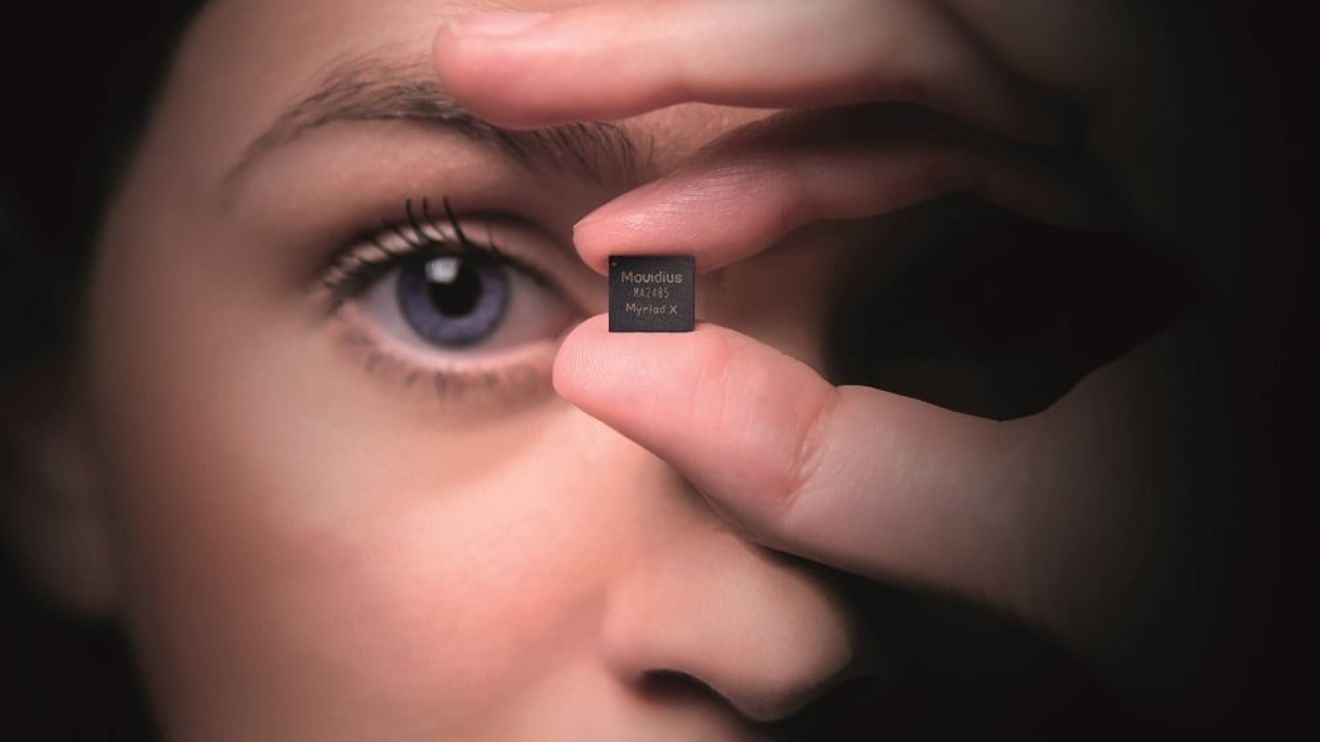
If the optical inspection involves identical and clearly identifiable features, machine vision, as it has become established in industry, is ideally suited. However, the more blurring there is, the higher the error rate. And when it comes to recognizing variants or completely different objects, the software has to be reprogrammed at relatively high cost. Both of these weaknesses can be avoided by using deep learning methods.
Deep learning methods are based on huge amounts of data and artificial neural networks. The system is trained with the help of countless images and their labeling as good or bad images; based on the algorithms and the artificial neural networks, it 'learns' which objects correspond to the specifications, i.e. which are good, and which are not. During use, the system continues to learn and the recognition rate improves continuously.
After a short training phase, the system can also deal with object variants or other objects and not only assess the quality of inspected parts, but also reliably classify objects. To do this, the software must be able to process huge amounts of data. This means that high-performance processors or - depending on the application - graphics cards are required. Some companies outsource these processes to cloud services.
However, it is often unavoidable to run the processing close to the application when it comes to issues such as latency, bandwidth or security.
GPU-based solutions have the disadvantage that they consume a lot of energy. Cloud-based solutions are associated with latency times and fluctuating bandwidths, meaning that (hard) real time cannot usually be guaranteed. In addition, security issues need to be clarified to prevent data espionage or manipulation.
Can be used on the Edge
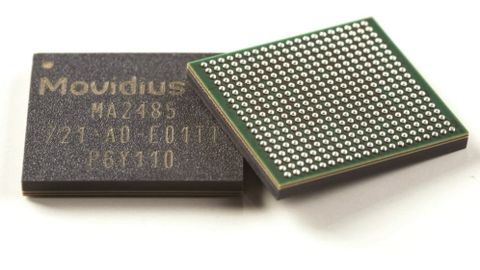
The 'Movidius Myriad X' from Intel has a neural computing unit that accelerates demanding deep learning calculations (inferences) without consuming a lot of energy.
© IntelWith the latest generation of the Movidius Myriad X (MA2485) Vision Processing Unit (VPU), Intel now offers an alternative that can be used at the edge and guarantees the real-time capability and security required for industrial processes. The VPU is equipped with a neural processing unit that is used exclusively to accelerate the demanding deep learning calculations (inferences) without consuming a lot of energy. As a result, the 'Myriad-X' architecture delivers a computing power of 1 TOPS - that is one trillion operations per second. The total performance can reach over 4 TOPS. As the computing unit is specifically designed for inference, classic solutions must still be used to train the models.
In addition to this neural computing unit, a number of other components ensure that the VPUs work extremely quickly, even with continuously high workloads due to deep learning processes: With several 128-bit VLIW (Very Long Instruction Word) vector processors that can be programmed in C, several application pipelines for image processing and recognition can be processed in parallel. A suite of over 20 hardware accelerators ensures, for example, that the optical flow or stereo depth can be controlled without generating additional load.
The 2.5 Mbyte on-chip memory has freely accessible intelligent memory structures that minimize the data flow on the chip: With a bandwidth of 450 Gbyte/s, both access time is reduced and energy consumption is lowered to less than 3 W. In addition, 4 Gbytes of LPDDR4 memory are available.
Based on the small package size of 71 mm2 and a height of 1 mm of the VPU, the manufacturers Aaeon, Advantech, IEI or Intel offer plug-in cards with one or more 'Myriad X' VPUs as MiniPCIe, M.2 or PCIe variants, all of which are available from the distributor Rutronik. The wide selection of different form factors and the scalability of certain cards make it possible to fulfill a wide range of requirements in the field of vision computing.
Toolkit for customized models

Florian Schmäh is Product Sales Manager Boards at Rutronik Elektronische Bauelemente in Ispringen.
© RutronikIntel offers the 'OpenVino' software toolkit to match the VPU, which simplifies and accelerates the development, installation and execution of deep learning models for all image recognition solutions and computer vision applications. With the Python-based deep learning model optimizer, the trained models can be imported, converted and optimized for the respective hardware, thus increasing the performance of the system used. 'OpenVino' supports Intel's VPU, CPU, iGPU and FPGA solutions.
The imported and optimized deep learning models are then transferred to the Deep Learning Inference Engine API. This allows them to be transferred to different platforms. Samples for speech or image recognition, for example, make it even easier to get started.


You might also be interested in
Own business division for security technology
Sensor technology provider Leuze is now placing its safety expertise more firmly in the focus of its business activities with its own business unit.
 read more...
Artificial Intelligence Forum 2020
Presentations now available online
On May 14, the Artificial Intelligence Forum took place virtually due to the corona pandemic. If you missed it, you now have the opportunity to download the top-class presentations.
read more...Guided by the point cloud
In assembly processes, 3D point cloud technology plays a special role in the guidance of industrial robots. Quad-camera sensor solutions that enable multi-stereo recordings are a new approach here.
read more...Measuring amplifier suitable for IoT
LCB is a universal measuring amplifier for load cells from Althen Sensors & Controls which, according to the manufacturer, meets 'Industry 4.0' requirements and is designed especially for IoT needs.
read more...A perfect fit in five steps
Laser distance sensors ensure process efficiency in automated production processes with the help of non-contact measurements. When choosing the right sensor, factors such as measuring range, focus, beam shape or object surface as well as ease of use...
read more...IP69K portfolio expanded
Posital has upgraded its portfolio of 'Ixarc' encoders and 'Tiltix' inclinometers with protection class IP69K.
read more...Smart sensor technology for the IIoT
In addition to status information, intelligent sensors provide a wealth of secondary data - on service life, load level and damage detection as well as ambient temperature or contamination. Optical sensors in particular are undergoing a lot of...
read more...Sensor technology and digital services
Sensor technology, sensor apps and the cloud - Sick now wants to use this trio to create a digital solution portfolio. The aim is to enable customers to generate individual added value for their business processes.
read more...Sensor & Vision 2020 dossier - simply smart
Our dossier on the latest trends in sensor technology and industrial image processing is now available as an e-paper or for download. Many exclusive reports, application examples and new product lines are waiting for you.
read more...