
Pepperl+Fuchs
Light section and vision sensor combined
The light section method is an often underestimated sensor principle for presence, completeness and position checks and similar tasks. Intelligent light section sensors deliver much more precise and reliable results than other types of sensor.
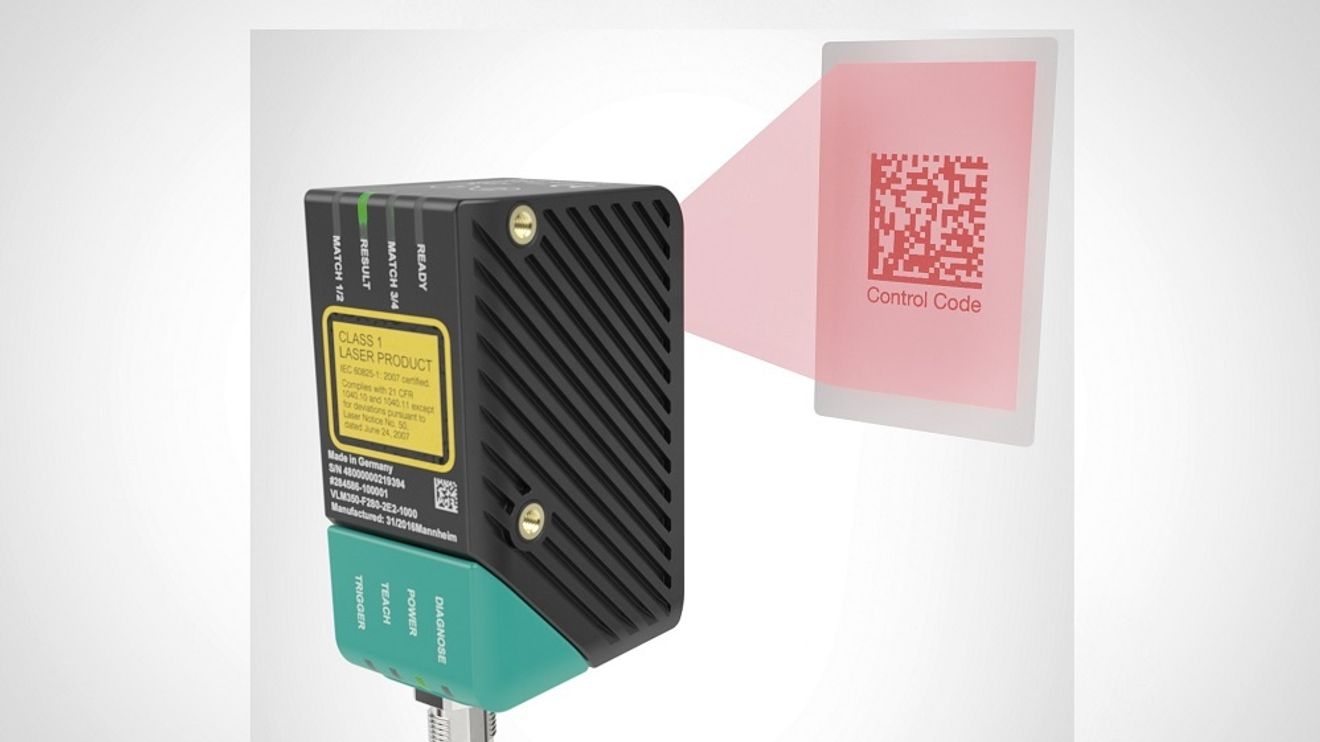
High throughput without downtimes and waste production is the primary goal of any automation system. More and more sensors are therefore being used in production, processing and logistics applications to ensure that the necessary requirements are met. Vendor parts must be checked for presence, completeness and freedom from defects; object carriers and components must be in the correct position and alignment in order to be filled, further processed or picked up by a robot arm. Many of these typical detection tasks can be reliably solved with light section technology.
Light section sensors usually offer simpler parameterization than 2D vision sensors. They use the principle of triangulation, with which height profiles and edge profiles can be detected with high precision via a projected laser line: The known distances and angles of the triangle formed by the light source, camera and object allow the exact calculation of the positions of all pixels of the projection line on the target object being viewed.
Robust against interference
The use of the sharply defined laser beam provides some decisive advantages, for example compared to normal vision sensors. For example, even low-contrast objects can be detected well with light section sensors - this even applies to object contrasts down to zero. Only a height offset is required for detection.
The light section method is also much more robust against ambient light and changing lighting situations. With 2D vision sensors, (unexpected) changes in light in particular can significantly reduce or even completely invalidate the detection performance, for example if daylight enters through a window. With vision sensors, the exposure time, arrangement of the device and, if necessary, external lighting must be adapted precisely to the conditions of the application. In the case of light section sensors, the automatic exposure, which the device ideally has, is completely sufficient for the vast majority of applications.
These properties make laser light section sensors such as the 'SmartRunner Matcher' from Pepperl+Fuchs interesting, for example, for applications in the automotive industry, packaging technology, logistics and generally in machine and plant construction.
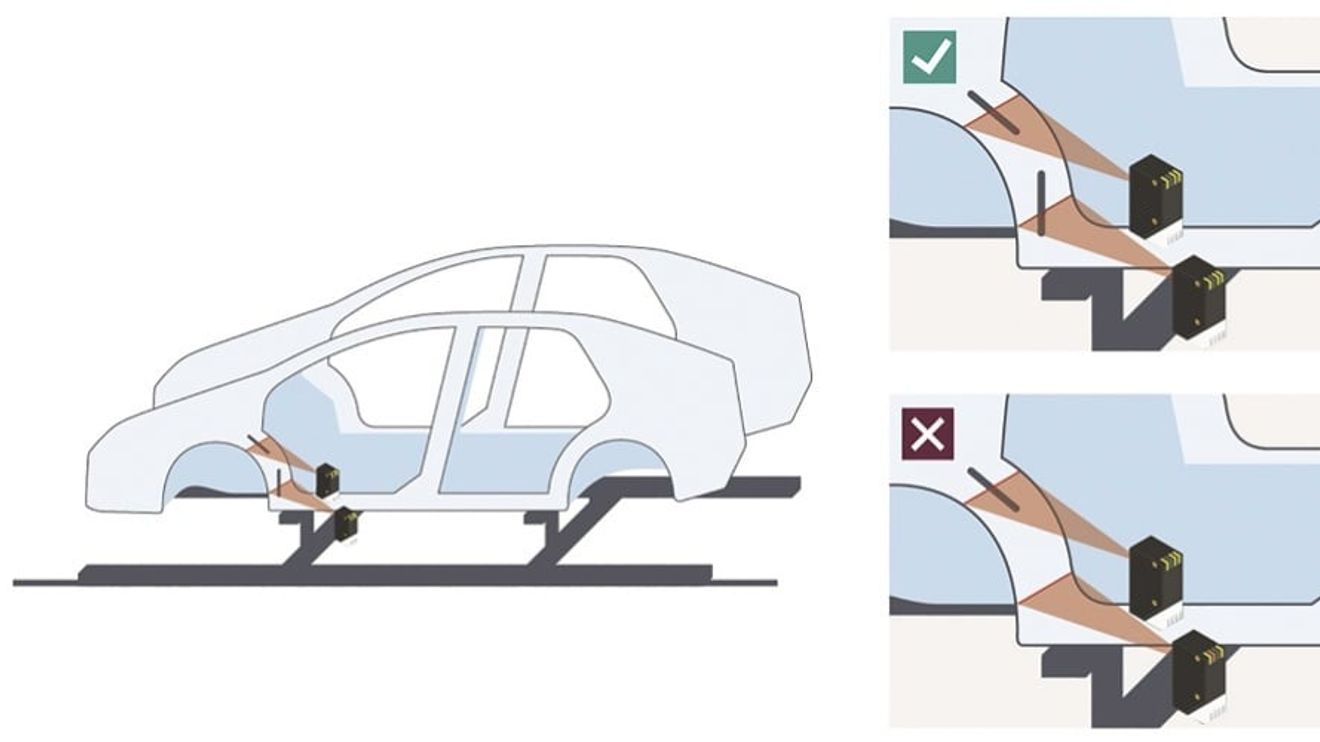
Testing independent of contrast
In car body production, for example, it is important to check whether fixing elements such as rivets, screws, clips and blind plugs are present and in the correct position. These small parts are often only slightly different from the background and the contrast is very low. The light section solution masters this challenge with ease: the sensor detects the height profiles regardless of color and surface texture and issues a good or bad signal via its switching outputs depending on the detection result. If the sensor is mounted on a robot arm, it is even possible to verify different elements or scenes with one and the same device. All that is needed is a sensor version that can store several detection profiles.
Other applications in the automotive industry include
checking anchors on assembly slides (skid bolts), checking sheet metal parts for defects before welding processes or checking whether anti-vibration pads (stickies) have been glued correctly.

Twist detection of ready meal trays. The light section technology offers reliable detection of ready meal trays even with low contrasts.
© Pepperl+FuchsThe packaging industry can also benefit from light section technology. One example: plastic trays with several compartments are often used when packaging ready meals, allowing the main course and side dishes to be kept separate until consumption for reasons of taste and aesthetics. Perfect separation of the components is an essential prerequisite for both customer acceptance and correct airtight sealing. It is therefore necessary to check the orientation of the trays before filling. A light section sensor is also ideal here, as the single-colored, mostly white trays naturally offer hardly any contrast. By recognizing the height profiles, the sensor always provides reliable and clear results.
Ready for immediate use

Laser light section technology has a lot of previously untapped potential. All of the applications mentioned can be realized with the laser light section sensor 'SmartRunner Matcher', for example. The device combines a high-precision light section sensor and a vision sensor in one compact unit. It is factory-optimized for the recognition of a previously taught-in reference contour, can store up to 32 profiles and can be immediately integrated into applications as a plug & play solution. The evaluation results are output as a good or bad signal at switching outputs that can be processed by any controller. Fieldbus solutions and gateways for Profinet, Profibus, Ethernet IP and Ethercat are also available.
An interesting feature is the ability to output the deviation of the current X and Z position from the taught-in position. If an application does not allow precise triggering, standard sensors such as light scanners or ultrasonic sensors are not suitable for presence detection. In such a case, the laser light section sensor can supply the geometric displacements to the controller. On-board LED lighting helps to create image documentation of faults, process states and quality features. Alternatively, the sensor can be parameterized via data matrix control codes so that no PC is required.


You might also be interested in
Kanban 4.0
With an intelligent combination of optical sensors, identification systems and modern, process-oriented cloud software, Kanban-controlled production and material flows are raised to a fully digital level.
 read more...
Safety portfolio expanded
Pepperl+Fuchs is expanding its portfolio for factory automation by acquiring the 'USi' safety ultrasonic sensor from Mayser, the 'world's only' ultrasonic sensor with safety certification in accordance with EN ISO 13849 Category 3 PL d, according to...
read more...Use in hazardous areas
With the Tab-Ex Pro, the Pepperl+Fuchs brand Ecom Instruments is expanding the existing Tab-Ex series and thus the range of mobile devices for hazardous areas.
read more...SPS Connect 24.11. - 16:20 - 16:40
"Intelligent Supermarket" Digital Kanban Management System
Kanban systems are indispensable in manufacturing companies and have many advantages. Nevertheless, error-prone, manual workflows and a low level of digitization cloud the picture.
read more...SPS Connect 11/25 - 13:35 - 13:55
Digital twin for sensors as a machine-readable data source
Development of standards-based sensor technology sub-models for the asset administration shell in the ZVEI working group "Industry 4.0 in sensor technology".
read more...SPS Connect 11/24 - 10:20 - 10:40 a.m.
Corona - catalyst for digitalization?
In his keynote speech, Dr. Gunther Kegel, Chairman of the Board/CEO at Pepperl+Fuchs, will address the effects of the coronavirus pandemic and the digital transformation.
read more...Four new USB camera models
Allied Vision has added a total of four Alvium cameras with a USB3 Vision interface to the '1800' series. All models feature a 2nd generation Sony CMOS sensor, either with Pregius global shutter technology or with rolling shutter.
read more...IDS Imaging Development Systems
3D data directly from the camera
Shifting computationally intensive processes away from the industrial PC and into the camera improves both the speed and accuracy of data processing. But what are the benefits of integrated data processing in detail?
read more...No access! Please wait!
How can it be ensured that the number of people permitted in premises is not exceeded in light of the coronavirus pandemic? Two automation companies - Pepperl+Fuchs and Schmersal - present their technical solutions.
read more...