

IFR
Service robots are experiencing a boom
The market for industrial robots tended to stagnate in 2020. Professional service robotics, on the other hand, achieved global sales growth of 12% in 2020. The market amounted to a total of 6.7 billion US dollars.
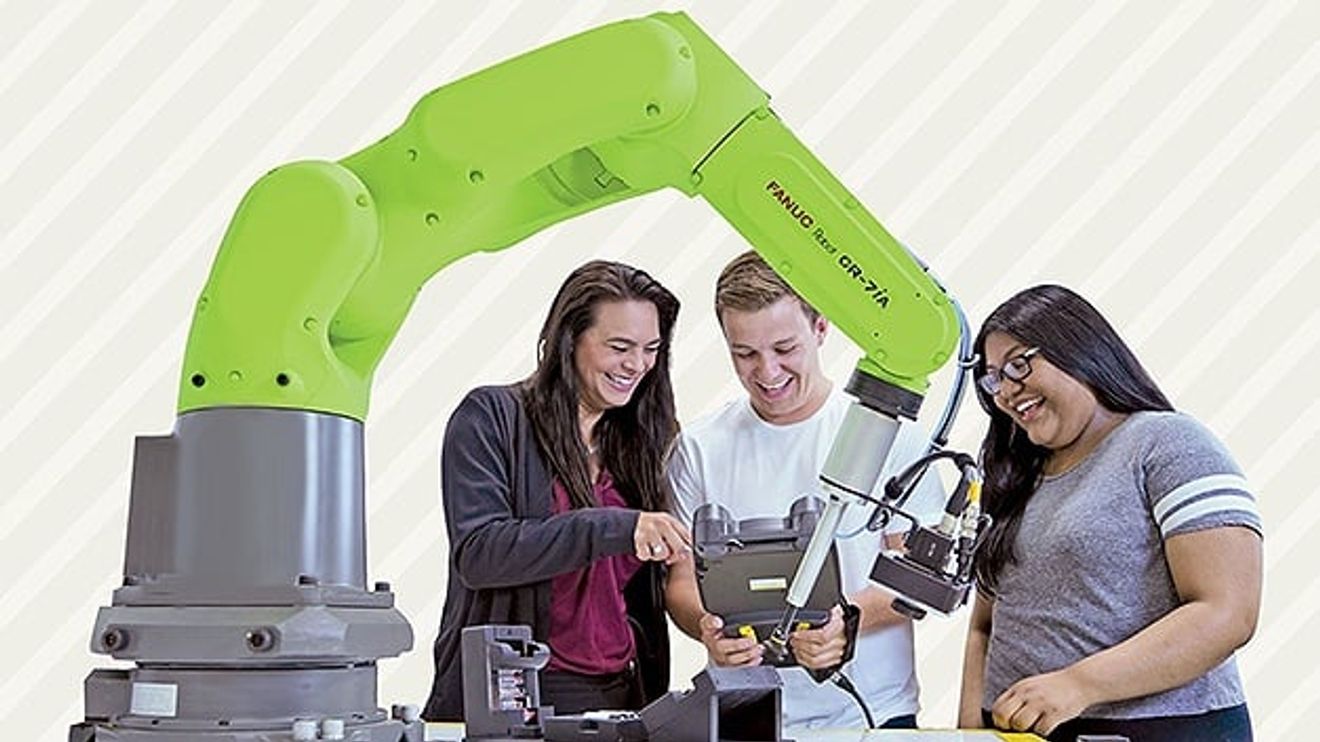
"Service robots are continuing their success story and show enormous market potential worldwide," says Milton Guerry, President of the International Federation of Robotics. "Sales of professional service robots increased by an impressive 41% to 131,800 units in 2020."
5 application trends for service robotics
The following top 5 application trends for professional service robots benefited from a surge in demand triggered by the global pandemic:
Transportation of goods and merchandise
One in three professional service robots is used to transport goods or merchandise. Sales of autonomous mobile robots (AMR), including delivery robots, rose by 11% to over 1 billion US dollars. Most of the units sold are used indoors - for example in production or warehouses. There is a trend towards flexible solutions that allow AMRs to operate in complex environments - for example together with forklift trucks, other mobile robots or humans. There is also strong market potential for transport robots with public access in outdoor areas, for example for last-mile deliveries. The marketing and monetization opportunities still depend on the introduction of a legal framework, the lack of which currently stands in the way of the widespread use of these robots in most countries.
Cleaning tasks
Demand for professional cleaning robots rose by 92% to 34,400 units sold. In response to the increasing hygiene requirements during the Covid-19 pandemic, more than 50 suppliers of service robots developed disinfection robots that spray liquids or work with ultraviolet light. Manufacturers often convert existing mobile robot models into disinfection robots. The potential for disinfection robots in hospitals and other public facilities remains high. Sales of professional floor cleaning robots are expected to grow at double-digit rates on average every year from 2021 to 2024.
Medical robotics
The most profitable segment among professional service robots is medical robotics, with a market share of 55% in 2020. This is mainly due to robot systems used in surgery, which achieve the highest individual prices. Sales increased by 11% to 3.6 billion US dollars. An enormous increase in the number of robots for rehabilitation and non-invasive therapy is responsible for the largest unit sales in this segment. Around 75% of suppliers of medical robots come from North America and Europe.
Social robots
The global pandemic has created a particular demand for social robots. For example, they help nursing home residents to stay in touch with friends and family in times of social distancing. Communication robots provide information in public spaces to avoid personal contact with people, set up video links for business conferences or help with maintenance tasks in production.
Hotel and hospitality industry
Robots in the hotel and hospitality industry are also experiencing increasing sales success and achieved a turnover of 249 million US dollars. Demand for robots for food and beverage preparation increased enormously - sales almost tripled to USD 32 million (+196%). The Covid-19 pandemic raised awareness of the need to avoid human contact with food. The potential for robots in the hotel and catering industry remains high and is expected to achieve mid-double-digit annual growth.
Service robots in industry and the home
Robots for domestic use are the largest group in the consumer segment: almost 18.5 million units (+6%) worth USD 4.3 billion were sold in 2020.
Sales of robot vacuum cleaners and other robots for domestic floor cleaning increased by 5% to more than 17.2 million units with a value of USD 2.4 billion. These types of service robots are now available almost everywhere in retail stores and are easily accessible to all customers. This market is served by many American, Asian and European suppliers.
Among garden robots, lawn mowing robots are in high demand. This market is expected to grow at low double-digit rates per annum on average over the next few years.
Structure of the service robotics industry
"The service robot industry is developing rapidly," says IFR President Milton Guerry.
"Every year, many start-up companies appear on the market, developing innovative service robot applications and improving existing concepts. However, some of these young companies disappear as quickly as they appear. However, activity in the field of service robotics remains high: on the one hand through acquisitions of established companies and on the other hand through takeovers of companies from other industries that want to expand and work in this exciting field."
Globally, 80% of the 1,050 service robot providers surveyed are established companies that were founded more than five years ago. 47% of service robot providers come from Europe, 27% from North America and 25% from Asia.


You might also be interested in
Cobots automate electronics function tests
Increasing quality requirements and growing cost pressure are forcing electronics service providers to achieve a higher degree of automation. Frank Elektronik relies on a collaborative robotics solution from TQ.
 read more...
New Vice President elected
Marina Bill has been appointed as the new Vice President of the International Federation of Robotics with immediate effect. She represents the IFR together with IFR President Milton Guerry.
read more...The trends in 2022
The experts at Webcon see five important automation trends for the current year - low-code and no-code tools, citizen-assisted development and content management play a decisive role here.
read more...Robot density in Germany at record high
Germany is the most automated economy in Europe: according to the IFR, robot density - i.e. the number of industrial robots per 10,000 employees - has risen to a record 371 units (2020).
read more...Improved safety for service robots
In the S³ research project, researchers at Fraunhofer IPA and their project partners have developed safety technologies and recognition algorithms for service robots. They were tested on the Care-O-bot 4 service robot in a nursing home application.
read more...Robot support for bricklayers in space
A remedy for bad moods: the robot Cimon is to keep German astronaut Matthias Maurer company on the International Space Station ISS.
read more...Albert-Ludwigs-University Freiburg
Research project on learning assistance robots
The Carl Zeiss Foundation is funding the research network 'Responsable and Scalable Learning for Robots Assisting Humans' (ReScaLe) at the University of Freiburg as part of its 'Scientific Breakthroughs in Artificial Intelligence' program.
read more...These 5 trends will shape robotics in 2021
Robot density is increasing rapidly in all industries worldwide. With new applications, robots are also learning new tricks and helping to reduce the carbon footprint. The top 5 trends in robotics.
read more...These 5 trends will shape robotics in 2021
Robot density is increasing rapidly in all industries worldwide. With new application possibilities, robots are also learning new tricks and helping to reduce the CO2 footprint. The 5 top trends in robotics.
read more...