
followed up! - with Helmut Schmid, DRV
Securing Germany as a business location with robots
At the beginning of the year, Helmut Schmid co-founded the German Robotics Association. We asked him why a new association is needed and how the DRV is fighting the prejudice that robot automation is expensive and complicated.
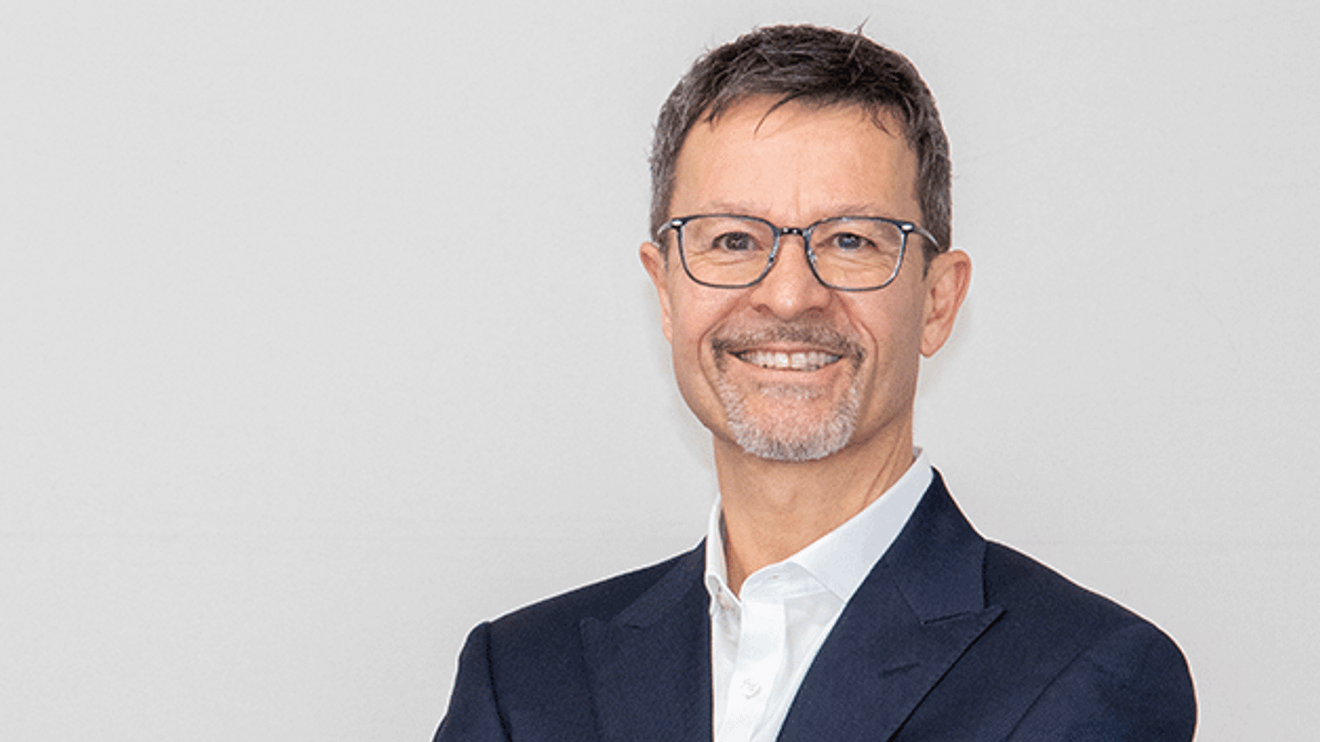
You founded the German Robotics Association. Can it be seen as an alternative to the VDMA Robotics + Automation Association and the IFR?
Helmut Schmid: The German Robotics Association is not a competitor to the existing associations, but rather a supplement or expansion of their offerings. In recent years, a complete ecosystem of start-up companies has emerged around cobots, which also appeal to a new clientele, including craft businesses. This is precisely the clientele we want to address with our association - small businesses with up to 100 employees that are generally at home in local networks. In other words, they do not attend large trade fairs and events, are not active in any large associations, but maintain contact with regular business meetings, chambers of industry and commerce and associations. We want to offer these companies a point of contact.
So a cobot association?
Schmid: We actually toyed with the idea of founding a cobot association. But then we decided on Deutscher Robotik Verband, because a small company doesn't necessarily need a cobot. There are companies with up to 30 employees that have a lot of manual routine tasks and high-speed applications. This is exactly where an industrial robot would be the right choice. Or in the logistics sector, for example, where I need a robot on an AGV, a mobile platform. Companies don't necessarily need a cobot, but clever systems with appropriate peripherals. We see ourselves as a service or information platform.
What does the idea of a service platform look like in reality?
Schmid: We at DRV are also a start-up. This means that we are in a very similar situation to many other companies: we have to think about the needs of the market. We want to address SMEs and craft businesses, whose main needs are service, information and exchange. And that's what we want to offer. We want to offer a platform with different specialist areas: Application technology, promotion, training and new technologies. There are suitable contacts in these specialist areas. For example, an SME can find out specifically how to obtain favorable funding. Or a university has funding in the area of training and would like to test and implement the technology in the company; we bring university and SME together. As already mentioned, these companies do not attend large trade fairs, we want to offer them local events, fireside chats, breakfasts, seminars and webinars among their peers. We see this as a service network: an exchange at eye level.
How can I imagine this, will you be organizing small local trade fairs?
Schmid: One of our ideas would be to organize relatively small, regional events. The IHKs would naturally be a good partner for this. We want to be open as a platform, so we can certainly imagine working together with other associations; I'm thinking in particular of the topic of artificial intelligence. The actual exchange between people on site is important and that's where the network, the trade fairs, are sorely lacking. Despite all the euphoria about digitalization, I believe that hands-on experience is very important for our industry. You have to feel robotics, you have to experience it, you have to touch it.
Finally holding a product in your hand again...
Schmid: Exactly! If I can't show a product, I can hardly convince anyone. I can convey a lot with slides and videos, but if I put the tool in someone's hand, if I take them by the hand, lead them to a robot and let them do it themselves, that's something completely different.
Norms and standards as limiting factors?
Which robotics applications do you see the greatest potential in SMEs?
Schmid: Many SMEs still believe that robotics is expensive, complicated and difficult to implement. They don't get to grips with the subject of robotics and there is a huge gap in their knowledge of what I can automate. Why do I say that? German SMEs are among the world market leaders in mechanical engineering, they develop the most amazing, highly automated machines. But everything that happens before, after or next to the machine is usually done manually, i.e. loading and unloading the machine, packing, palletizing and depalletizing products. These tasks and also typical sorting and handling activities are the main starting points, and this is where I can automate quickly and easily with robot technology. Here I also have a quick return on investment and companies can see that it can actually be implemented quickly and easily. Today, there are many market players that offer excellent solutions in the low-cost and easy programming sector. Difficult and complicated is no longer the case.
Norms and standards play a major role in German industry, to what extent are they limiting factors in the use of robots?
Schmid: Yes, we Germans are in love with norms and standards... (laughs) That can actually be a hurdle, although I would like to emphasize that safety is important! People work with, on and next to machines, so there is definitely a need for clarification here. The problem here is how the standards are to be interpreted. Large corporations are well equipped here, but for SMEs that do not yet use robots, standards are a challenge. Many do not know how to interpret standards correctly. It makes a difference whether I'm handling knives or handkerchiefs, because I need a different interpretation of the safety regulation for each. This is exactly what we need to work towards: that companies know how to interpret and interpret a standard, but do not question it.
What will your involvement in the area of standards and standardization look like?
Schmid: The VDMA is one of the main drivers of the standards committees, the employers' liability insurance associations are also part of it and we would also like to get involved. I believe that the standards situation should be simplified - not in terms of interpretation, but in the context of certification and risk assessment. This is where we want to get involved: Small companies have different concerns than large companies, so we are trying to pull together with the others.
Skills shortage due to demographic change
Where do you see robotics in Germany in 2025 and 2030?
Schmid: The year 2030 is roughly the time frame in which the majority of baby boomers will retire. Due to demographic change, there will be a shortage of between 3 and 6 million workers in Germany. If Germany wants and needs to continue to be a technology driver, we can only fill this gap with automation and robotics. This will be the case in a wide range of segments, from service robotics, hospitals and restaurants to industry, logistics centers and agricultural technology. In other words: In 2030, robots per se will play a dominant role in the appearance of industry, trade, commerce and the service sector. It will be impossible to imagine Germany as a business location without robotics. I take a critical view of all the doomsaying about 'robots destroying jobs', because demographic change means we will be short of workers and we won't be able to solve the problem without robotics.
Germany in particular has many fantastic start-ups and hidden champions in the robotics sector. Their technologies must now be driven forward and brought to market in the next two to four years, by 2025 at the latest. Because it is precisely these technologies that will help us to cope with demographic change and the shortage of skilled workers in 2030. In my opinion, however, robots will always be a support and not a replacement. Humans will do what they can do - make decisions, be creative - because we humans are simply better at that than robots.


You might also be interested in
Live discussion - register now!
Robot integration made easy!
'We are so small, there is no potential for robot automation here', 'Robotics is expensive, complicated and difficult to implement'. What is the truth behind these prejudices? The round table 'The robot as colleague' gets to the bottom of this.
 read more...
Automation potential is increasing
According to a study, the automation potential of human labor is constantly increasing. The potential is increasing, especially for skilled labor.
read more...Helmut Schmid takes over management
Cobot expert and DRV founder Helmut Schmid is the new Managing Director of cobot company Franka Emika.
read more...ENG ***** KOPIE *****New Executive Board appointed
Andrea Alboni, Martin Kullmann and Alexander Mühlens have been newly appointed to the VDMA Robotics Board.
read more...New Management Board appointed
Andrea Alboni, Martin Kullmann and Alexander Mühlens have been newly appointed to the VDMA Robotics Board.
read more...***** ENG ***** Autonomous mobile robots in the portfolio
Baumüller announces the cooperation with Sesto Robotics from Singapore. The company is thus strengthening its systems and solutions business via Baumüller Anlagen-Systemtechnik with autonomous mobile robots (AMR) for the agile manufacturing of the...
read more...Autonomous mobile robots in the portfolio
Baumüller announces its cooperation with Sesto Robotics from Singapore. The company is thus strengthening its systems and solutions business via Baumüller Anlagen-Systemtechnik with autonomous mobile robots (AMR) for the agile manufacturing of the...
read more...Inserts from rough to sterile
Stäubli is launching three new six-axis models for the medium payload range. The TX2-140, TX2-160 and TX2-160L models complete the TX2 generation.
read more...Goodbye lines of code!
Fuzzy Logic Robotics is announcing the first version of the Fuzzy Studio software platform for the Hannover Messe 2021 - a product designed to enable robots to be used more flexibly in production.
read more...