
Fraunhofer IPA
Low code for service robots
Launched in 2017, the SeRoNet project aims to significantly simplify the design, development and use of service robots. With 'xito.one', an open IT platform is currently being created for users, solution providers, robotics and component manufacturers.
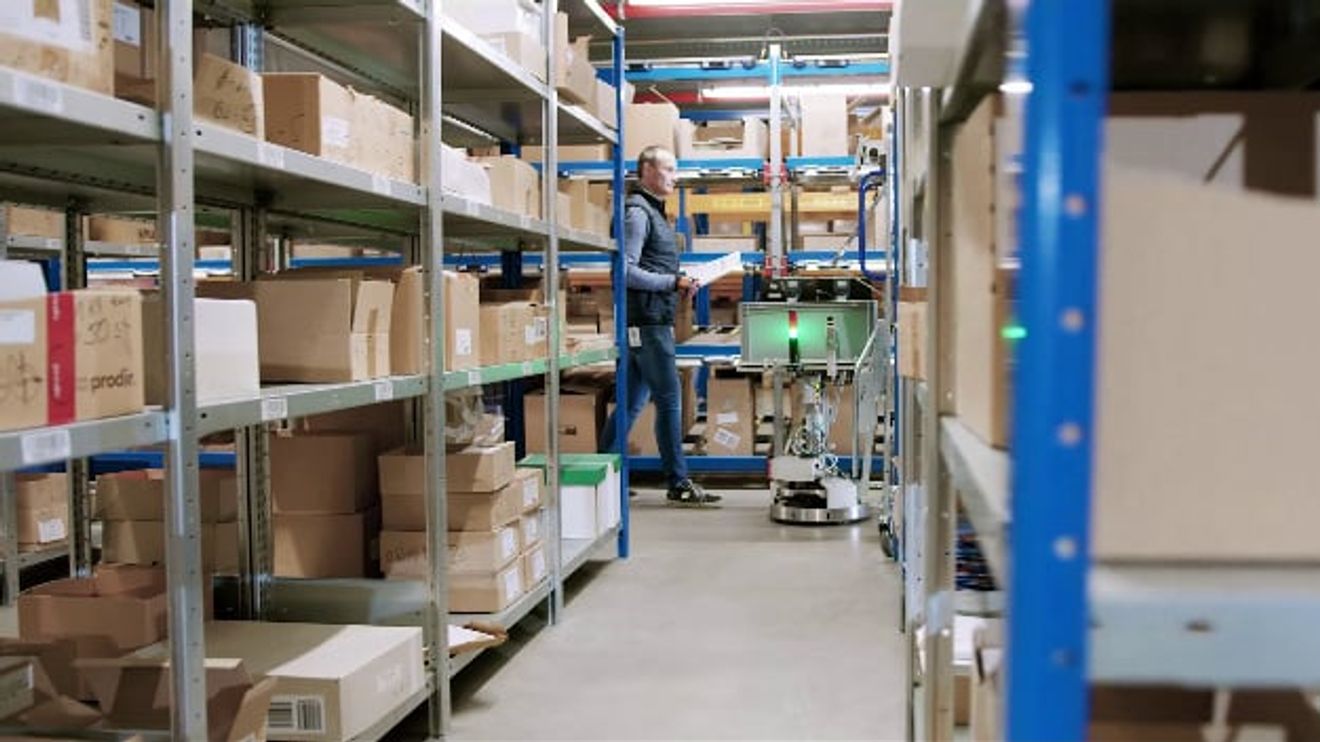
With the open IT platform 'xito.one', users can jointly develop applications and mediate between manufacturers, service providers and customers according to their individual requirements, explains project manager Dr. Björn Kahl from Fraunhofer IPA. The platform will create an ecosystem for the development of robot systems that makes reusable components for professional service robotics applications easily accessible and shows which providers and components are available on the market. 'xito.one' currently offers over 40 components.
"With SeRoNet, the software development effort in professional service robotics can be significantly reduced. For example, the project has successfully implemented an order picking solution in pharmaceutical logistics in which items of various shapes and sizes are picked automatically," explains Dr. Werner Kraus, Head of the Robot and Assistance Systems department at Fraunhofer IPA. "SeRoNet is currently focusing on sophisticated intralogistics solutions in a wide range of industries. Other examples include machine loading with mobile robots at a plastic injection molding manufacturer or a material flow solution at an automotive supplier."
The SeRoNet consortium is made up of five research institutions, one system integrator, three end users and one robot manufacturer. Together, the project partners are pursuing the goal of making service robotics in Germany globally competitive in the future. "In the project, we have carried out market analyses that show a considerable need for easy-to-implement robot solutions. SeRoNet addresses precisely this need with its tools for the efficient implementation of robot systems - from the initial application idea through to commissioning," explains Kraus. The online platform 'xito.one' created in the project brings users and solution providers together in an uncomplicated way and simplifies the entire project process from the initial inquiry to the specification and implementation with a modular system through to the delivery of a robot solution thanks to target group-specific online tools.


You might also be interested in
The Low Code Association
The Low Code Association e.V. has now been founded in Berlin by low-code and no-code platform providers. The new association has set itself the goal of promoting the spread of modern low-code technologies in German-speaking countries and...
 read more...
Improved safety for service robots
In the S³ research project, researchers at Fraunhofer IPA and their project partners have developed safety technologies and recognition algorithms for service robots. They were tested on the Care-O-bot 4 service robot in a nursing home application.
read more...Sensors from the printer
Together with the Baden-Württemberg companies Arburg and Balluff, Fraunhofer IPA has achieved a breakthrough in the 3D printing of customized sensors.
read more...More intelligent in a swarm
Why do fish swim in shoals, birds fly in flocks or bees in swarms? Because they are more intelligent and efficient together. This also applies to swarm robotics - decentralized, self-organizing systems.
read more...Disinfection robot acts independently
In order to contain the spread of the coronavirus, the Stuttgart-based Fraunhofer IPA has developed a prototype of a mobile cleaning and disinfection robot that autonomously travels to potentially contaminated objects such as door handles and...
read more...Gripper for multi-variant production
Adapting grippers quickly and cost-effectively to changing products is made possible by a new process developed by Fraunhofer IPA.
read more...Robots learn to assemble thanks to AI
Flexible robot programming for assembly tasks is still complex. The aim of the 'Rob-akademi' research project is to improve this.
read more...What is behind the SeRoNet project
Developing robot solutions and, in particular, service robots more efficiently and bringing them to market - this is the goal behind the online brokerage platform robot.one, which is being developed as part of the joint project SeRoNet.
read more...Robotics Institute Germany co-founded
Fraunhofer IPA is a co-founder of the Robotics Institute Germany, which aims to bundle Germany's cutting-edge research into AI-based robotics.
read more...