
Cloud technologies
The GAIA-X project
GAIA-X has been launched! That was the message at the digital summit in Dortmund on October 29. The aim of this major digital project is to establish a European cloud for the secure digitalization and networking of industry.
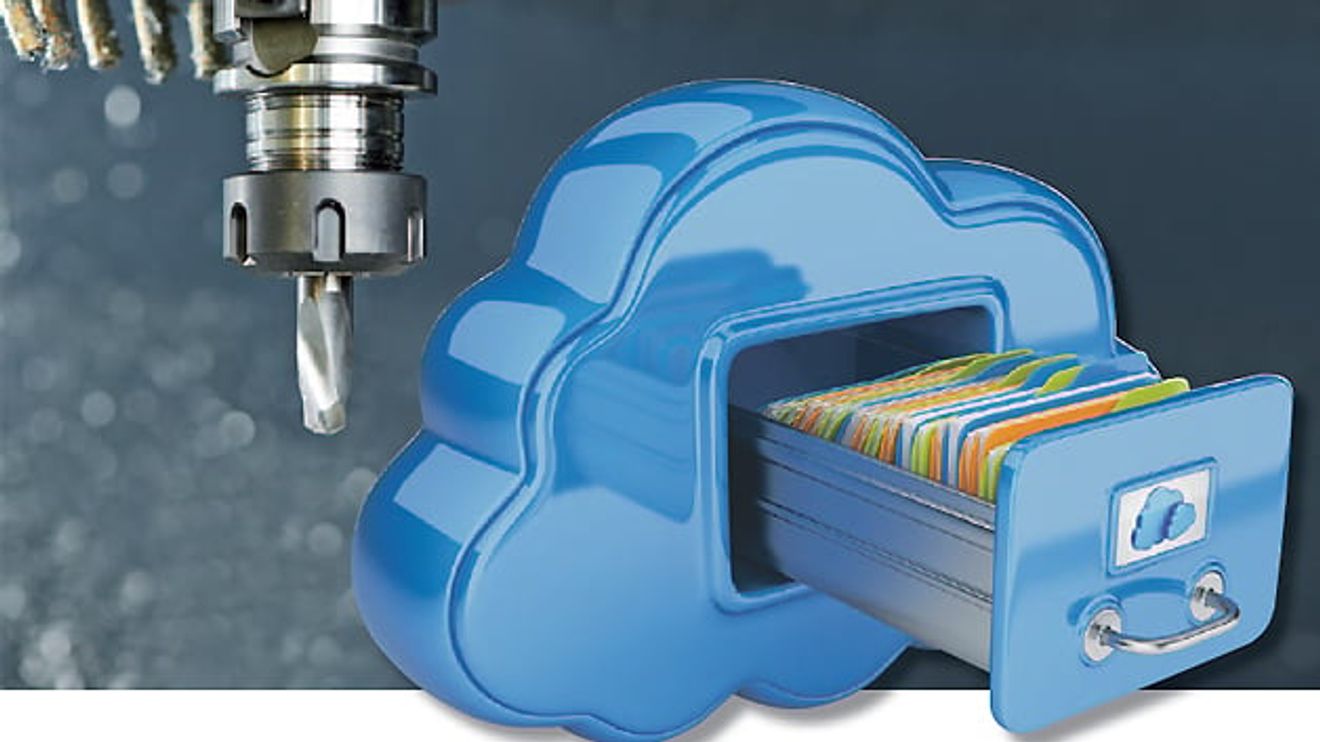
What is behind GAIA-X? Representatives of the German federal government, business and science want to create the next generation of a data infrastructure for Europe together with other European partners: A secure and networked data infrastructure that meets the highest standards of digital sovereignty and promotes innovation. The project serves as the cradle of an open and transparent digital ecosystem in which data and services can be made available, brought together and shared with confidence. - This is the claim of the project formulated by the Federal Ministry for Economic Affairs and Energy.
The aim is to network decentralized infrastructure services into a homogeneous, user-friendly system. The resulting data infrastructure is intended to strengthen both the digital sovereignty of cloud service customers and the scalability and competitive position of European cloud providers.
But can such a project really create a cloud infrastructure that can stand up to the established cloud platforms of market-dominating providers such as Amazon, Microsoft and Google? At first glance, GAIA-X gives the impression of a bureaucratic, politically motivated research monster.
The preparatory work
On closer inspection, however, a long-term and down-to-earth structure of the project becomes apparent. It is not only the Association of the Internet Industry eco with its more than 1100 member companies that supports the GAIA-X endeavors. But what counts at least as much: Both the Industry 4.0 platform and the International Data Spaces Association have already done important groundwork. For example, the International Data Spaces Association already offers a reference architecture supported by over 100 partners that enables an ecosystem for the sovereign exchange of data with clearly defined usage rights and thus describes a component of the networked, open data infrastructure that GAIA-X is striving for. The reference architecture defines a technical infrastructure and a semantic set of rules for the exchange and use of data in ecosystems. Technically, a software component, the IDS Connector, prevents or allows data links and analyses between different members of an ecosystem. This allows existing and new cloud services to be embedded in an interoperable digital economy while maintaining data sovereignty.
The implementation
The first companies have already adopted the GAIA-X spirit and are acting accordingly. A striking example: the Friedhelm Loh Group. The owner and CEO Prof. Dr. Friedhelm Loh himself is one of the key players who helped bring this major project to life. Together with the companies Rittal, German Edge Cloud and IoTOS from his own group of companies, he is driving the GAIA-X idea forward.
Together with Bosch Connected Industry, the three Friedhelm Loh companies presented the scalable edge cloud solution Oncite on October 16. The aim is to enable customers to better convert existing production data into digital added value. The real-time-capable solution is based on a scalable edge cloud data center that is located on site at the user's factory. The data is therefore collected, stored, processed and analyzed close to the time and location. By keeping all collected data on site, the user retains full control and decides for themselves whether and how to transfer the processed data to other digital production platforms of OEMs or top tier suppliers. Data storage and the exchange of production-relevant information with customers and suppliers can take place via IoT platforms such as SupplyOn or Mindsphere from Siemens while maintaining data sovereignty.


You might also be interested in
Digital sovereignty at risk
Microsoft has signaled to the federal administration that the company's central software products for public administration will only be usable as cloud software from 2025. The government must take action if it does not want to jeopardize its goals...
 read more...
A first Gaia-X solution
Hewlett Packard Enterprise is now announcing solutions to help companies use Gaia-X. The focus is on a framework, a marketplace and services.
read more...2021 will determine the success of the "moon mission"
The GAIA-X project, originally initiated by Germany and France, aims to create a powerful and secure data infrastructure for Europe. Marc Schieder, CIO of Dracoon, comments on the status quo of the project in his statement.
read more...The NRW data marketplace
A transparent IoT data room for the digital economy in North Rhine-Westphalia aims to provide industrial companies with the right data at the right time with confidence and integrity. - Consortium partners are still being sought.
read more...A European data ecosystem
In June, the French and German economy ministers presented the GAIA-X data initiative. What is behind the GAIA-X concept? What are the plans and tasks of the associated foundation? - The European data initiative from the perspective of an automation...
read more...Start of the user group
The large-scale European digital project GAIA-X was launched on October 29 last year. The project is now becoming an organization with legal capacity to act.
read more...An 'all-in-one' solution
Three companies from the Friedhelm Loh Group are now launching a scalable edge cloud solution on the market together with Bosch Connected Industry. The aim is to enable customers to better convert existing production data into digital added value.
read more...Data security solutions no longer sufficient
According to a recent study, a majority of companies believe that their current data security solutions will not be sufficient for the future. Action is needed now, as data loss costs companies almost 900,000 euros per year.
read more...International Federation of Robotics
The three top trends in industrial robotics
According to the IFR, two million new robots will be installed in production facilities worldwide by 2022. Three trends stand out in particular.
read more...