
embedded world Conference 2020
Embedded intelligence, the second
The embedded world Conference and the electronic displays Conference will take place in Nuremberg from February 25 to 27, 2020. The motto is "Connecting Embedded Intelligence" - reflecting the main development trend in the industry.
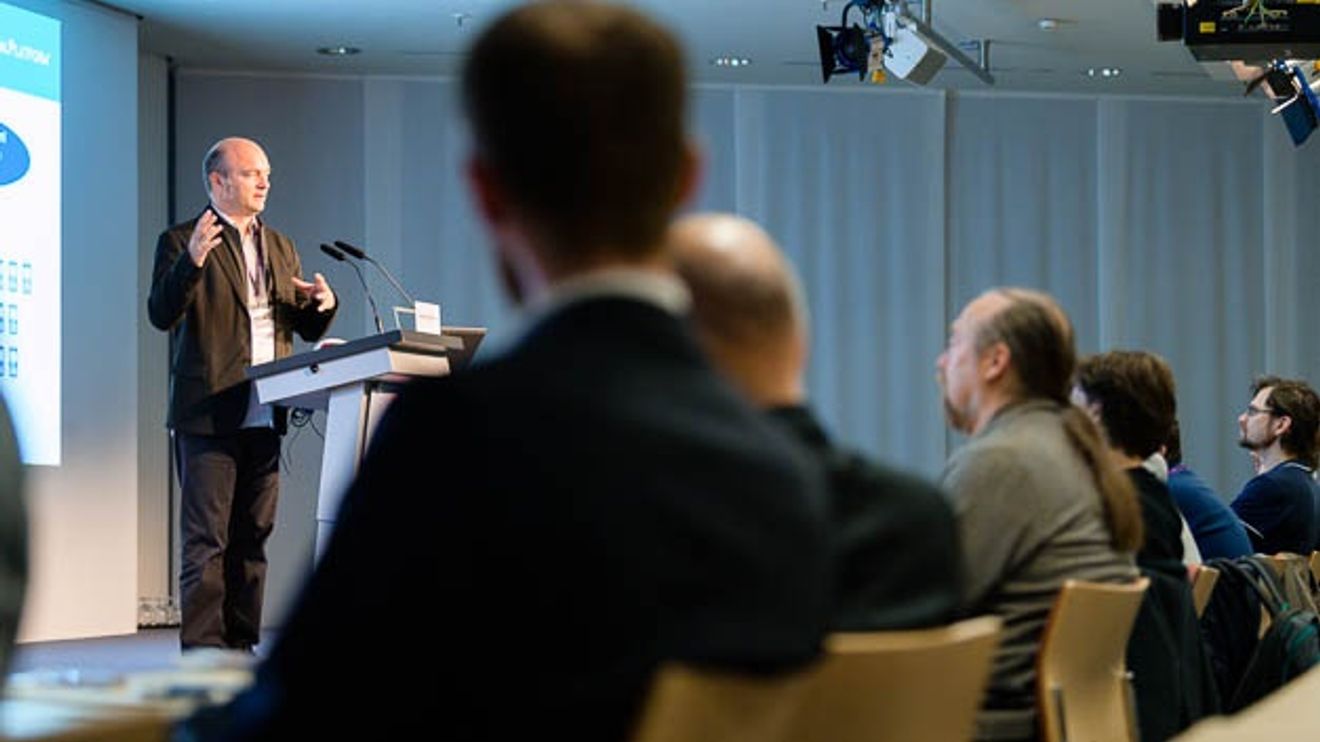
The motto of this year's embedded world conference is: Connecting Embedded Intelligence. The conference is thus taking up the theme from 2019 once again and expanding it to include connectivity. Artificial intelligence, machine learning and the convergence of these technologies with the IoT are key trends in the industry. The electronic displays conference addresses current topics relating to OLEDs, touch and much more.
Thanks to all-encompassing networking, huge amounts of data can now be collected, evaluated and analyzed in order to derive action strategies for the future. The extent to which data is processed on site and what is sent to the cloud - this area of conflict is one of the main topics of discussion at the conference.
But the "perennial topics" - topics that almost never lose their relevance - are also well represented at the conference: These include hardware and software engineering, which is caught between the conflicting priorities of cost pressure, innovation and quality and reliability. The "Internet of Things" has also become a permanent topic. No other topic has attracted so many submissions.
The 2019 program is divided into ten conference clusters:
- Internet of Things,
- Connected Systems,
- Embedded OS,
- Functional Safety & Security,
- Hardware,
- Software Engineering,
- Embedded Vision,
- Intelligent Systems,
- Embedded HMI & GUI and
- System-on-Chip.
The individual clusters are made up of sessions and classes. Sessions last one morning or afternoon and usually consist of half-hour presentations. Classes are limited to smaller groups and have the character of a training course: here, participants can focus intensively on one topic, often even with practical exercises on the computer or on microprocessor boards.
Topics in detail
The presentations in the topic clusters are highly topical and span the ten conference clusters:
In the "Internet of Things" track, the presentations are dedicated to topics relating to IoT platforms, trusted computing, databases for distributed applications and the discussion about cloud vs. edge vs. fog computing.
In the "Connected Systems" track, the presentations will focus on wireless and wired communication technologies. With single-pair Ethernet, the conference will address one of the latest developments. TSN, which has been around for some time, is also evolving and is now being used. In the wireless sector, after low-power wide-area networks (LPWAN), the focus will be on innovations relating to the new location-based functions of Bluetooth and cellular campus networks with 5G.
Embedded OS: In a basic session, the audience can learn how real-time operating systems work in the multi-core age. Other key topics include Linux, container technology, virtualization and how the operating system can help to ensure the security of systems.
A total of three classes on operating system topics round off the program.
Functional Safety & Security: Functional safety on the one hand and protection against attacks on the system on the other are essential requirements for many embedded systems. The presentations will deal with architecture developments for systems with critical and non-critical functional parts, as well as with current revisions of the leading safety standards. Especially in the age of neural networks in the context of functional safety, this is a very exciting question. Another focus is the security of microcontroller systems - both against attacks and against product piracy. Current developments in the field of quantum computers raise the fundamental question of whether and how an open embedded system with a long service life can be protected against hacker attacks.
The presentations in the "Hardware" track are just as diverse as the hardware itself: The topics range from flash memories and their reliability to the still lively topics of energy supply - with and without combination with data transmission - and RISC-V architecture, which is being implemented in more and more chips. Interesting application examples round off the picture.
Software engineering: The quality, reliability and security of embedded systems are playing an increasingly important role due to the penetration of software into more and more critical applications. This is ensured by numerous, targeted measures that cover the entire area of developing secure and reliable systems. Of decisive importance here is the design of the development process, from the recording and documentation of requirements to the modeling of the system and the detection of errors through powerful analyses and tests. All these important aspects will be addressed during the conference. A whole day will be dedicated to the programming phase, focusing in particular on coding standards such as MISRA, which have been developed specifically to ensure software quality.
Embedded vision: Through integration and miniaturization, image sensors and image processing hardware are merging into ever more compact systems. The presentations, which were compiled in cooperation with the VDMA, show that these systems play a particularly important role in machine learning.
Intelligent systems: In the near future, we will increasingly encounter technical systems that not only act programmatically, calculated in a completely predictable context, but also behave situationally. This means that there will be automated decision-making in situations that have not been simulated beforehand. This track will discuss current development trends and architectures in embedded systems (e.g. AI on FPGAs) as well as heterogeneous solutions with high-performance cloud connections.
Embedded HMI & GUI: Embedded systems are also being offered with increasingly complex graphical user interfaces. However, software developers are sometimes not the best designers for a user-friendly interface. This session bridges the gap.
The "System-on-Chip" track covers many hardware and design aspects for programmable FPGAs and hard-wired ICs. From design, architectures and verification to the supply chain - the SoC sessions cover all aspects.
Strong partners
To ensure the relevance and topicality of the lecture programme, the embedded world Steering Board is working together with leading organizations in the embedded industry. The embedded word Conference 2020 is supported by contributions from:
- VDMA (German Engineering Federation),
- MISRA (Motor Industry Software Reliability Association),
- prpl Foundation,
- RISC-V Foundation,
- Bluetooth SIG and
- Trusted Computing Group (TCG).
"The embedded world Conference has developed into the largest and most important application-oriented event for embedded systems. This is impressively underlined in 2020 by a lecture program that is unique in its breadth and depth with 267 contributions from international experts in 48 sessions and 14 classes," comments Prof. Axel Sikora from Offenburg University of Applied Sciences and Chairman of the embedded world Conference. "In particular, the topics relating to embedded intelligence, possible architectures and solutions and the associated challenges will play a central role this year. But the technical tracks of the classic topics will also be intensively developed," adds Sikora.
The program with the presentation abstracts and information on the speakers is now available online at www.embedded-world.eu. Interested parties can also register directly online for the conference there.
electronic Displays Conference: Program expanded
Just like the embedded world Conference, the electronic Displays Conference can look back on a success story. In 2020, it has the most extensive program ever, with three parallel lecture strands for the first time.
"The electronic displays Conference is the most important European B2B platform for display technologies. It is the central dialog and industry platform and stands for top-class know-how from experts for experts. The special feature of the conference is the exchange of information at a high professional level. Innovations are presented here and new projects are put on track," explains Prof. Dr. Karlheinz Blankenbach, Pforzheim University of Applied Sciences and Chairman of the Conference Advisory Board. "We have once again received many excellent submissions of top-class presentations for the electronic Displays Conference 2020. We are very pleased with this great commitment from the display industry to our conference," Blankenbach continues. On February 26 and 27, 2020, developers, scientists and users of electronic displays will once again find out about the latest display technologies such as LCD, touch, optical bonding, display systems and the promising HDR technology.
All information on the conference program of the electronic displays Conference 2020 as well as a registration option can be found at: www.electronic-displays.de


You might also be interested in
Visualization system functionally expandable via app
Siemens presents a system for operating and monitoring: The web-based visualization system consists of the Simatic WinCC Unified visualization software and the Simatic HMI Unified Comfort Panels HMI operating devices.
 read more...
Embedded vision system with numerous interfaces
Vision Components is launching a new generation of embedded vision systems, including one with an integrated quad-core Qualcomm Snapdragon 410 processor clocked at 1.2 GHz.
read more...Power via 8th generation Intel CPUs
For complex software and ever more data, Compmall offers the hardware with the GH-1000 embedded PC with whiskey-lake power.
read more...The knowledge hub of the embedded community
The embedded systems industry will meet from March 11 to 13. In seven exhibition halls, exhibitors in Nuremberg will provide information on hardware, software, services and tools. Two accompanying conferences, expert panels and exhibitor forums will...
read more...Customized Single Board Computer
Helbling has developed a flexible embedded vision platform based on an ARM processor that can be used as a reference design for the development of customized single board computers (SBC).
read more...Secure embedded PC for industrial applications
According to the manufacturer, the 'ReliaCOR 54-13' embedded PC from Inonet is one of the first embedded computers made in Germany to be certified for AI applications in accordance with IEC 62443-4-2. It therefore meets the requirements of...
read more...Operation via touch, glove, pen or digitizer
Getac launches the next generation of 'F110' and 'K120' tablets: The new F110 is suitable for use in a variety of harsh outdoor and indoor scenarios.
read more...IPC for IIoT gateway
The compact and energy-efficient industrial PC 'DA-1200' from Cincoze is suitable for IIoT gateways in modern industrial applications.
read more...Two new surface-mounted keyboards
Wöhr is expanding its 'Surta' industrial keyboards with versions 15 and 16, which have been specially developed for environments such as medical and dental areas, the pharmaceutical, clean room and food industries, as well as general industry and...
read more...