
PwC
Is the AR/VR boom coming?
To date, augmented and virtual reality technologies have tended to lead a niche existence for gamers and film fans. According to the latest PwC analysis, this is set to change dramatically over the next ten years.
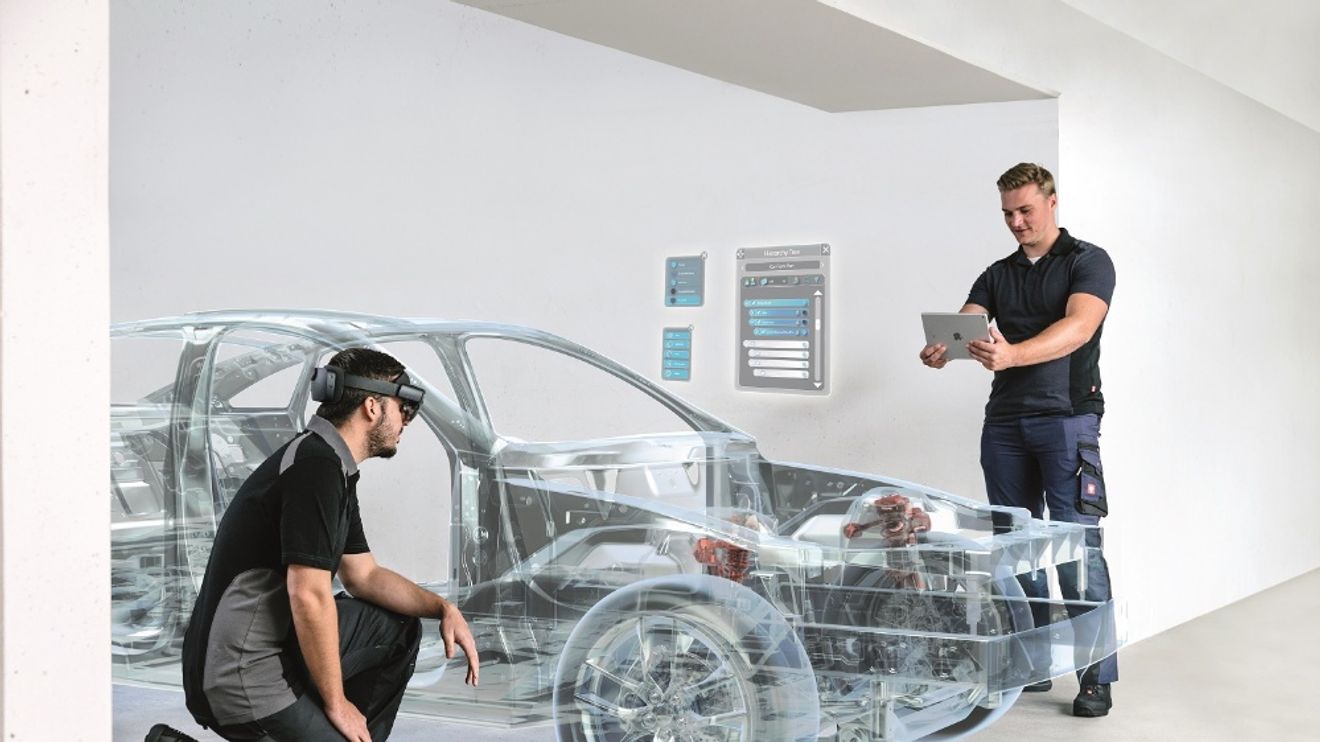
By 2030, products and services based on virtual and augmented reality could contribute 1.5 trillion US dollars to the global economy. For Germany, the PwC experts estimate a potential of 103.6 billion US dollars. This corresponds to an increase in GDP of 2.5%.
"From the healthcare sector to manufacturing, retail and the consumer goods industry, all industries will benefit from virtual and augmented reality. This is because VR and AR technologies are not only well suited to making processes and workflows more efficient, but also the way people work together," comments Werner Ballhaus, Head of Technology, Media and Telecommunications at PwC Germany.
23 million jobs influenced by AR/VR
The analysis shows that VR and AR technologies will also have a significant impact on employment: Currently, around 824,000 jobs worldwide are directly influenced by VR and AR. By 2030, the number of people working with AR/VR could increase to 23.4 million. In Germany, every 100th employee, a total of around 400,000 people, would then come into contact with this innovative technology in the workplace; today there are already 15,000.
"Companies, the economy and society are at a decisive point in the use of virtual and augmented reality. The technology and hardware have finally matured. VR and AR can now unleash their potential and not only boost the economy, but also revolutionize the way organizations work: Processes run more efficiently, employees can train themselves more effectively," says Ballhaus.
The following areas and sectors will benefit particularly strongly:
- Thanks to AR and VR technologies, the development of products and services is made easier, contributing an additional 359 billion US dollars to global GDP. AR and VR enable companies to work together in virtual environments - which saves a lot of time and money.
- In the global healthcare sector, AR and VR technologies will generate an increase in GDP of 351 billion US dollars, according to the analysis. Virtual reality is already being used in the training of doctors to allow them to participate in operations up close without having to be in the operating room themselves.
- The use of augmented and virtual reality in training and development will contribute around 294 billion US dollars to global GDP. With AR and VR, for example, very realistic training scenarios can be recreated without any risks.
- VR and AR offer the opportunity to improve the efficiency, productivity and accuracy of employees and processes. PwC experts estimate the potential in this area at around 275 billion US dollars by 2030. For example, engineers can use an AR interface to obtain information in real time in order to quickly identify problems and carry out repairs quickly.
- Many people have already come into contact with virtual and augmented reality in the gaming sector. The technology also offers great potential in retail, for example in the form of virtual fitting rooms or applications that allow users to see what a piece of furniture would look like in their home before they buy it. VR/AR applications represent a potential of 204 billion US dollars for the entire retail and consumer goods industry.
Tackle pilot projects now
"Companies should give high priority to the development of VR and AR technologies," says Ballhaus. In his view, it makes sense to focus on solving business-critical problems, such as improving security, reducing costs or speeding up product development. "Companies should start with a pilot project as quickly as possible and then continue to explore the potential step by step," summarizes PwC expert Werner Ballhaus.


You might also be interested in
The 5 biggest mistakes when introducing virtual reality
The timing for the introduction of virtual reality in companies is favorable: the world of work demands new forms of location-independent collaboration. However, companies should avoid five key mistakes.
 read more...
From fantasy to reality
The XR industry - VR (Virtual Reality), AR (Augmented Reality) and MR (Mixed Reality) - will usher in a new Moore's Law, Philip Song from Huawei is certain of this. He explained what he means by this at the Mobile World Congress in Barcelona.
read more...Spatial Computing - The Status Quo!
The term spatial computing dates back to 2003 and stands for the interaction between man and machine. The technologies virtual reality, augmented reality and mixed reality in particular stand for this term. Is spatial computing revolutionizing the...
read more...Change in the Stemmer Imaging Management Board
There have been changes to the Management Board of image processing technology provider Stemmer Imaging: one new member has been appointed and one is leaving the board.
read more...Hands off the big players?
Many companies are in the process of developing their own IoT solutions. Around 60% are bringing external partners on board. Michael Breidenbrücker, CEO at Senseforce, appeals to SMEs in particular not to rely on the large IT service providers.
read more...AI follows its own rules
At the end of last year, Google put the icing on the cake of the advancing development of artificial intelligence with its quantum supremacy test. America and China are engaged in an AI race. What role does Germany and Industry 4.0 play in this?
read more...Visualization via app
With the "industrialPhysics App" from Machineering, which is available via iTunes, simulation models created on the desktop can also be transferred to handheld devices.
read more...Augmented reality for the "little man"
Augmented reality can be used to optimize products and processes, but its use requires a high level of expert knowledge. The AcRoSS research project proposes a platform concept that also enables smaller companies to use AR applications for...
read more...The Glass@Service project
A consortium of six companies and institutions led by Siemens has spent the last three years researching augmented reality (AR) in industry. - The results of the Glass@Service project.
read more...