
PTC
Spatial Computing - The Status Quo!
The term spatial computing dates back to 2003 and stands for the interaction between man and machine. The technologies virtual reality, augmented reality and mixed reality in particular stand for this term. Is spatial computing revolutionizing the industry?
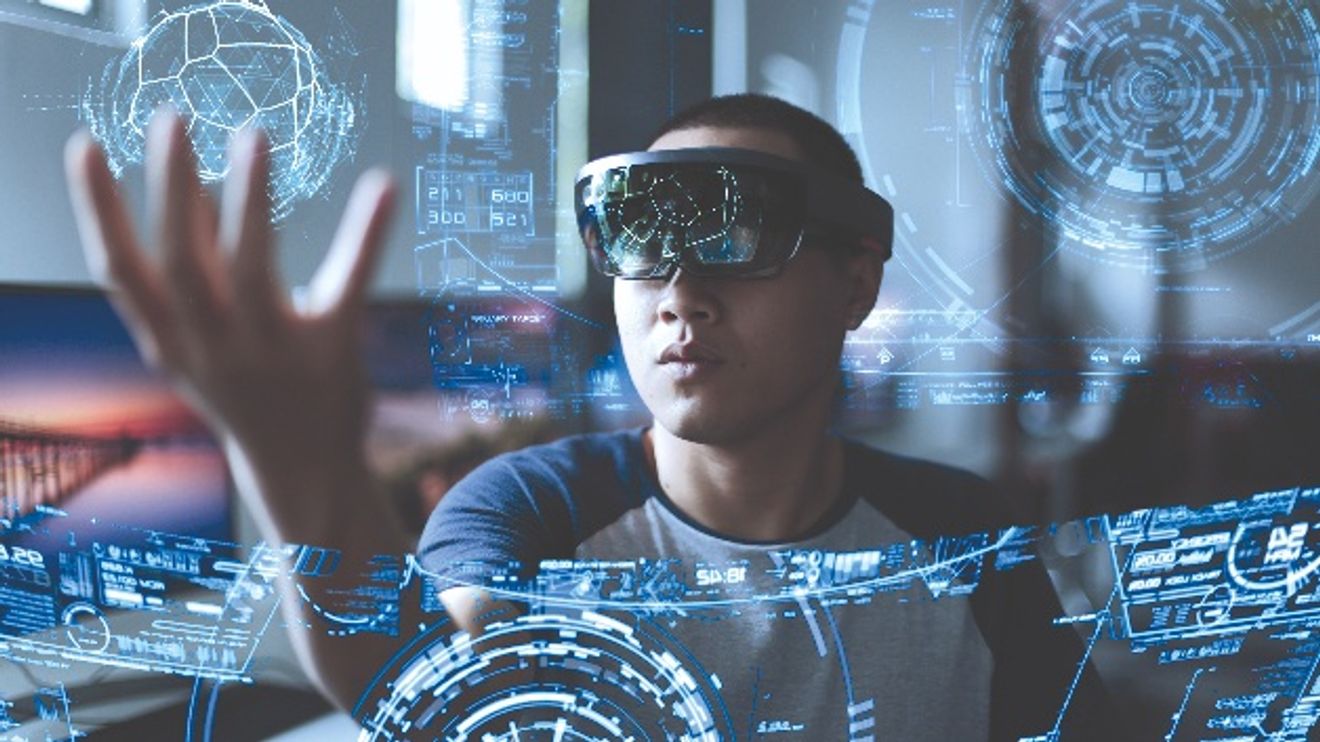
The idea of viewing physical space as an integral part of computer-supported worlds of experience is something we encounter in many places in the consumer environment - albeit often without us being aware of it. Be it the Uber cab whose arrival we track via an app, the robotic lawnmower waiting in pole position for its turn or the display showing the arrival of the next subway train: wherever movement sequences can be optimized, spatial computing is there to help. This is also the case in the broad field of navigation: although we reveal our position with Google Maps, we are shown the ideal route to our destination - despite all the traffic jams.
In the professional environment, spatial computing is invaluable for goods or food delivery services. How else would the delivery person get to the food I ordered in the restaurant in my neighborhood as quickly as possible and from there to my delivery address? Spatial computing also has considerable potential in the B2B environment, for example in factory planning. However, while it is still relatively easy to calculate an optimized route from A to B in road traffic, because in principle there are only the options left, right and straight ahead, in a factory you are confronted with much more complex routes. The spatial extent of a factory must be recorded much more precisely and the software must include significantly more options, including danger zones and ramps. Spatial computing has also earned its merits in intra- and outbound logistics: the product groups most in demand are arranged in a warehouse in such a way that they can be transported away as quickly as possible.
Merging digital and real
Creative developers are currently taking spatial computing to the next level in the field of industrial applications. The clever combination of leading-edge technologies such as augmented reality (AR), the Industrial Internet of Things (IIoT), machine learning and sensor technology allows manufacturing processes to be further optimized and their design and operation to be massively simplified. Detailed knowledge of every process step, no matter how short, reveals new insights and opens the door to more efficient and faster work, saving time and energy.
Increase data quality sustainably
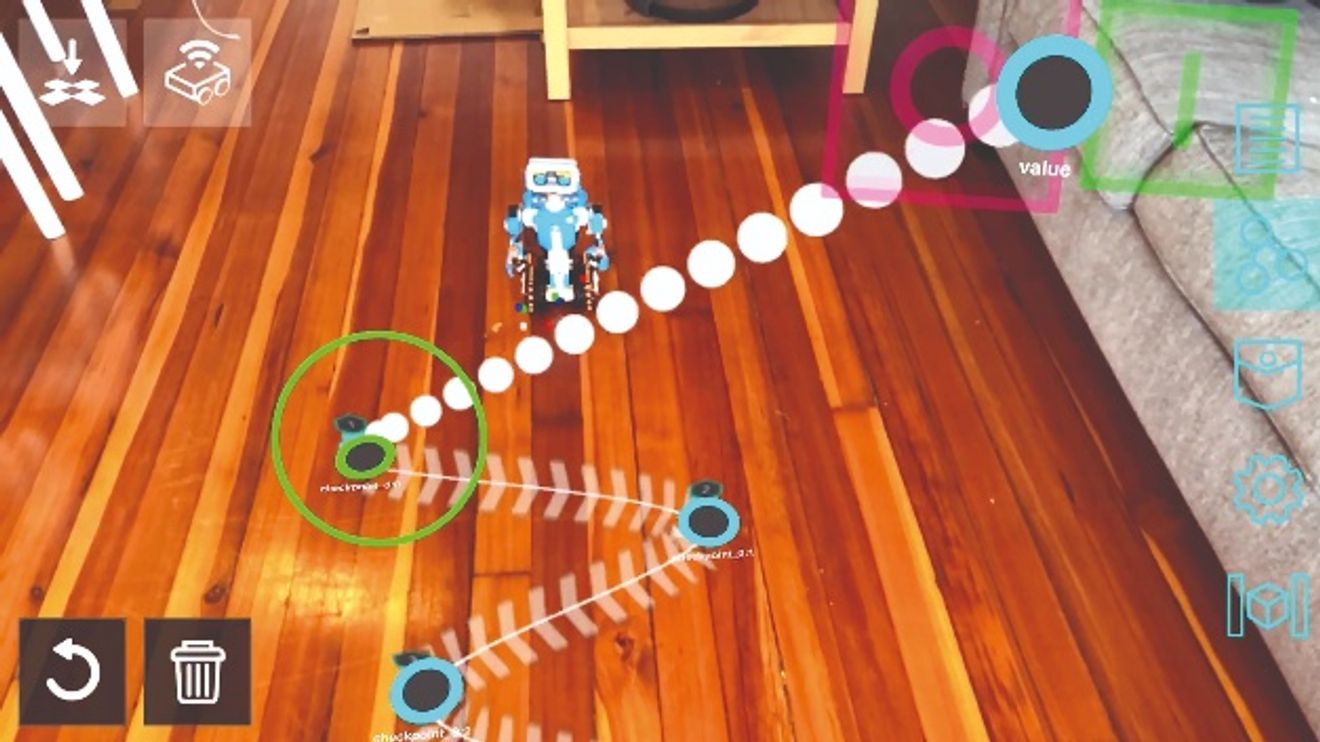
With the advent of IIoT, the use of machining centers on the factory floor has been optimized on the basis of MES concepts. As part of the introduction of the Manufacturing Execution System (MES, also known as process-oriented detailed production planning), the monitoring of individual production cells was centralized, several machines were monitored in parallel and their cycles were coordinated. Now the increasingly demanding activities of the workers need to be synchronized more precisely with the machine sequences. Spatial computing makes it possible to visualize process instructions with a clear spatial reference and thus make them easier to understand. For example, when programming industrial robots. Until now, these have been laboriously programmed via 2D interfaces (teach-in).
Understanding this complicated programming environment requires lengthy training. Spatial computing, however, significantly reduces the level of abstraction of the teach-in. Instructions can be intuitively linked to the physical action space of the robot via an interface. For example, by giving the robot a direction with an arm movement or placing waypoints with a smartphone.
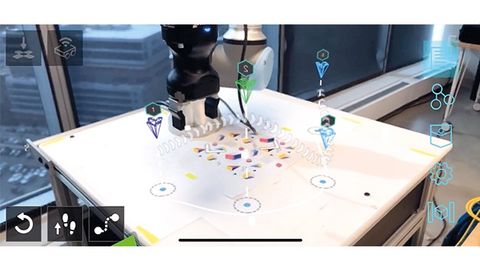
If several machines and robots then have to be linked together, the advantage of spatial computing becomes even more obvious: in a factory where large numbers of sensors are in operation, it is still necessary to inspect vast quantities of time series in drop-down menus on the desktop - it is a real challenge to maintain an overview due to the different data structures. Spatial computing can show where an error has occurred on the store floor and an AR application can show the employee how to get there. This can significantly increase overall productivity and considerably reduce the frustration of individual workers due to unnecessary queries.
The digital twin is getting smarter
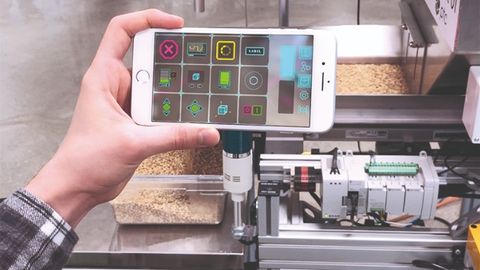
In addition to the machines, cameras can be used to track and evaluate the movements of materials, tools and workers. Whereas the actual routes taken by employees or goods were previously largely unknown, the entire production process, including assembly work, can now be precisely documented. This allows initiatives to be developed that make use of this knowledge. Spatial computing is thus further developing the digital twin of the factory. In future, not only will the processes in the machine be mapped in real time, but the digital twin of the worker can also be created: It will be possible to precisely record where a person is currently located, what they are doing and what skills they have. If, for example, it is known that a person can only lift 10 kg without harming their health, but is trying to lift twice that weight, the system automatically detects the conflict, warns the person concerned and requests assistance. This enables employers to better fulfill their duty of supervision.
Another remarkable aspect of spatial computing is its analytical capabilities: Via so-called spatial heat maps, companies gain insights into where workers are most frequently located during the workflow, where unexpected machine downtime occurs and which work routes are most frequented.
Spatially improved high-resolution cameras and machine learning have given rise to a completely new field of application. New camera technologies not only capture a 2D image, but also distance information. The most advanced method is based on the time-of-flight method: The time it takes for a beam of light to travel from the camera to the object and back again as a result of reflection is measured. The 3D images from several cameras can be linked together to create comprehensive real-time simulations of reality. AR applications can be projected onto these scenes.
Record processes over a longer period of time
The right to privacy is a major issue, currently once again brought into the spotlight by the GDPR. Since spatial computing also records people's movements, the protection of intimacy must be taken into account. The key issue here is which data is collected and how it is processed.
Currently, new processes are simulated in advance and then their duration is measured at the implementation site using a stopwatch. It has long been common practice to record the relevant data, for example in accordance with the specifications of the REFA Federal Association. On this basis, quantities are defined that are to be achieved per hour. The danger with this method, however, is that the measured times may unintentionally contain special effects: If a worker knows that they are being observed and their time is being logged, they are likely to exert themselves more and work faster. This does not take into account the fact that they may become tired and perform differently depending on their state of mind during the day. This is because only a short section under ideal conditions is mapped and converted into a target. If, on the other hand, longer stages are recorded with the help of spatial computing, a more realistic image is obtained. Spatial computing makes it possible to collect data much more precisely and thus better align the workplace and performance specifications with the worker's capabilities. Depending on guidelines and internal specifications, only de-personalized movement patterns are stored, but not video recordings in the sense of personal data.
A new era in the industry
Interlinked camera systems can be used to control entire production sites remotely. Interdisciplinary working groups can collaborate globally on the basis of the digital twin as if they were sitting together in one room - they can see themselves and move around in each other's virtual observation room.
PTC is investing in this technology, knowing full well that it is far from exhausted. For example, the company is making the Vuforia Spatial Toolbox available to the open source community so that they can develop their own programs and learn from each other. In addition to partners from industry, the system provider works closely with universities such as the Massachusetts Institute of Technology (MIT).
While spatial computing is already very successful in the e-commerce environment, further research and development is required for its effective use in industrial production. For example, PTC is intensifying its work on the Vuforia Spatial Toolbox in a lively exchange of knowledge with other protagonists in this field.


You might also be interested in
The accelerated transformation
Rockwell Automation has now presented its results for the fourth quarter and full financial year 2020. In terms of technology, the company is focusing on the further development of its own IIoT solution.
 read more...
Virtual reality in CAx applications
The VR PluraView from Schneider Digital is a passive virtual reality stereo monitor based on the supplier's '3D PluraView' monitor. Equipped with a tracking system, the monitor allows interaction with 3D stereo models and content across all axes.
read more...Is the AR/VR boom coming?
To date, augmented and virtual reality technologies have tended to lead a niche existence for gamers and film fans. According to the latest PwC analysis, this is set to change dramatically over the next ten years.
read more...Siemens cooperates with Sony
Together with Sony, Siemens presented a solution at the CES that redefines the workflow of engineers and designers.
read more...Securely networked - even in the Ex zone
Seamless communication and fast data transfer are the guarantors of success for digital workflows in the smart factory. In order to benefit from the digital transformation in potentially explosive areas, lone workers need suitable mobile devices.
read more...followed up! - with Rainer Brehm, Siemens
An All Automation Society?
Industrial automation has experienced an enormous upswing in the last 25 years. But where exactly is automation today and where should or must it be in the future? Rainer Brehm takes a stand in this interview.
read more..."Unnecessary uncertainty for companies"
The EU institutions have agreed on the "Data Act", which regulates the use of collected data. The VDMA takes a critical view of the agreement.
read more...Group companies merged under one brand
At automatica 2023, the Hahn Group will be appearing for the first time with a new brand design and under a new name. This step will unite more than ten individual brands into a globally positioned automation company under one brand.
read more...The arrival of augmented reality
With the new version of 'Eplan eView Free', the AR function is now directly accessible via a 3D visualization. Navigation in the project is much easier.
read more...