
5G research project
Flexible production in SMEs
How can the 5G mobile communications standard be used as a campus network in SME production in order to reduce production costs? The '5G++ FlexiCell' research project is getting to the bottom of this question. The focus is on networking and positioning technology.
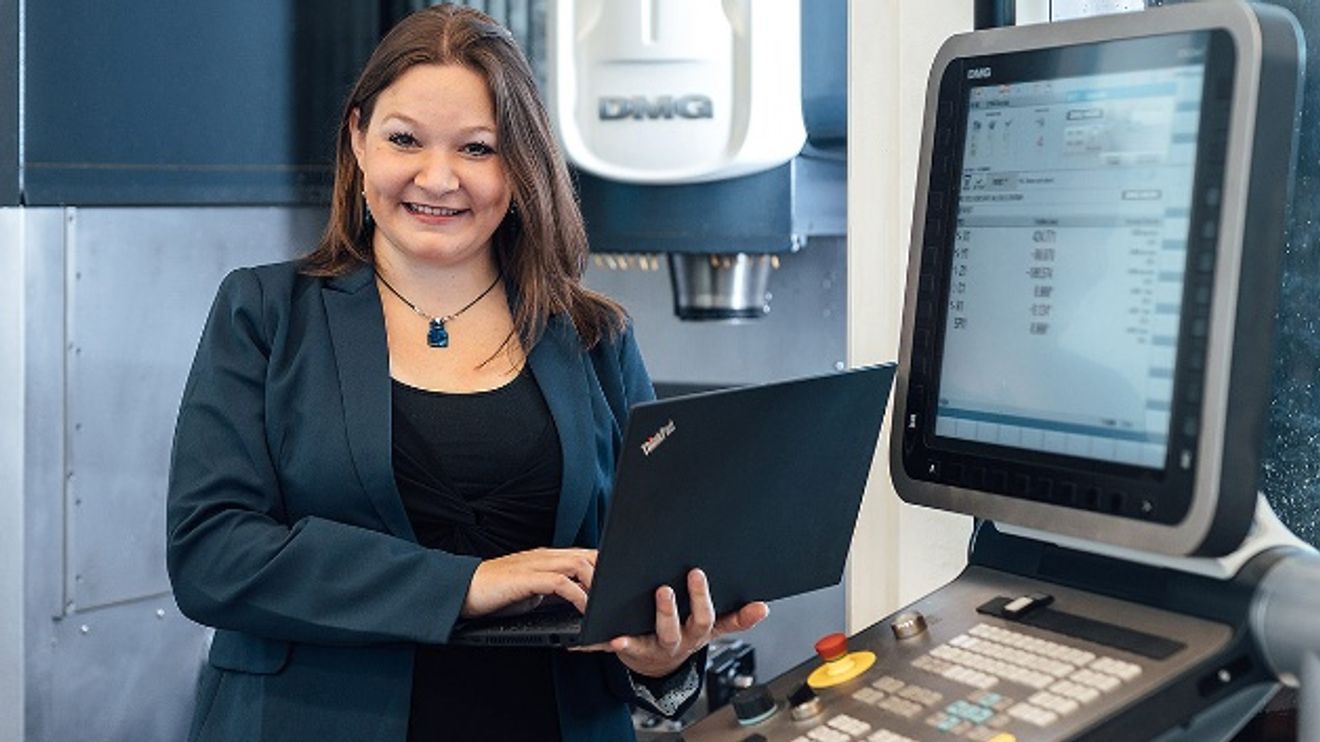
Small and medium-sized companies in particular are facing major challenges with regard to Industry 4.0 and digitalization. In addition to their core knowledge, expertise in information and communication technology (ICT) is now also required. A 5G research project led by Aalen University is paving the way for flexible production in SMEs. The aim is to enable flexible production and optimize intralogistics through easy-to-use networking and positioning technology. The project is being funded by the Federal Ministry for Economic Affairs and Energy with four million euros.
Optimizing production with island networks
The project consortium consists of the companies Awesome Technologie Innovationslabor, Blackned, Carl Zeiss Automated Inspection, Joyson PlasTec and Varta Microbatteries as well as the Ilmenau University of Technology and Aalen University. The project 'Open and flexible industrial networking with 5G small cell center: Adaptive production and intra-logistics in SMEs (5G++ FlexiCell)' aims to research the use of small, mobile radio cells, so-called 'small cells', as an island network, which also make it possible to locate objects and goods. Island networks are campus networks that can function autonomously and without an internet connection to mobile phone providers. However, because different communication and positioning technologies are used for different applications, small cells are also intended to integrate these. "This gives companies the freedom not to have to commit to one information and communication technology in these rapidly changing times, but to remain flexibly networked in the future," says Prof. Dr. Stephan Ludwig, who contributes his expertise in the operation of industrial 5G networks. "The solution should be easy to use and require no in-depth specialist knowledge," adds Prof. Dr. Doris Aschenbrenner, who is leading the project at Aalen University together with Ludwig.
5G as an enabling technology
In order to reduce costs and thus secure jobs in Germany, many manufacturing companies are investing in the digitalization of their production. SMEs in particular are faced with the challenge of transforming their production quickly, flexibly and automatically, often with small quantities and a wide variety of products. One prerequisite for this is efficient and flexible networking. Mobile technology 5G is currently making a big splash, as it allows control commands to be transmitted reliably and quickly via radio for the first time and objects to be localized at the same time - both of which are necessary for flexible production, including quality assurance, as well as a further improvement in internal production logistics.
Since the beginning of 2020, companies have been able to apply for exclusive spectrum licenses tied to their premises in order to operate their own 5G network there. However, 5G infrastructure is currently still comparatively expensive, meaning that investing in a comprehensive network for a technology is often not worthwhile. The solution should be easy to use and require no in-depth specialist knowledge. It is planned that several small cells can also be automatically networked with each other to form a larger network or cover a longer production line.


You might also be interested in
Followed up with Kai Grunwitz, NTT
Not a classic rollout project!
5G campus networks are quite similar to a complex IT system in terms of introduction, implementation and operation. In this interview, Kai Grunwitz, Managing Director of NTT in Germany, explains what companies need to bear in mind and where pitfalls...
 read more...
Hanover to get a 'digital twin'
With the new 5G mobile communications standard, Hanover is to receive a digital image that reflects the state capital three-dimensionally and in real time. It will start with the exhibition grounds.
read more...Porsche tests 5G network at Leipzig production site
Sports car manufacturer Porsche is now testing a 5G network in production at its Leipzig site. This is the first research network with the latest mobile communications standard in a Porsche production environment, the Group announced on Friday...
read more...5G - A security risk?
Trend Micro, a provider of cybersecurity solutions, has published a study highlighting new threats to 4G/5G campus networks. Many attacks specifically exploit the difficulties organizations face in patching critical OT environments.
read more...Test platform supports manufacturers of 5G devices
Keysight's 5G Protocol R&D Toolset, part of the company's range of network emulation solutions, enables mobile operators such as Qualcomm Technologies and device vendors to validate designs based on 3GPP Rel-16.
read more...First industrial 5G router
Siemens is now presenting its first industrial 5G router. The device connects local industrial applications with public 5G, 4G (LTE) and 3G (UMTS) mobile networks.
read more...Verizon launches with Nokia
Verizon Business is now introducing a 5G platform for companies in Europe and the Asia-Pacific region. The offering is being jointly realized in a partnership with Nokia.
read more...The interaction of Ethernet TSN, OPC UA and 5G
Only the reliable and structured interaction of all units in an ant colony ensures its survival. Data communication in a modern industrial network works no differently in a figurative sense.
read more...Where there are still problems with 5G
5G in automation - a hot topic at the moment. How quickly can we actually expect 5G to be used in industry? What obstacles still need to be overcome? Thomas Schildknecht summarizes the key points in this interview.
read more...