
IT Security and Quantum Research
Fraunhofer IPMS Unveils Quantum Random Number Generator
Fraunhofer IPMS has unveiled "Q-Dice," a quantum random number generator that generates random numbers at a rate of more than 4 Gbit/s from quantum vacuum fluctuations. The system is available as a 19-inch rack and as an online service and is designed for security-critical applications.
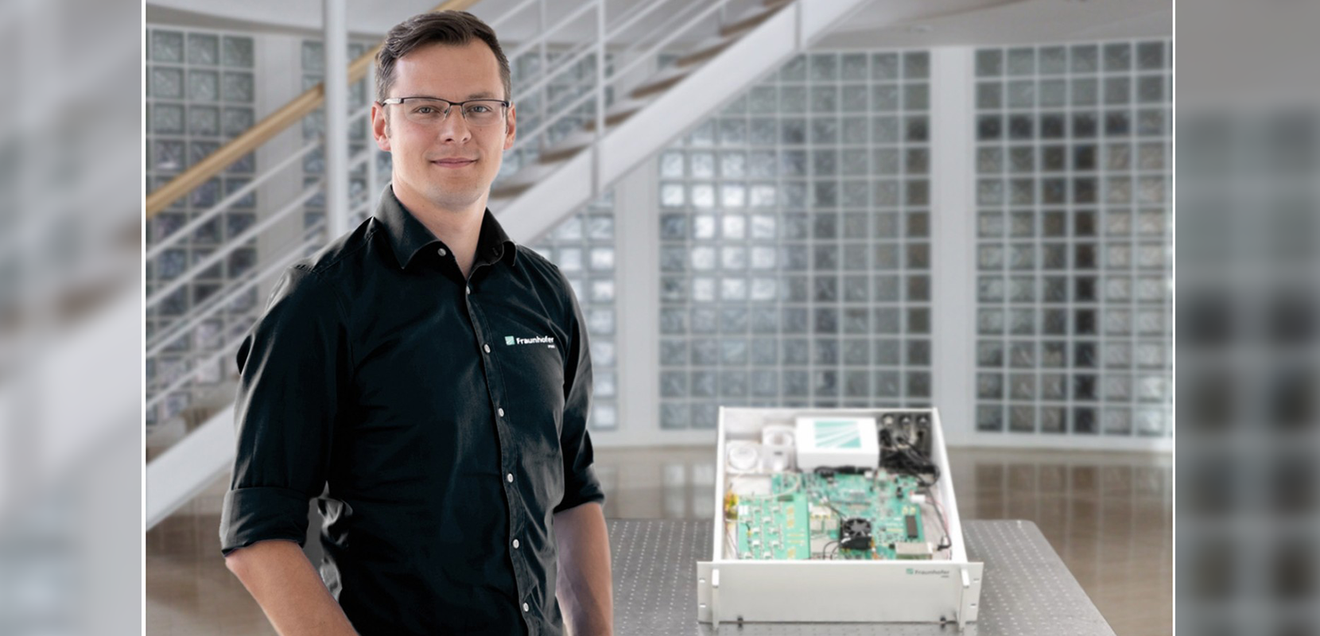
The Fraunhofer Institute for Photonic Microsystems (IPMS) has unveiled the Q-Dice quantum random number generator. The system generates truly random numbers based on quantum vacuum fluctuations and achieves a random bit rate of 4.1 Gbit/s. Unlike algorithmic random number generators, Q-Dice utilizes physical quantum effects that are considered intrinsically random.
The random numbers generated are suitable for, among other things, cryptographic methods, secure communication, data encryption—for example, in the fields of quantum key distribution (QKD) or post-quantum cryptography (PQC)—authentication, access management, and large-scale simulations.
Security Standards and Deployment
According to the institute, the quality of the random numbers was verified using the BSI AIS 20/31 test procedures and the NIST SP 800-22 test suite. The system meets the requirements of the Federal Office for Information Security (BSI), is rated at EAL3 level, and is classified as a PTG.3-class physical random number generator.
Q-Dice is available in two versions: as all-in-one hardware in a 19-inch rack format with a 10 Gbit/s Ethernet interface, and as an online service that allows users to access quantum-generated random numbers without needing their own hardware. “With Q-Dice, we are making high-quality quantum randomness practical and accessible,” says Dr. Alexander Noack, Head of the Data Communication & Computing Division at Fraunhofer IPMS.
One-Stop Development
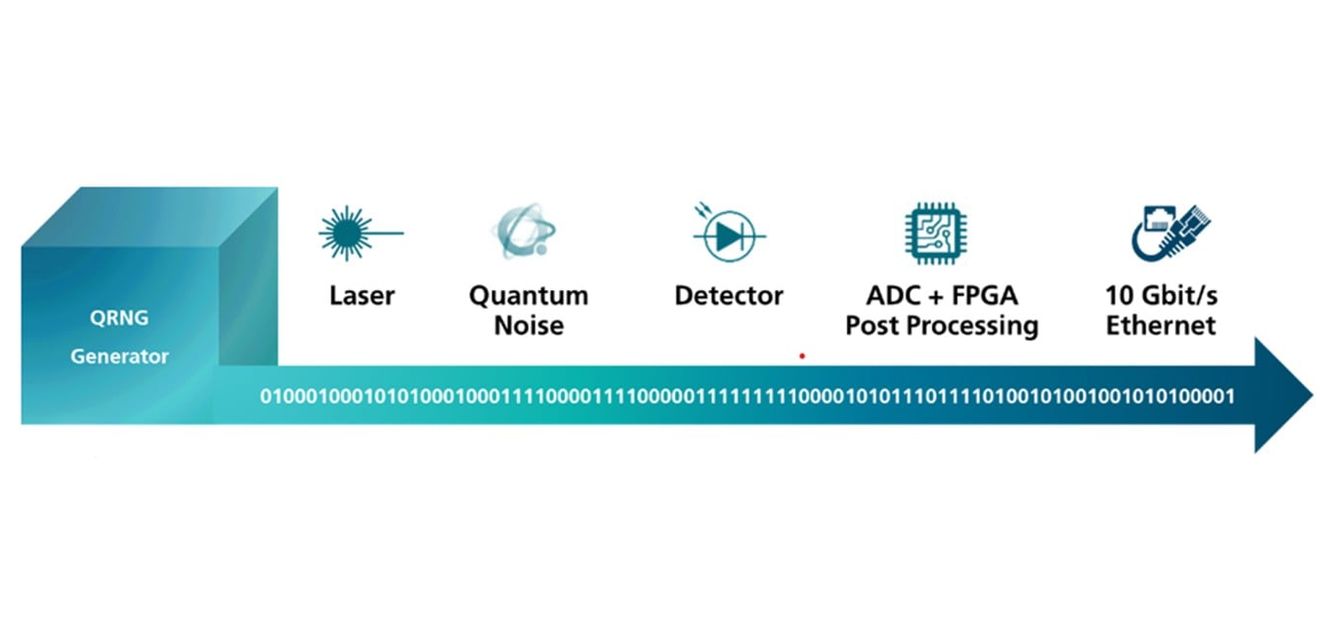
According to Fraunhofer IPMS, all components were developed in-house. These include laser and optical front-end systems, a low-noise analog front-end section for detecting quantum vacuum fluctuations, high-speed data acquisition using analog-to-digital converters, FPGA-based randomness extraction, and system integration with high-throughput interfaces, including 10 Gbit/s Ethernet.


You might also be interested in
CRA guide for Powerlink checked
TÜV Rheinland has audited the "CRA Guide for Powerlink" from B&R. The guide is one of the first independently audited technical documentations for the implementation of the EU Cyber Resilience Act in automation.
 read more...
Check Point Cyber Security Report 2026
More attacks on German companies
The new "Cyber Security Report 2026" from Check Point shows a significant increase in cyberattacks on German organizations by 2025. The education sector is particularly affected and is well above the national average.
read more...Weidmüller cooperates with Fortinet
Weidmüller and Fortinet have agreed a partnership to provide cyber security solutions for OT environments. The aim is to better secure industrial networks against attacks and at the same time meet regulatory requirements such as NIS2 or the Cyber...
read more...Government draft on NIS 2 implementation significantly strengthens the role of the BSI
With the new draft law to implement the EU NIS 2 Directive, the German government is comprehensively modernizing IT security law. In future, the Federal Office for Information Security (BSI) will be responsible for the supervision of around 29,500...
read more...Coordination problems at C-level during the introduction of GenAI
While CEOs worldwide are driving forward the use of generative AI, many CISOs see significant security and infrastructure deficits. A new study by NTT Data reveals a clear divide within company management.
read more...'TÜV Cybersecurity Study 2025'
Number of successful attacks increases significantly
The cyber security situation in the German economy is coming to a head: according to the new 'TÜV Cybersecurity Study 2025', 15% of companies reported at least one IT security incident in the last twelve months.
read more...Increase in phishing attacks with SVG files detected
Since January 2025, the Sophos X-Ops security team has seen a significant increase in malware and phishing attacks distributed via SVG graphic files.
read more...More than 10 billion euros for cyber security for the first time
Hardly a day goes by without a company or public administration in Germany falling victim to a cyberattack. Against this backdrop, potential victims are stepping up their preparations.
read more...AI-supported cloud-to-edge cybersecurity
NTT DATA and Palo Alto Networks cooperate
NTT DATA is expanding its strategic partnership with Palo Alto Networks. Together, the companies are offering a solution for AI-driven cloud-to-edge cyber security.
read more...