
Robotics Drives from Europe
Synapticon and Generative Bionics Partner Up
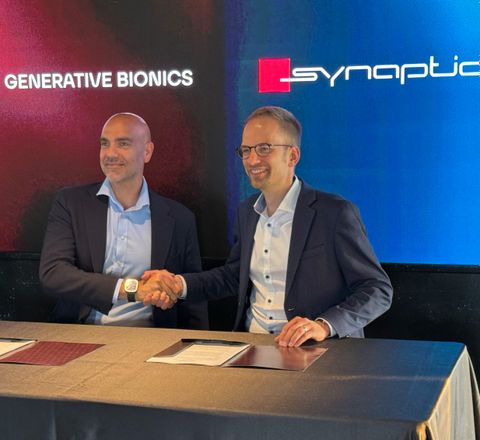
Synapticon and Generative Bionics have entered into a partnership to develop propulsion systems for humanoid robots. The goal is to establish a European supply chain for the development, manufacturing, certification, and integration of the technology, as well as to reduce dependence on external suppliers.
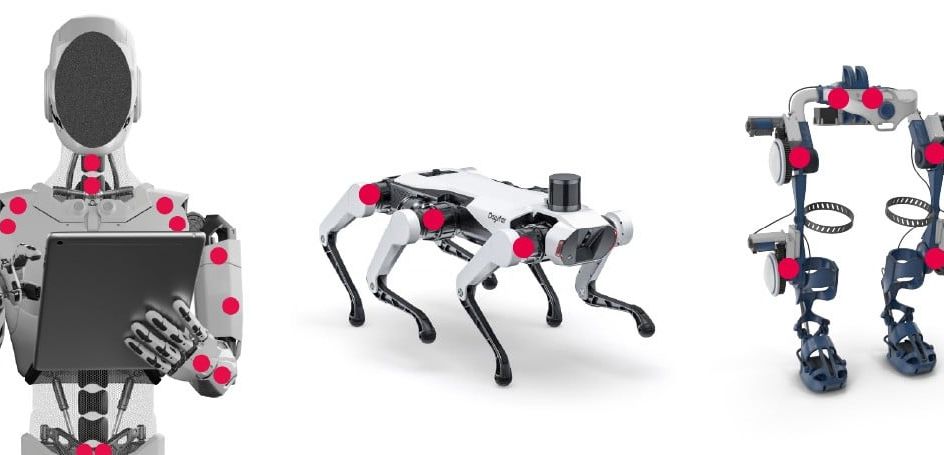
The German company Synapticon and the Italian robotics firm Generative Bionics plan to collaborate on the development and integration of propulsion systems for humanoid robots. The partnership focuses on establishing a European supply chain for key components of what is known as “Physical AI”—that is, AI-powered physical robot systems.
Humanoid robots are increasingly being developed for industrial and service-related applications. As a result, attention is shifting not only to the capabilities of these systems but also to issues such as supply chains, certification, and technological control. According to the companies, critical technologies are to be developed, manufactured, and integrated within Europe in the future.
The Drive Level as a Key Technology
The collaboration focuses on the drive system of humanoid robots. It encompasses motors, servo drives, encoders, safety functions, and motion control software. Only the interaction of these components enables precise movements and the safe use of robots in close proximity to people.
Daniele Pucci, CEO of Generative Bionics, describes the significance of this technology: “Europe faces a clear challenge regarding its technological sovereignty in the fields of Physical AI and humanoid robotics. This is not about closed or isolated supply chains. The key technologies for humanoid robots must be resilient to geopolitical fluctuations and supply chain disruptions. At the same time, they must meet safety and certification requirements. The drive system is of fundamental importance here. It is where movement, safety, reliability, and certification requirements all converge.”
Three Areas of Cooperation
The collaboration is based on three key areas. First, the goal is to establish a secure supply chain within the European Union for the drive systems of Generative Bionics’ humanoid platform. Final assembly, calibration, and safety testing are primarily planned to take place in Germany. In addition, the companies are planning to use alternative European suppliers, maintain safety stock within the EU, and implement measures to ensure the traceability of critical components.
In addition, the partners plan to jointly develop custom drive units. These will combine motors, servo controllers, encoders, firmware, and functional safety features. The systems will be adapted to meet the mechanical, thermal, and control requirements of Generative Bionics’ robot platform.
Another focus is the development of a safety architecture for humanoid robots. The plan is to include functions for safe motion control, person recognition, and the monitoring of AI-controlled robot systems. The foundation for this is Synapticon’s “Positron” safety platform. The development is intended to align with emerging international standards.
Focus on Resilience and Traceability
According to the companies, measures to safeguard the supply chain are already being integrated into their collaboration. These include pre-qualified European alternatives for critical components as well as safety stocks stored within the EU.
In addition, confidential documentation regarding the origin, manufacturing location, and qualification status of key components must be maintained. This is intended to ensure traceability within the supply chain.
Collaboration in High-Volume Production
Under the terms of the partnership, Synapticon will be designated a strategic European supplier for specific areas of drive technology. As a strategic customer, Generative Bionics will receive preferential access to production capacity secured within the EU.
In addition, both companies are already working on a new series of actuators from Synapticon, which is designed for large-scale production modeled after the automotive industry. Generative Bionics will provide structured feedback throughout the development process and support the industrialization of the series.


You might also be interested in
International Federation of Robotics
U.S. Robotics Industry Sees Double-Digit Growth
In the U.S., sales of industrial robots rose by 11% compared to the previous year: 38,000 units were newly installed in 2025. This significant recovery is driven by robust growth in the food industry and other non-manufacturing sectors. However, the...
 read more...
Development Collaboration for Humanoid Robotic Hands Launched
Schunk is entering into a new development partnership with Robert Bosch Robotics. Their shared goal is to develop an industrial-grade robotic hand that can be integrated into various humanoid robot systems.
read more...Quantum-resistant hardware security for Nvidia robotics platform
Infineon Technologies integrates the hardware security module 'Optiga TPM SLB 9672' into Nvidia's 'Jetson Thor' computing platforms for robotics and autonomous systems. The module secures cryptographic keys directly at chip level and thus protects...
read more...6 Criteria for the objective comparison of humanoid robots in industry
A new benchmark from Fraunhofer IPA is intended to enable the first standardized and neutral analysis of humanoid robots for industrial use based on six key criteria.
read more...AI-supported lighting robot wins German Innovation Award 2026
Ledvance, provider of innovative lighting solutions, was named "Winner" in the Excellence in Business to Consumer Lighting category at the German Innovation Awards 2026. With the AI Companion Lighting Robot 'Elix', the company presents an...
read more...Regulation and safety slow down robotics projects in Germany
QNX has published the study "Inside the Robot: Architecture Benchmark Report". The results of the global survey of 1000 robotics developers show that software and safety requirements are increasingly becoming the central bottleneck for innovations...
read more...International Federation of Robotics
China puts AI robotics at the center of its national strategy
With its 15th five-year plan, China has placed robotics at the center of its new industrial strategy. The aim is to focus AI research on physical applications and use robotics as the main driver of economic growth.
read more...Humanoid robots as a means to combat the skills gap
Humanoid robots are already performing various tasks in industrial production. A representative survey commissioned by the digital association Bitkom shows how the industry views this overall.
read more...Physical AI with virtual twins and robotics
Dassault Systèmes and Neura Robotics announce partnership
Dassault Systèmes and Neura Robotics combine virtual twin technologies and cognitive robotics to scale physical AI. The partnership combines virtual planning, AI training and real automation in a continuous end-to-end pipeline.
read more...