
Interview
Digitization - a spectre?
The trend towards increasing efficiency in companies through digital transformation does not stop at enclosure construction. However, many companies are hesitant when it comes to implementation. Nicole Kreie, Head of Project Service International at Wago, explains why this should change.
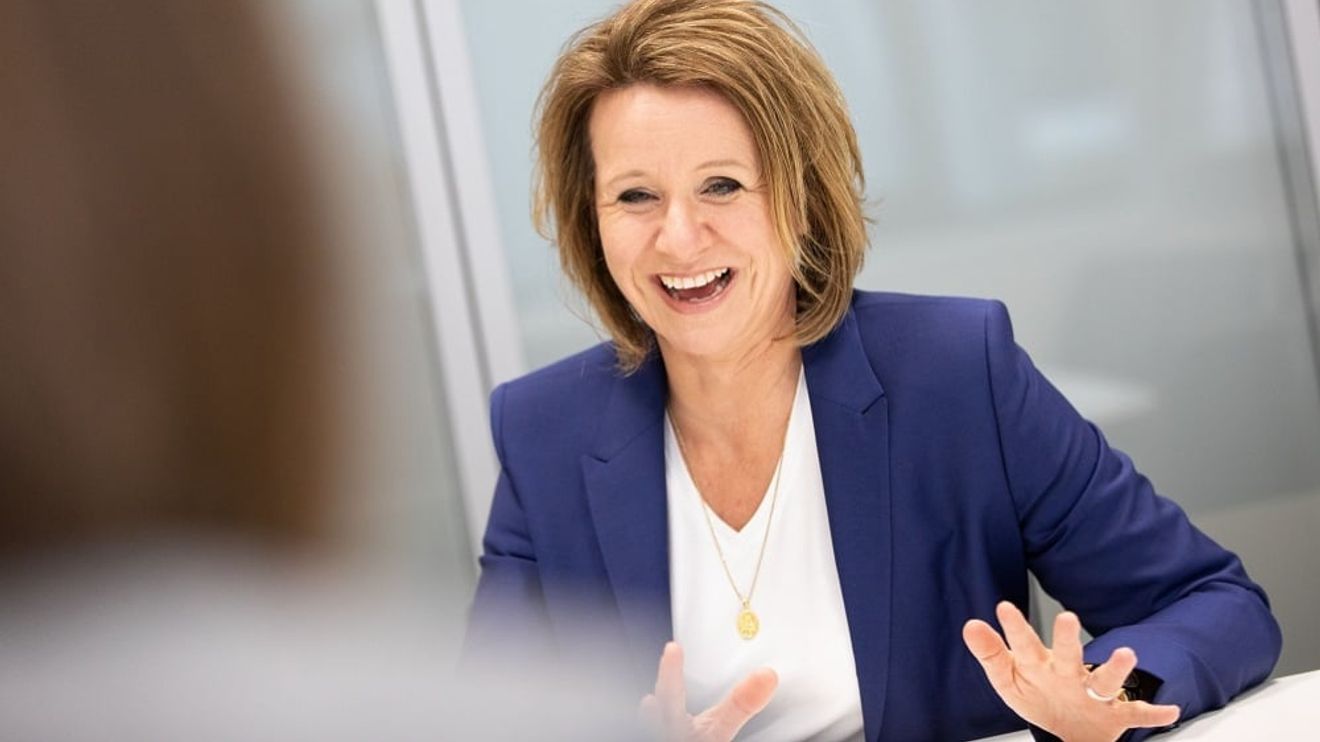
Ms. Kreie, why do medium-sized enclosure manufacturers often shy away from the supposed 'digital spectre'?
Nicole Kreie: Digital terms such as smart factories, cloud computing and the Internet of Things are not tangible for most small to medium-sized enclosure manufacturers and give the 'digital spectre' a frightening face. However, challenges in the core business such as a shortage of skilled workers, order peaks that are difficult to plan and a high volume of changes in customer requirements cannot hide the fact that increasingly networked and integrated systems require the implementation of digitalization strategies. Time and employees must be made available for this - but in practice they are urgently needed to manage the core business.
Many employees also fear that increasing digitalization will increase the risk of losing their jobs and react with defensiveness. However, the human factor is crucial for the successful integration of digital processes and the implementation of new technologies! If fears are dispelled through transparency in the implementation process and employees are involved, experience has shown that they will support all steps of the digital transformation and the 'digital spectre' will vanish into thin air.
To what extent does digitalization affect enclosure construction at all?
Many customers expect their enclosure manufacturer to work efficiently and save time, and translate this into extremely short delivery times for the finished end product. This could only be achieved with a high level of human resources - but the personnel are not available due to the prevailing shortage of skilled workers. This is where digitalization comes in. By implementing digital process steps, it offers the opportunity to save time and optimize internal company processes.
"If you want to make your company fit for the future, you don't have to switch everything to 'new'. Rather, it's about taking small steps and looking at processes in detail to identify where processes can be made more consistent."
It is important for the enclosure manufacturer to realize that digitalization does not threaten jobs, but rather changes them and can mitigate the prevailing shortage of skilled workers to some extent. Ultimately, the enclosure manufacturer needs a solution that can be integrated quickly and provides added value so that it can process its orders faster and more efficiently without the need for additional experts.
In what specific areas do enclosure manufacturers benefit from digitalization?
Digitizable sub-processes can be, for example, the use of a software-controlled configuration tool for the modular assembly and drawing of TS35 rails or the seamless data transfer of the precisely fitting digital twin of configurations into the systems Eplan, WSCAD, Zuken E3 and others.
What exactly does 'digitization' mean to you?
For me, digitalization is a broad term that primarily includes the creation and development of new business models. Strictly speaking, for me it means optimizing the process chain or the value chain with the possibilities of technological progress. The key pillars for this are the creation of new technologies and interface definitions.
The optimal digitization process

How does Wago address the concerns and fears of enclosure manufacturers? What support do you offer?
Our enclosure manufacturers are currently dealing with the topic of digitalization in completely different ways: Some of them have a high level of digitization, while others have virtually no digitization at all. Nevertheless, almost all enclosure manufacturers are aware of their own 'pain points' and the existing digitalization potential. What they lack is, on the one hand, the time to develop a digitalization strategy and, on the other, the know-how on how and to what extent digitalization can be sensibly implemented in the company. This is where Wago provides support and helps to define the individual target process. To do this, we put the entire value creation process to the test together. In this way, we advise the customer step by step through the digital transformation, taking their needs and core processes into account. New technologies are integrated and the entire business model of the enclosure manufacturer continues to develop in a future-oriented manner.
In your opinion, what does an optimal digitalization process look like?
Ideally, the switchgear manufacturer already receives their order in digital form and can start the design directly in the CAE tool. The well-known CAE tools are supplied with all the digital data for their products by manufacturers such as Wago. Accordingly, the components for the design of the system are already available as a digital twin. Macros, templates and application units of component groups should already be stored in the CAE tools; this enables recurring access to the existing documentation. In times of increasing product complexity, it is important to supplement the digital twin with the electrotechnical information of a product - from current and voltages to connection diagrams.
Wago provides the online tool 'Smart Designer' to make the design of terminal block products - which are often regarded as 'me-too' products in switchgear construction - as efficient as possible. The Wago product data is read in from the CAE tool via an interface and undergoes a plausibility check. Additions such as end plates, bridges and labeling can be added quickly. The user can automatically display a price for the rail he has configured. This allows the panel builder to place the order directly with Wago and receive a delivery on time; the time-consuming coordination of price and delivery date is no longer necessary.
is no longer necessary.


You might also be interested in
Connect all conductor types without tools
Wago is launching the 221 series feed-through connector with lever for universal conductor connection in feed-through direction.
 read more...
Monitor and configure networks intuitively
Lean managed switches from Wago complement the manufacturer's portfolio in the network infrastructure sector and offer new functions, particularly for network diagnostics. The switches are available with 8 or 16 copper ports with transmission rates...
read more...SPS Connect 11/26 - 12:10 - 12:30 p.m.
Digitization for SMEs - what is possible today
Today, simple and standardized interfaces make it possible to implement digitalization applications and thus increase effectiveness and efficiency in production.
read more...SPS Connect 26.11. - 12:00 - 12:20 p.m.
What to do in the event of security incidents?
When it comes to software and cyber security, Wago proactively supports you to protect your existing industrial automation processes in the best possible way.
read more...Data usage in the field
Wago is launching two new edge devices, an edge controller and an edge computer. The 752-8303/8000-0002 Edge Controller from Wago works with an ARM Cortex A9 quad-core processor and has an extensive range of interfaces.
read more...The e-paper of the October issue 10
Our new issue 10 is now available for you as an e-paper or direct download. You will find the latest technical reports, practical tips and technology news as well as the electromechanics special. We hope you enjoy reading it.
read more...Fit for Industry 4.0 operation
Old machines and systems do not necessarily have to be replaced by a new purchase, but can be retrofitted or 'upgraded'. Chemnitz University of Technology uses demonstrators to explain how a retrofit works.
read more...Fit for the outdoors
With the AX plastic enclosures, Rittal completes its compact enclosure range and replaces the previous KS series. Typical fields of application are waste water drinking water systems, photovoltaics and aggressive environments such as maritime...
read more...RJ45 replaced
With the 'XTS' transport system, Beckhoff enables flexible machine concepts with highly individualized product transport. In the current generation, an Ethernet interface from Harting replaces the RJ45 interfaces of the computer cards. What are the...
read more...