
Machine tool industry 2019/2020
Digital networking is becoming a hot topic
The VDW expects the machine tool industry to decline by 18 percent this year, but also sees the downturn as an opportunity for the industry to reinvent itself. The biggest lever here is digital networking.
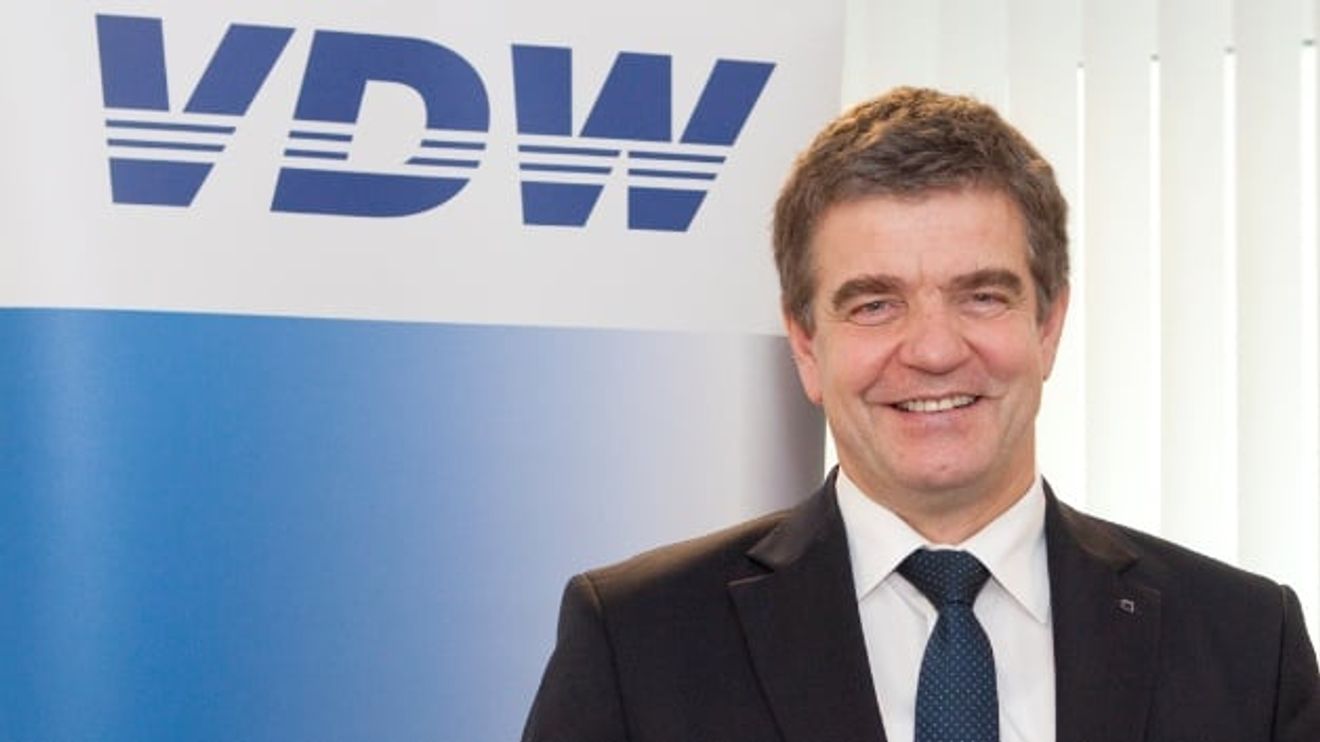
The machine tool industry has been experiencing a decline in demand since 2018, but the sector was still able to maintain the previous year's level in 2019. The German Machine Tool Builders' Association (VDW) reported a decline in production of just one percent. While the industry was still able to benefit from the high order backlog in 2019, a sharp decline is expected for 2020: The VDW expects a decline of 18% and also assumes that things will not pick up again any time soon. The bottom could only be reached in the second half of the year, but the expected positive effects will not be enough for a turnaround. Dr. Heinz-Jürgen Prokop, Chairman of the VDW, assesses the situation as follows: "Federal Economics Minister Altmaier recently declared the economic crisis in Germany to be over. This does not apply to large parts of the industry. According to Oxford Economics, industrial production in Germany will fall again. Only the aviation industry and other vehicle manufacturing outside of the automotive sector are expecting significant growth of more than 3 percent. Fixed asset investments in the main customer industries will only increase marginally. After a slight decline in the previous year, machine tool consumption is expected to fall by a fifth in 2020."
Digitalization and sustainability as an opportunity
For Dr. Heinz-Jürgen Prokop, Chairman of the VDW, however, this is no reason to bury one's head in the sand: "The machine tool industry would not be the machine tool industry if it did not pull out all the stops to reinvent itself a little against this backdrop." The machine tool is a core component in industrial production and as such can contribute to greater efficiency and sustainability. "Our own initiatives and the industry's close links with production technology research are launching many ideas that will lead to more sustainable products and more efficient processes," says Prokop.
However, Prokop defines digital networking as the biggest lever. It still offers a great deal of potential in terms of new business models, because this is precisely where a lot can still be achieved with creativity. Prokop: "We are continuing to work on the basic prerequisite for data usage, the umati standardized communication interface. The first products are expected in the course of the year."
The potential of digitalization and sustainability is still great, especially for small and medium-sized companies in the manufacturing industry. Studies by the European machine tool association Cecimo have shown that just 5% of SMEs in Europe have networked their machines, plants and systems across the board. One in three companies is taking the first steps in this direction or is at least planning to do so. So there is still huge potential here. "Greater efficiency in production paves the way for the circular economy and supports sustainable business practices. Control technology and end-to-end machine communication are important. Wireless access to information in real time is key to optimizing production processes, capacities, energy and raw material consumption," says Prokop, explaining the importance of networked and efficient production.
Digitalization and automation for sustainable production
Greater efficiency in production supports sustainable management and paves the way for a circular economy. Control technology and end-to-end machine communication are important here. Wireless access to information in real time is key to optimizing production processes, capacities, energy and raw material requirements.
According to the VDW, the machine tool industry in particular is a model industry when it comes to sustainability. The statement is based on the fact that machine tools of German origin are already among the most sustainable products: They are characterized by a long service life, spare parts are available for all machine components over a long period of time and the control components last for several generations thanks to software updates. In addition, machine tools are often overhauled and resold as used machines - this leads to a second and sometimes third machine life. If they are scrapped at the end of their life, most materials can be recycled or upcycled.
In addition to optimizing machine components, manufacturers are also focusing on energy requirements during the use phase. The raw materials used and the consumption of electricity and media also determine the carbon footprint of production. Manufacturers are therefore working on software, for example, to further reduce offcuts and waste. In combination with new hardware, media consumption can also be reduced by up to 70%.


You might also be interested in
The first steps towards digitization
Real-time transparency in the material flow: this was the goal set by Miba when it set out to digitalize its internal logistics processes. But how successful was the close link between ERP and MES in the end? - A field report.
 read more...
Machinery exports continue to decline
German machinery exports are declining. According to the VDMA, exports fell by 1.5% in real terms. A further decline is likely in 2020.
read more...Digital twin revolutionizes maintenance
As virtual representatives of real machines, digital twins open up new possibilities for maintaining and servicing complex industrial plants and systems. A project report.
read more...Production remains at record level in 2019
The German machine tool industry is expecting production to grow by 2% in 2019, according to the annual press conference of the German Machine Tool Builders' Association (VDW).
read more...The Companion Specs of the VDMA
Unrestricted interoperability is the basis of Industry 4.0, but what role do the OPC UA Companion Specifications play in this? And why is the VDMA considered the center of gravity for their development?
read more...Trumpf collaborates with the IPAI AI Network
Trumpf is a new partner of the IPAI AI network in Heilbronn. Together, the two parties plan to develop and test artificial intelligence applications for industry.
read more...TSN as the Foundation of the Digital Industry
TSN/A Conference 2026 – Get your Early Bird Ticket now!
With a top-notch program and leading experts from industry, research, and standardization, the 11th TSN/A Conference 2026 will once again bring together the international TSN community under the theme “Multi-Industry Adoption of TSN.”
read more...Kontron Begins Production of 5G Modules in Düsseldorf
Kontron has launched mass production of 5G communication modules in Düsseldorf. The modules, which were developed in Berlin, are used in a variety of sectors, including industry, transportation, and critical infrastructure.
read more...Interview with Mike Slater, DigiKey
The Benefits of Data-Driven Distribution
With a single global distribution center, data-driven demand forecasting and comprehensive digital services, DigiKey aims to serve industrial customers worldwide. In this interview, Mike Slater explains the role Europe plays in the company's...
read more...