
VDMA
Machinery exports continue to decline
German machinery exports are declining. According to the VDMA, exports fell by 1.5% in real terms. A further decline is likely in 2020.
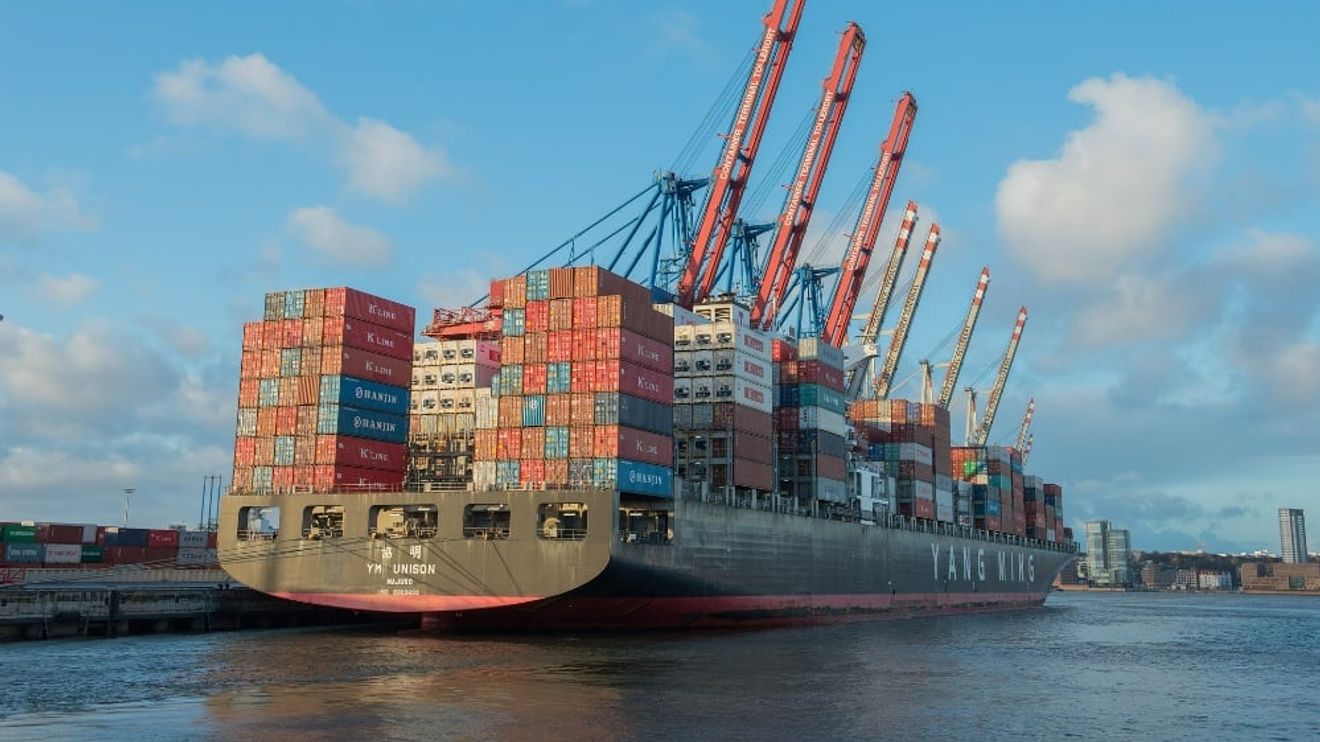
German mechanical engineering companies exported goods worth a total of 179.8 billion euros in 2019. This means that machinery exports were 1.5% below the previous year in real terms, reports the VDMA, citing preliminary figures from the Federal Statistical Office. According to the VDMA, machinery exports just managed to stagnate when not adjusted for prices. With an export share of just under 80%, mechanical engineering companies from Germany continue to have a strong presence on the global market, but are also particularly dependent on its development. "In particular, international trade disputes, increasing protectionism and the Brexit impasse as well as the far-reaching structural change in the automotive industry have led to uncertainty and a reluctance to invest in many industries," says VDMA economic expert Olaf Wortmann, assessing the situation. "In view of the current order intake of mechanical engineering companies, a further decline in exports is likely for 2020 as a whole."
USA on course for growth
The United States emerged as the most important customer for German mechanical engineering goods in 2019: Exports rose by a nominal 4.3% to 20.1 billion euros. This means that the USA accounts for 11.2% of total German machinery exports. Here too, however, the pace of growth slowed over the course of the year. Wortmann: "This is not least due to the fact that the trade dispute between the USA and China has also weakened the industry in the United States." In the first half of 2019, machinery exports to the USA still increased by 7.8% in nominal terms. In the second half of the year, however, growth was only around 1%. Nevertheless, the USA was able to extend its lead over the Chinese sales market.
China, corona and the effects
Machinery exports to China also fell by a nominal 1.1% to 18.8 billion euros in 2019 as a whole. The People's Republic accounts for 10.5% of total German machinery exports. "In the second half of 2019, growth in Chinese industry had stabilized again and there was hope that the trade war could be defused. However, China is now confronted with the coronavirus, the impact of which on global exports cannot yet be assessed," said Wortmann. "However, the coronavirus threat does not change the fundamental importance of the Chinese market for our industry in the future," emphasized the VDMA economic expert.
Development of the EU and the UK
Exports to EU countries (€85.9 billion) remained almost at the previous year's level in 2019. EU countries accounted for a total of 47.8% of all German machinery exports. The most important partner here is traditionally France, number three in the overall export ranking. German machinery exporters recorded an increase of 5.3% to 12.4 billion euros in business with France. "French investments in equipment, including German machinery, developed much more dynamically in 2019 than the EU average. Macron's reform policy is likely to have been a key reason for this development," explained Wortmann. In contrast, the picture for exports to the UK was different. The political wrangling over the modalities of Brexit had a significant negative impact on export business with the UK from the second quarter of 2019. German mechanical engineering exporters recorded a nominal drop in exports of 5.8% to 7.4 billion euros from January to December.
Growth in Russia and Turkey
Turkey and Russia were unable to maintain their previous year's level. In 2019 as a whole, machinery exports to Turkey shrank by 3.3% to 3.2 billion euros. German machinery manufacturers delivered goods worth €5.3 billion to Russia, 1.9% less than in 2018. However, machinery exports to the two countries increased by 5.4% and 4.3% respectively in the second half of the year. Exports to Japan continued to develop positively (up 6.4% to 2.9 billion euros).


You might also be interested in
Machine tool industry 2019/2020
Digital networking is becoming a hot topic
The VDW expects the machine tool industry to decline by 18 percent this year, but also sees the downturn as an opportunity for the industry to reinvent itself. The biggest lever here is digital networking.
 read more...
Robotics and automation slip into the red
The economy is now also having an impact on the robotics and automation industry: the VDMA expects sales to fall by 5% in 2019. The reasons can be found in the global economy, but also in saturation effects.
read more...“Product of the Year – Industrial AI” wanted!
Show how AI is driving the industry forward: Submit your innovation now for the readers’ choice award “Product of the Year – Industrial AI powered by sps – smart production solutions”! All exhibitors at SPS 2026 with a new or improved product are...
read more...Early Access Program for AI Features
PTC has launched an early-access program with Onshape Labs for AI features on the Onshape cloud-based CAD platform. Users will receive early access to new tools for product development.
read more...Valtech Identifies Shortcomings in Agentic AI
The Valtech study “The Agentic Age” shows that skilled workers are open to agentic AI, while many companies have not yet established integrated AI-supported work processes.
read more...EDAG and Framence Partner Up
EDAG Production Solutions and Framence have entered into a strategic partnership. Together, the companies are developing solutions for digital twins, engineering, and the digitization of industrial production environments.
read more...AI Tool for Safety Engineering
AI Tool for Safety Engineering
Neuron Automation introduces the Smart Engineer. This T3-certified development environment for functional safety combines safety engineering, DevOps, and AI support up to SIL 3.
read more...Industrial AI and Manufacturing
Siemens and IFS Bridge the Gap Between Planning and Operations
Siemens and IFS are collaborating to use industrial AI to enable a closed-loop digital twin across the entire plant lifecycle. The goal is to more closely link design data with real-world operational information and optimize industrial processes.
read more...Astra Prize for Two Female Researchers at Graz University of Technology
Bettina Könighofer and Anna Galler of Graz University of Technology have each been awarded an Astra Prize by the FWF. With one million euros in funding each, they are conducting research on trustworthy AI and two-dimensional quantum materials for...
read more...