
B&R
The climate always in view
In control cabinets, the waste heat must be dissipated and monitored as effectively as possible. But is an extra measuring box in the enclosure really necessary for this? A pragmatic approach.
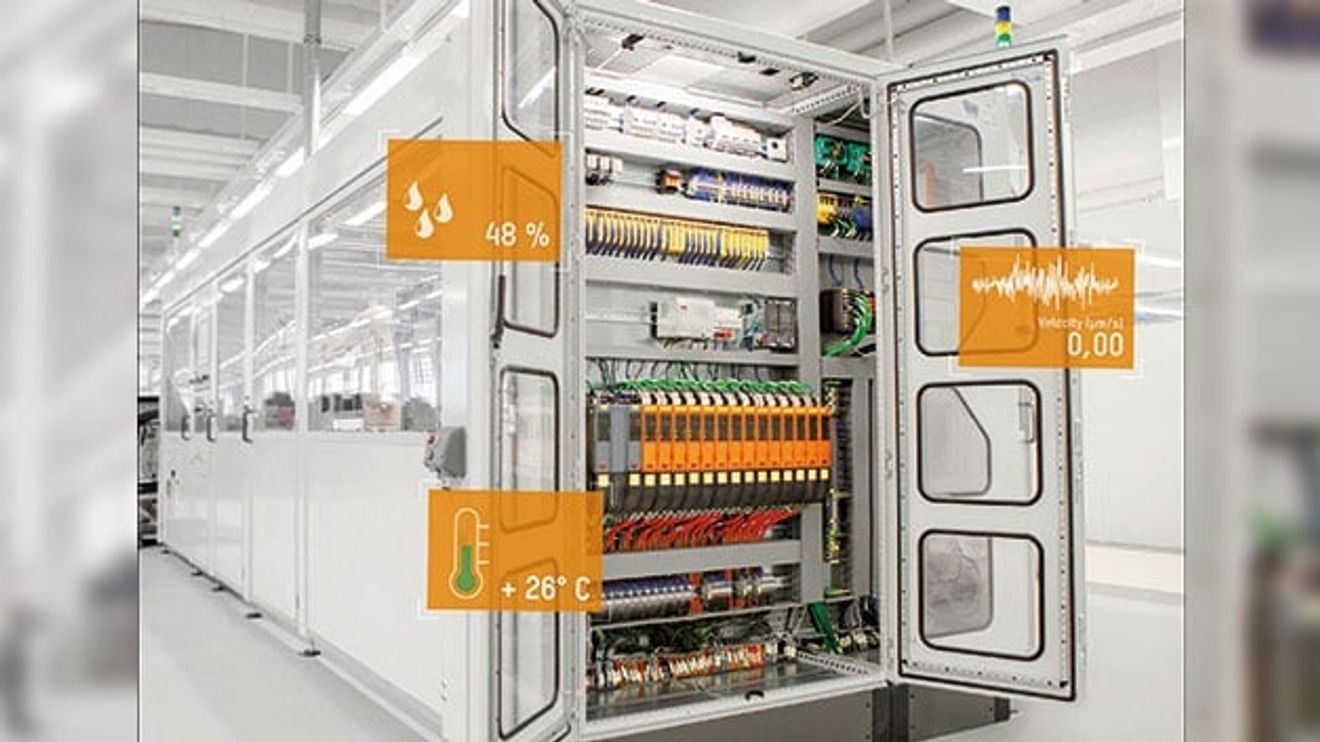
High temperatures, humidity and vibrations are the enemies of electrical and electronic components. If, for example, the temperature in the control cabinet rises due to insufficient cooling, malfunctions or even failures become increasingly likely. In the worst case scenario, an entire production line can come to a standstill - with considerable financial consequences. Causes of faults that only occur sporadically are particularly difficult to rectify, for example in the event of brief temperature increases. For example, it is possible that the sun only shines through a hall window every few days at midday and heats up the control cabinet even more. In such cases, control cabinet monitoring can be very helpful, as the service technician has meaningful data at his disposal with which he can detect such events.
Plug in and you're done
However, installing an appropriate measuring box in the control cabinet is time-consuming. The hardware must be purchased, wired and parameterized so that the monitoring solution can communicate with the control application. However, there is an easier way.
The X20CMR011 I/O module from B&R is mounted on the DIN rail like any other module. This is possible for both new and existing machines. No additional wiring or hardware is required. In large control cabinets, additional modules can be placed in strategic locations if required. They are connected to the control system via a bus controller.
Data logger on board
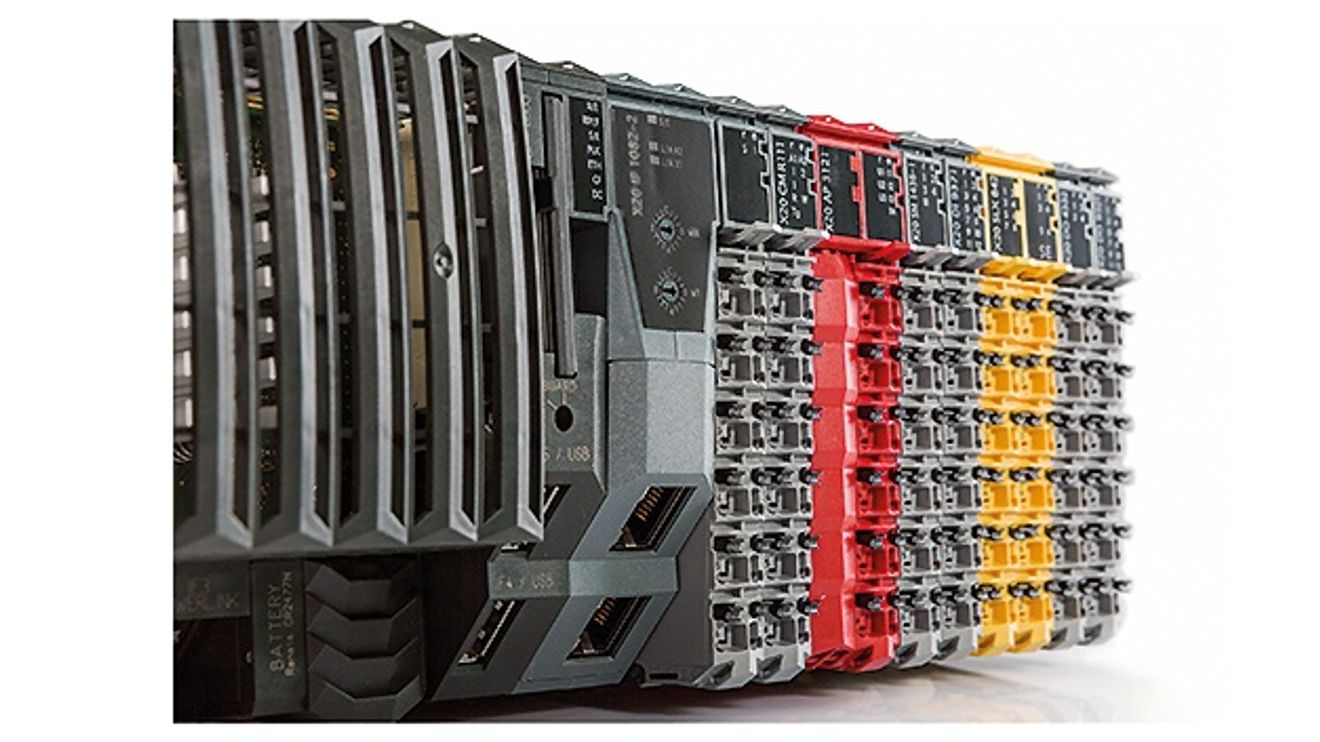
Interface cards for all common communication protocols and a broad portfolio of different I/O modules can be connected to the X20 controllers via a plug-in system. This means that the complete sensor system for monitoring humidity, temperature and vibration in the control cabinet can be accommodated in an X20 module just 12.5 mm wide and seamlessly integrated into an already installed X-20 system.
© B&RThe monitoring module measures temperature, humidity and also vibrations via an integrated acceleration sensor. The data can be read out by the application at any time, for example for service entries or messages. Certain data can also be stored in the module's internal memory, for example minimum and maximum values, as well as the time spent in a certain value range. The internal memory of the modules works without a battery and is therefore maintenance-free. The values are retained even if the control unit is replaced.
The module also offers the option of connecting external sensors to two digital inputs, for example door contacts. This makes it possible to track whether the enclosure door is open. Two PT1000 inputs are available for external temperature sensors. A warning light, for example, can be connected via a digital output. This allows you to see at a glance if excessive temperatures, humidity or vibrations could damage the electronics in the enclosure.
Inexpensive monitoring tool

Enclosure monitoring is just as interesting for the machine or system operator as it is for the machine manufacturer: for example, they can track the conditions under which their enclosures are working, i.e. the actual temperatures at the location, the air temperature or how often the enclosure door is opened. Preventive maintenance measures are just as possible as future product optimizations. Last but not least, it is easier for the machine manufacturer to deal with complaints. The stored data can be used to determine if there has been an operating error - for example, if the enclosure door has been left open and the air conditioning has not worked properly as a result. The monitoring module can be used to reject unjustified claims.


You might also be interested in
Automate without control cabinets
Murrelektronik is expanding its business model and offering 'Vario-X', an automation platform that brings sensors and actuators into the field in a decentralized manner without the need for a control cabinet. A digital twin is also on board.
 read more...
The digital circuit diagram
Rittal is doing away with paper and making data usable for operation and service. A digital circuit diagram called 'ePocket' ensures this. Uwe Scharf, Managing Director Business Units and Marketing at Rittal, reveals the details behind it.
read more...Interview with Stefan Schönegger, B&R
"There will be no either-or"
The programmable logic controller - PLC for short - has been around for 55 years. How has the controller changed since then and where will it go from here? Stefan Schönegger, responsible for the Controls division at B&R, provides an outlook in...
read more...25 years of Computer&Automation - The e-paper
For 25 years, Computer&Automation has accompanied the growing influence of IT in automation technology. Ultimately, IT and automation can no longer be clearly separated. In this anniversary issue, you can read about the importance that...
read more...Robotics & Automation - The pacemakers 2023
The robotics market has been experiencing enormous growth for years. The mechanical helpers are used in many sectors - industry, logistics, retail and medical technology. They can be used to increase productivity, efficiency and accuracy in...
read more...The top articles in May 2023
The fact that the fight against climate change is undisputedly the biggest global challenge is also reflected in the most-read articles of May. New applications with the digital twin and trends in AI in dialog continue to top the list.
read more...Special employment model
In order to meet the high demand more quickly, B&R is currently introducing a new weekend shift for a limited period of one year. For 20 hours a week, exclusively on Saturdays and Sundays, the company is offering a salary equivalent to a...
read more...Follow up with Stefan Messerkliger, B&R
"The same mistakes!"
In industrial manufacturing, OPC UA is regarded as the data exchange format of the future. In the world of mobile machinery, such an agreement is still missing. Stefan Messerklinger calls for OPC UA to be introduced in this sector too.
read more...Free choice of simulation tool
B&R has added a new function to the Automation Studio development environment: With 'FMU Export'.
read more...