

Siemens quarterly figures Q1/2024
Siemens starts better than expected
The first quarter of fiscal year 2024 went well for Siemens: Revenue from September to December 2023 increased nominally by 2% to EUR 18.4 billion, profit after tax by 56% and order intake was also better than many analysts would have expected.
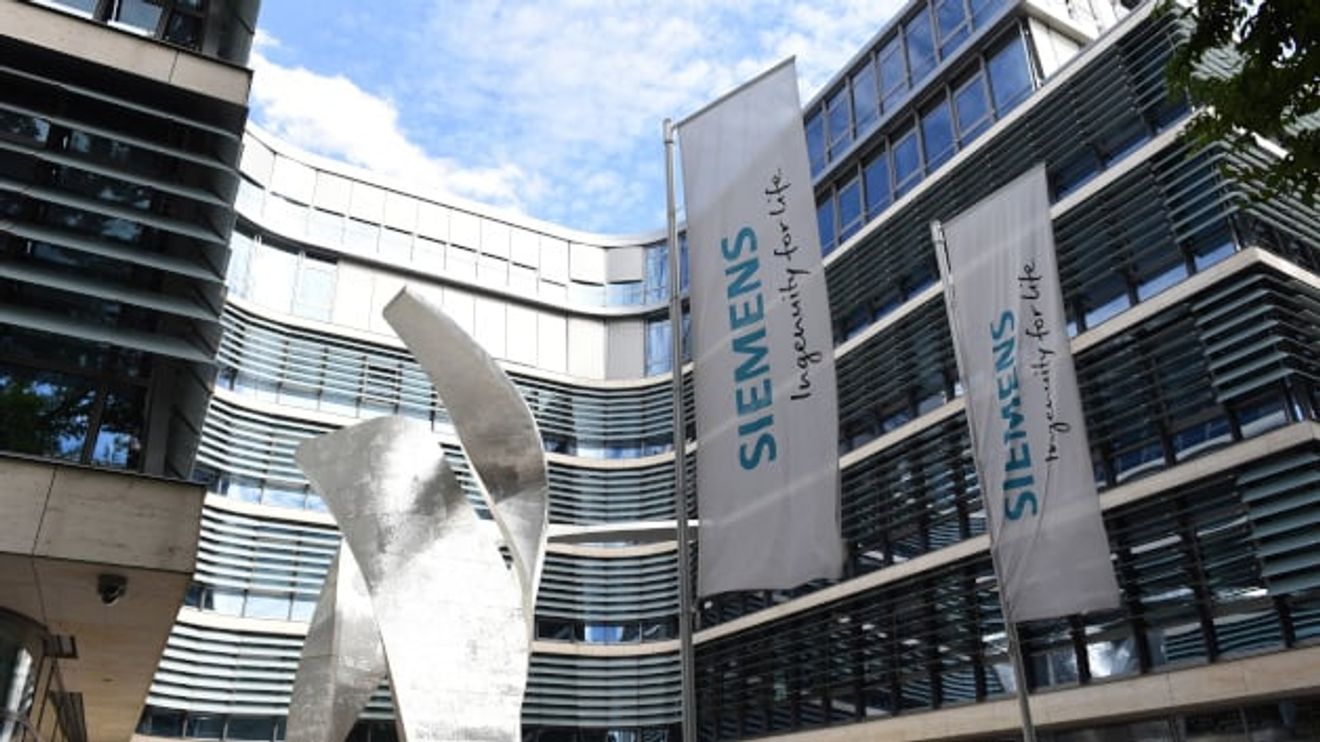
On Thursday (February 8, 2024), Siemens published its figures for the first quarter of the current fiscal year 2024. In the period from September to December 2023, revenue increased by 6% to €18.4 billion (Q1/2023: €18.1 billion) on a comparable basis, i.e. excluding currency translation and portfolio effects, while order intake rose by 2% to €22.3 billion (Q1/2023: €22.6 billion). This is due to growth in the Smart Infrastructure and Mobility divisions, among other things, as a result of major orders. The ratio of incoming orders to sales (book-to-bill ratio) reached a value of 1.21. The order backlog is at a record level of EUR 113 billion. At EUR 1.0 billion, free cash flow "all-in" from continuing and discontinued operations at Group level was significantly higher than in the same quarter of the previous year (EUR 0.1 billion). This development is primarily due to the strong increase in free cash flow in the Industrial Business to EUR 1.3 billion (Q1/2023: EUR 0.4 billion).
Record figure for a first quarter
At €2.7 billion (+3%), earnings in the Industrial Business recorded growth in almost all industrial businesses and thus reached a record level for a first quarter, according to the Group. After taxes, Siemens achieved a 56% increase in earnings to around €2.5 billion (Q1/2023: €1.6 billion). Siemens also benefited from a profit from the transfer of an 8% stake in Siemens Energy to its own pension fund. In future, the Group will only report the remaining 17.1% stake as a financial asset. In addition, as already announced in November 2023, the company will soon launch a new share buyback program with a volume of up to €6 billion over a period of up to five years.
Basic earnings per share before the effects of the purchase price allocation amounted to EUR 3.19 (Q1/2023: EUR 2.08) and were therefore 53% higher than in the same quarter of the previous year.
CEO Roland Busch commented on the successful start to the new fiscal year: "Siemens delivered another strong quarter and continued its profitable growth. We have expanded our partnerships with Microsoft and AWS to make artificial intelligence even more accessible. Our customers have full confidence in us as a technology partner for their digital and sustainable transformation."
Weakening order intake in the automation business
Digital Industries is struggling with weak incoming orders: on a like-for-like basis, incoming orders slumped by -31% to a figure of EUR 3.979 billion (Q1/2023: EUR 5.983 billion). The slump is mainly attributable to the automation business: the market environment weakened in comparison to the previous year; in addition, customers continued to reduce inventories after orders had previously been brought forward. Incoming orders in the software business also fell in comparison to the same quarter of the previous year, which included larger orders in the PLM business, according to the Group. The division recorded the sharpest decline by region in Asia - primarily due to China - and Australia. Earnings fell from EUR 1.119 billion in Q1/2023 to EUR 895 million in Q1/2024.
The Group reported new major orders in the Smart Infrastructure segment. Among other things, these ensured that incoming orders increased by one percentage point on a comparable basis. According to the Group, this development is attributable to growth in the Buildings business, particularly in the USA and Germany, as well as continued strong demand from data centers and in the area of energy distribution. However, the reported order intake of EUR 5.831 billion was lower overall than in the same quarter of the previous year (EUR 5.997 billion) due to negative currency effects. Sales increased in all regions, rising from EUR 4.585 billion in the first quarter of 2023 to EUR 4.827 billion in the past quarter. Growth was led by revenue from the Electrification business, which achieved double-digit growth rates in all regions. According to the Group, both earnings and profitability reached a record level with higher sales revenue, increased capacity utilization and a positive effect of EUR 94 million from the partial reversal of a liability in connection with previous portfolio activities.
The largest increase in incoming orders was reported by the MobilityDue to major orders - including two orders from Austria with a volume of EUR 1.3 billion from existing framework agreements for the delivery of trains - order intake rose by 92% on a comparable basis to EUR 5.636 billion (Q1/2023: EUR 2.971 billion). In terms of sales, the division achieved double-digit growth rates in all businesses, with the order backlog in the rail vehicle business and rail infrastructure business being particularly strong. Earnings rose from EUR 195 million (Q1/2023) to EUR 251 million and also benefited from subsequent Russia-related effects, according to the Group.
A decline on a comparable basis of five percentage points to €5.601 billion (Q1/2023: €6.087 billion) was reported by Siemens Healthineers. The book-to-bill ratio was above 1. Earnings and profitability improved as a result of higher revenue and cost reductions in the Diagnostics business in connection with its transformation program.
Siemens confirms forecast for fiscal year 2024
Siemens assumes that geopolitical tensions will not increase further and that the industrial business will continue to grow profitably as a result. Based on these assumptions, the Group has confirmed its forecast for 2024.
Revenue growth on a comparable basis is expected to be in the range of 4% to 8% and the book-to-bill ratio is expected to exceed 1.
For the Digital Industries segment, Siemens is forecasting revenue growth on a like-for-like basis in a range of 0% to 3%. This is based on the assumption that global demand in the automation businesses, particularly in China, will pick up again in the second half of the fiscal year following a reduction in customer inventories. The earnings margin is expected to be between 20% and 23%.
Siemens confirms forecast for fiscal year 2024


You might also be interested in
Siemens cooperates with Sony
Together with Sony, Siemens presented a solution at the CES that redefines the workflow of engineers and designers.
 read more...
Siemens and Salesforce introduce Teamcenter SLM app
Siemens Digital Industries Software and Salesforce are working together to make it easier for companies to set up service business models. The two companies announced the jointly developed Teamcenter SLM app on the Salesforce AppExchange.
read more...Siemens integrates Amazon Bedrock into development platform
Democratizing software development with generative AI is the goal of the partnership between Siemens and Amazon Web Services. To this end, Siemens is integrating Amazon Bedrock into its Mendix low-code development platform.
read more...Siemens takes over BuntPlanet
Siemens announces the acquisition of BuntPlanet, a technology company based in San Sebastian, Spain. BuntPlanet provides software applications for water management companies worldwide.
read more...Strong finish to the 2023 financial year
According to Siemens, revenue and order intake increased by 10% and 6% respectively on a comparable basis in the fourth quarter of 2023. In the Industrial Business, Siemens recorded its highest earnings and profitability figures ever.
read more...First control cabinet made of green steel
The Siemens subsidiary Alpha Verteilertechnik claims to offer the first control cabinet for industry made entirely of green steel.
read more...Siemens quarterly figures Q3-2024
Siemens confirms forecast with a "but"
Siemens is struggling with a weakening automation market in the third quarter. The software business, on the other hand, is developing strongly. It remains to be seen whether this will continue after the switch to a SaaS model.
read more...Edge rack server in robust
The trend towards hyper-convergent infrastructures is not stopping at the manufacturing and automation industry. Siemens has now launched the first edge rack server in robust industrial PC quality. How is the inner workings of the server designed?
read more...The e-paper of issue 07/2024
Read in the current issue of Computer&Automation how ChatGPT can provide support in the conception phase, how LLMs are used in code analysis and whether TSN can be considered as a backbone for virtualized control systems.
read more...