
Formula Student Germany 2016
German racing teams in front
The teams at the 10th 'Formula Student Germany' brought the asphalt to the boil in August. German students demonstrated the most engineering skill with their racing cars. They also prevailed with their concepts in the 'Driverless' discipline planned from 2017.
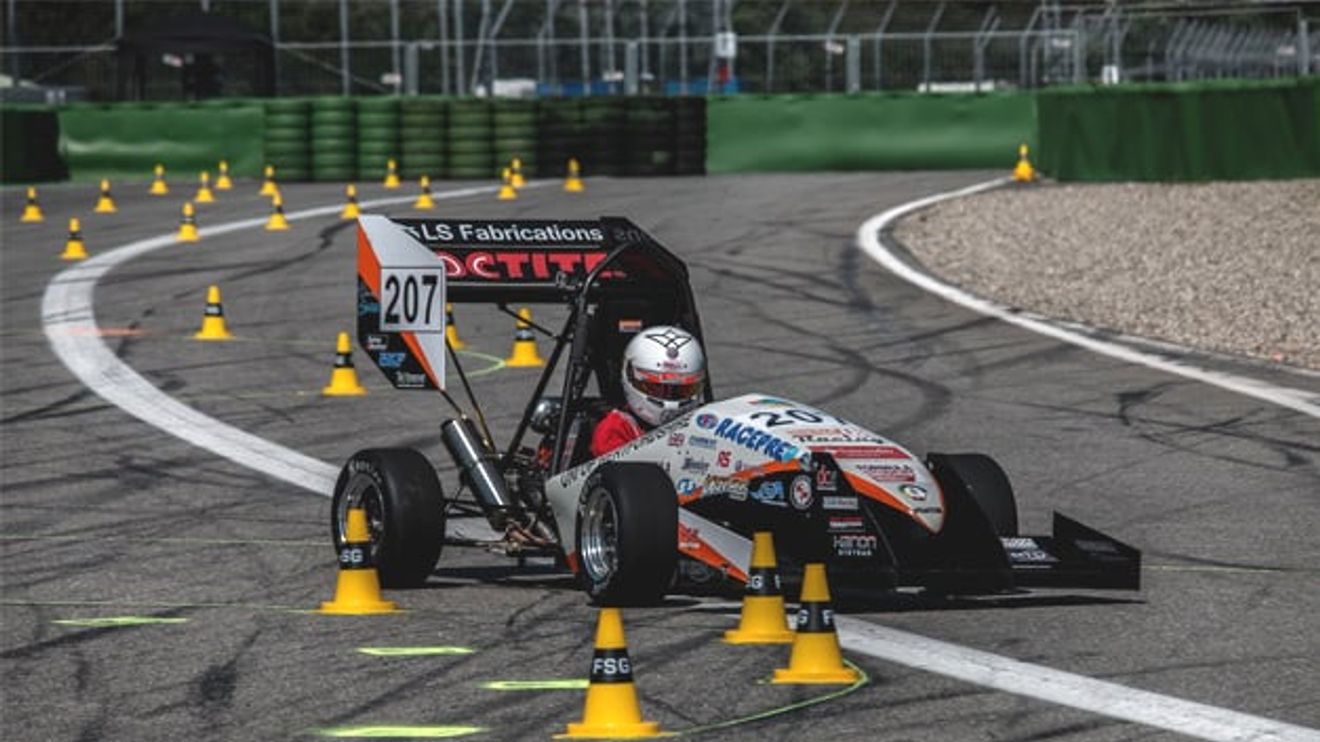
This year, 113 teams from all over the world took part in the design competition for students. The approximately 3,800 young engineers had one year to work on their self-designed racing cars. Between August 10 and 14, they then put their skills to the test in disciplines such as acceleration, endurance, fuel/energy efficiency, design and financial planning. As every year, the competition is divided into two classes: 74 teams took part in the classic 'Formula Student Combustion' - the competition for vehicles with conventional combustion engines. At the same time, the 'Formula Student Electric' (electric drive) took place for the sixth time, with 39 teams competing. They competed in the same disciplines as the combustion engines. This year, the teams were also asked on a voluntary basis to submit a concept for the third competition class planned from next year: 'Formula Student Driverless'. Computer&AUTOMATION shows which team stood out from the crowd and what was going on at the 10th Formula Student Germany in a series of pictures.


You might also be interested in
Impressions from Formula Student Germany 2016
The participants in the 10th round of 'Formula Student Germany' brought the asphalt at the Hockenheimring to the boil in mid-August. This year, the racing cars of German students demonstrated the most engineering skill.
 read more...
Swiss and German racing cars at the front
A total of 4,000 students competed in 118 teams in the 'Formula Student Germany 2018' competition at the Hockenheimring in August. Their self-built racing cars competed in three categories: Combustion Engine, Electric Drive and Autonomous Vehicles.
read more...New competition class at the start
115 teams from 24 nations brought the asphalt at the Hockenheimring to the boil at Formula Student Germany in August. The 'Driverless' competition class celebrated its premiere this year.
read more...Competition of autonomous model vehicles
At the Carolo Cup, student teams competed against each other with their self-developed and autonomously driving model vehicles. However, it wasn't just speed that counted.
read more...EPSG is looking for innovative automation projects
Innovative projects and automation concepts based on the open Industrial Ethernet protocol Powerlink: This is the brief for the 'Industrial Ethernet Award' student competition organized by the Ethernet Powerlink Standardization Group (EPSG).
read more...Miniature motors drive prosthesis
The aim of modern prostheses is to provide people with amputated limbs with the best possible support in everyday life. Powerful micromotors ensure that the latest models can grip quickly or firmly, while the gripping force remains constant when...
read more...All-wheel drive developed for electric motorcycles
After three years, the joint project 'Safety chassis with electric all-wheel drive for e-bikes and e-motorcycles' has been successfully completed. The University of Ulm, together with Gigatronik and the companies ID-Bike and ipdd, presented a...
read more...Students invent the 'wheel 2.0'
The 'Ourobot' from Bielefeld University of Applied Sciences resembles a thick bicycle chain. Each link in the chain has its own drive that enables the robot to move over obstacles. But the 'Ourobot's' journey does not end here.
read more...New world record for electric racing cars
From zero to one hundred in 1.513 seconds
The previous world acceleration record for electric cars has been broken: students from ETH Zurich and Lucerne University of Applied Sciences and Arts recently set it with their electric racing car 'grimsel': The vehicle accelerated from 0 to 100...
read more...