
More than science fiction
Electric regional aircraft - faster and cheaper
Zunum wants to present the first hybrid-electric aircraft for twelve passengers as early as 2022. Siemens also considers large electric aircraft to be realistic - preferably superconducting.
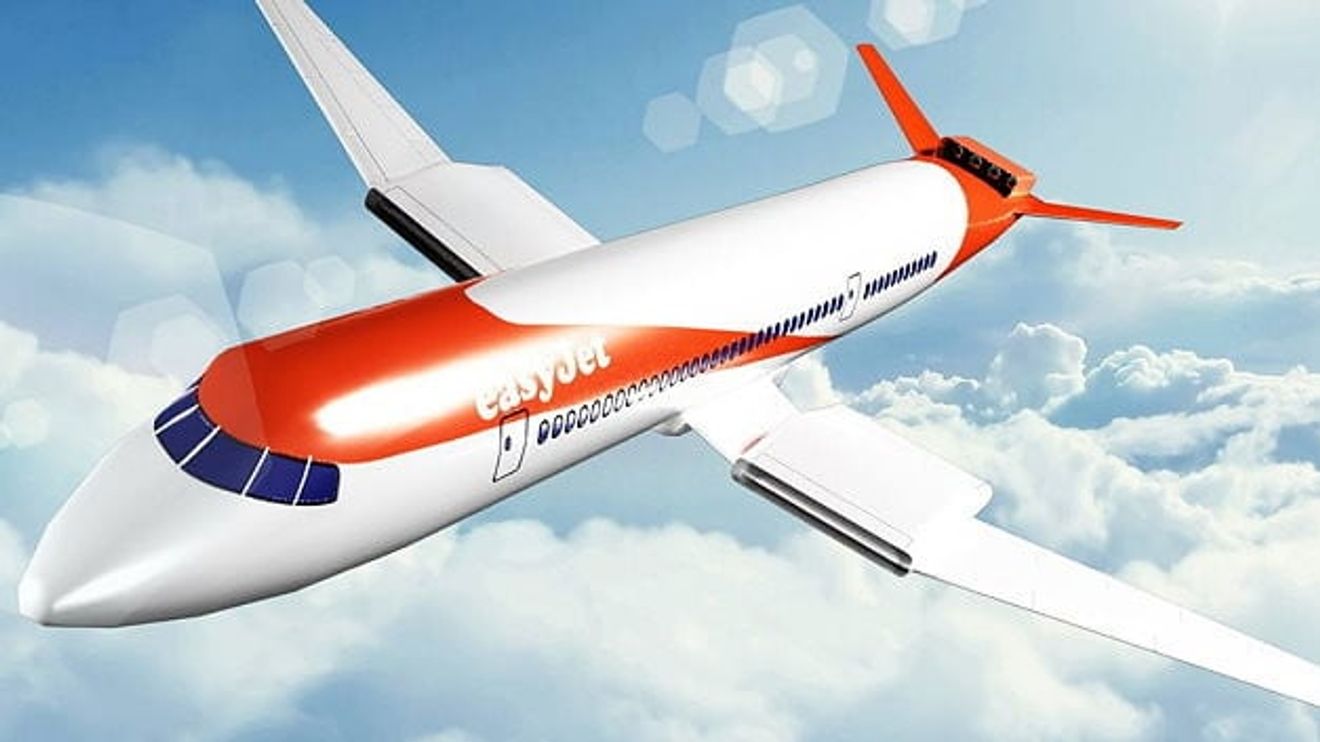
According to Zunum Aero, the ZA10 will have a hybrid-electric range of 700 miles and a speed of up to 340 miles per hour. The direct cost per seat and mile is said to be 8 cents or 250 dollars per hour. Emissions and noise levels would be 80% lower than those of conventional aircraft. Boeing recently announced its intention to work with Japanese companies to realize electric flying.
"The system is innovative and realistic," says Logan Jones, Managing Director of Boeing HorizonX, one of Zunum's investors. "The company is building on proven technologies and we see it as a world leader in the field of electric flight."
Zunum itself wants to give new impetus to flying with the new hybrid-electric aircraft. They could breathe new life into previously underutilized airports because they are quiet and can reach airports that are close to the final destination of the journey - at lower costs than before.
Faster and cheaper regional flights
Getting from San José to the Los Angeles area would take 2 hours and 15 minutes from the airports in Palo Alto, San Carlos, Hayward or Reid to Santa Monica, Burbank, Hawthorne or El Monte. Today, it would take 4 hours 40 minutes. In addition, the one-way flight would only cost 120 dollars - significantly less than today's price.
"This aircraft will change the way we live and work," says Matt Knapp, founder and chief engineer of Zunum Aero.
The start-up company Wright is also working on a hybrid-electric aircraft designed for 9 seats. Wright is working together with easyJet. Wright's actual goal is to develop a 150-seat electric aircraft the size of a 737, which will be used for flights of less than 300 miles
A few years ago,Siemens developed an electric motor that delivers around 260 kW of continuous mechanical power at a weight of 50 kg. Further improvements are on the way. Together with Airbus, a hybrid aircraft with 60 to 100 seats is to be developed by 2035. Rolls Royce is developing the hybrid E-Fan X drive (2 MW) in collaboration with Airbus and Siemens; the demonstrator is due to be ready in 2020 and a production-ready model is planned for 2025.
Superconductivity makes electric flight possible
Another interesting technology could contribute to optimizing the electric motor on this scale: high-temperature superconductivity (HTS). "HTS wires achieve much higher current densities and therefore twice as high power densities as conventional electric motors. This opens up completely new possibilities for machines in the MW range for electric aircraft engines," says Werner Prusseit, CEO of Theva, manufacturer of HTLS wires. Oswald, for example, is working on such motors in a project with Rolls Royce. "We want to develop a 1 MW motor with a superconducting rotor and stator that achieves 20 kW/kg. This would be impossible to achieve with conventional technology without superconductivity," says Thomas Reis, Head of Superconductor Motor Development at Oswald. "Electric drives for larger aircraft will not be possible without superconductivity," explained Detlev Konigorski from Airbus at the recent ZIEHL VI Conference 2018 ('The future and innovation of energy technology with HTS') in Berlin, where the superconductor community met.


You might also be interested in
Pepperl+Fuchs and Lufthansa found start-up
The companies Pepperl+Fuchs and Lufthansa Technik have founded the joint venture '3D.aero' in equal shares. Their aim is to develop and distribute innovative automation solutions for the aircraft industry.
 read more...
First flight of an electric vertical take-off air cab
The 'Lilium Jet', the world's first electrically powered vertical take-off and landing aircraft, has successfully completed its maiden flight in the skies above Bavaria.
read more...The Airbus air cab 'Pop.up'
The 'Pop.up' passenger capsule presented by Airbus as a concept study can switch between electrically powered ground and air vehicle modules. This makes the vehicle concept seem like something straight out of a science fiction movie.
read more...Into the stratosphere with the solar airplane
The SolarStratos mission aims to fly a solar airplane into the stratosphere. Weighing 450 kilograms, it will be the first solar-powered aircraft capable of reaching this altitude. The solar systems required for this were developed by the CSEM...
read more...Round-the-world flight with solar airplane successfully completed
On July 26, the Solar Impulse 2 landed in Abu Dhabi - the last stop on a historic round-the-world flight in a solar-powered aircraft that began on March 9, 2015. As one of the technology partners, ABB was involved in the project from the very...
read more...Electric airplane with record-breaking motor takes off
Siemens researchers have developed a new type of electric motor for airplanes: Weighing just 50 kg, it delivers a continuous output that is five times higher than that of comparable drives. Installed in an aerobatic airplane, it has now completed...
read more...MTCON and Sensor-Technik Wiedemann combine expertise
MTConnectivity power2pcb (MTCON) has a new shareholder: Sensor-Technik Wiedemann (STW) has held a stake in the power element manufacturer since the end of 2019.
read more...Electromobility / green electricity
Intelligent charging saves fossil fuels
Charging electric cars can overload the electricity grid and lead to fossil fuel power plants having to step in. This is unnecessary and leads to high costs for grid operators. BMW and Tennet want to change this.
read more...Service robotics at Conrad Electronic
Sales robots in use around the clock
To provide its customers with a 24/7 shopping experience in Berlin Schöneberg, Conrad Electronic has now deployed a sales robot. The robot 'Alex' is designed to provide a high-tech shopping experience. It comes from the manufacturer pi4_robotics.
read more...