
Sensory study
Sensors are getting smarter
Smart technologies in the field of sensor technology will be in greater demand in the future. The storage of sensor data in the cloud and the use of digital sensor twins are also among the future trends - according to the results of a recent study.
While only a few machine manufacturers are currently able to access the configuration or status of their sensors via mobile devices or smartphones, more than one in three are planning to do so in the future. The storage of sensor data in the cloud and the use of digital twins of the sensor also point to this trend. These are the findings of a recent independent study conducted by Michaela Rothhöft, research assistant at South Westphalia University of Applied Sciences, on a freelance basis in collaboration with the VDMA Electrical Automation Association. As part of the study, more than 300 mechanical engineers and engineering firms across Germany provided information on purchasing behavior, technical requirements and future developments in the field of sensor technology in 2021.
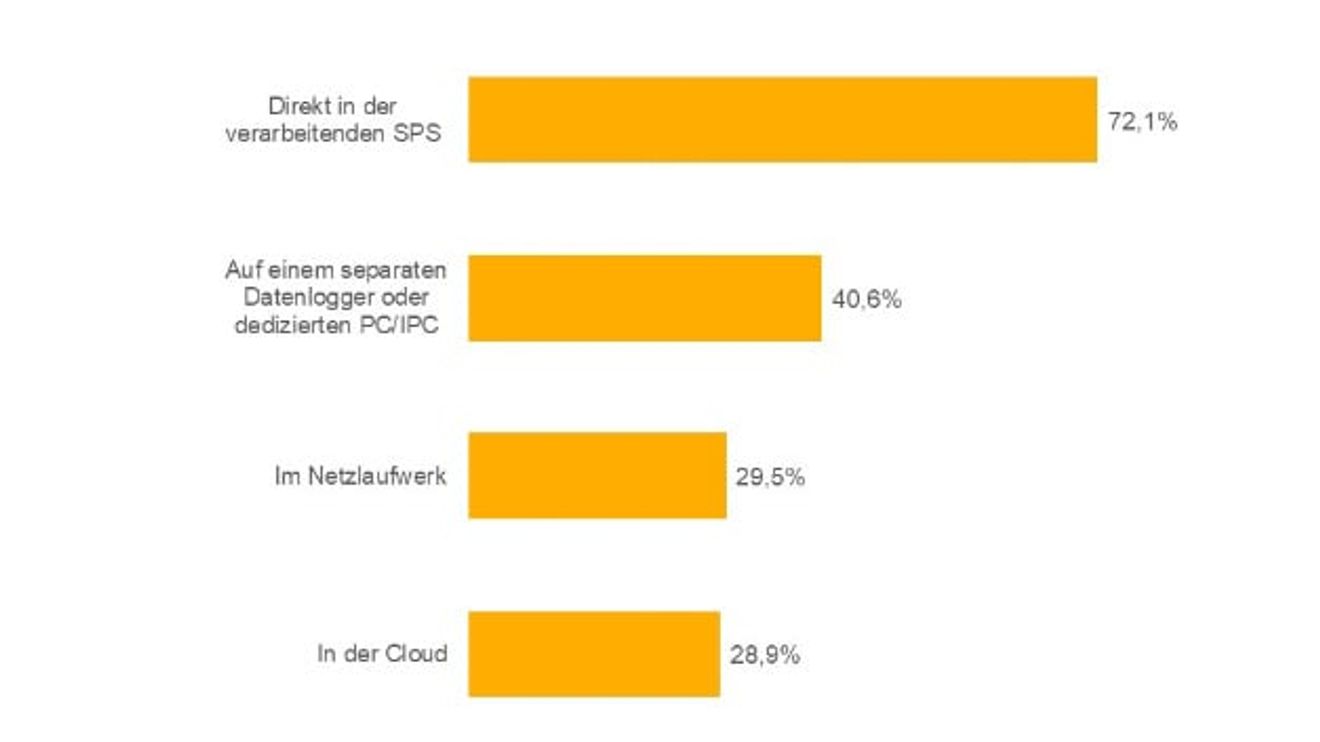
Even if sensors become smarter, the majority of companies still want to store sensor data directly in the processing PLC (72%). However, 30% expect to use a cloud, and this figure rises to 43% for companies with more than 200 employees. As cloud use entails increased security requirements, security (e.g. tampering and access security) will very often be required in the area of sensor technology in the future. One in three also intends to use digital twins of the sensor and/or web services. Artificial intelligence, single-pair Ethernet, augmented reality and a manufacturer cloud, on the other hand, are rarely planned. However, it is also worth noting the many disadvantages that users see when using smart sensors compared to standard sensors. The main criticisms are the need for updates, complexity and manufacturer dependency.
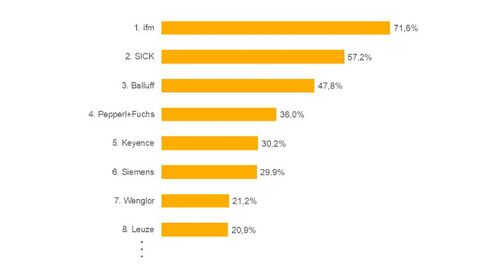
The sensor technology market is characterized by a large number of suppliers on the German market. The 300 or so participants in the survey alone stated that they were familiar with 200 different sensor manufacturers. The company ifm electronic was named most frequently with 72%, followed by Sick (57%) and Balluff (48%). Each machine manufacturer listed an average of five sensor manufacturers as suppliers. The fulfillment of technical requirements plays the most important role in the purchasing decision.


You might also be interested in
Growing market for servo drives
Almost six out of ten machine manufacturers expect demand for servo drives to increase in the future. These are the findings of a recent study.
 read more...
SensoPart and Cambrian Robotics
Partnership for 3D-Guided Robotics
Cambrian Robotics and SensoPart are jointly developing an AI-powered solution for 3D-guided robotic applications. The combination of vision sensors and AI is designed to simplify gripping and positioning processes.
read more...Expansion of the Sensor Portfolio
Infineon Completes Acquisition of ams Osram's Sensor Business
Infineon has completed the acquisition of ams Osram's non-optical analog/mixed-signal sensor portfolio. The business is expected to generate approximately 230 million euros in revenue in 2026.
read more...Technologies for precise data and analytics
From June 9 to 11, 2026, Sensor+Test once again brought together trade visitors from the fields of sensor technology, measurement, and testing in Nuremberg. With its focus on these core technologies and the wide range of application areas, the trade...
read more...Increased revenue and expanded production capacity
The Fraba Group, a manufacturer of sensors for industrial motion control, looks back on a successful 2025, during which both revenue and the number of employees increased.
read more...From sensor to intelligent system
Sensors, measurement technology and artificial intelligence are merging to form intelligent systems. From June 9 to 11, 2026, Sensor+Test in Nuremberg will showcase the most important trends in a changing industry.
read more...Technology and innovation center opened in Chengdu
Balluff has opened a technology and innovation center at its production site in Chengdu, China. The aim is to provide even more targeted support to local and international customers with solutions and expertise.
read more...Dr. Volker Frey becomes CTO
On May 1, 2026, there were personnel changes in the top management of the ifm group of companies. Dr. Volker Frey succeeds Benno Kathan as CTO, who has retired.
read more...Self-learning sensor systems monitor industrial manufacturing processes
In the 'GenSATIOn-Edge' project, the Fraunhofer Institute for Microelectronic Circuits and Systems IMS is working with partners to develop intelligent sensor systems for the continuous monitoring of industrial processes. AI models run directly on...
read more...