
Fraunhofer IFF
Working safely with cobots
At the Fraunhofer Institute for Factory Operation and Automation IFF in Magdeburg, the European COVR project is researching and promoting the 'safety' aspect of collaborative robotics in practice.
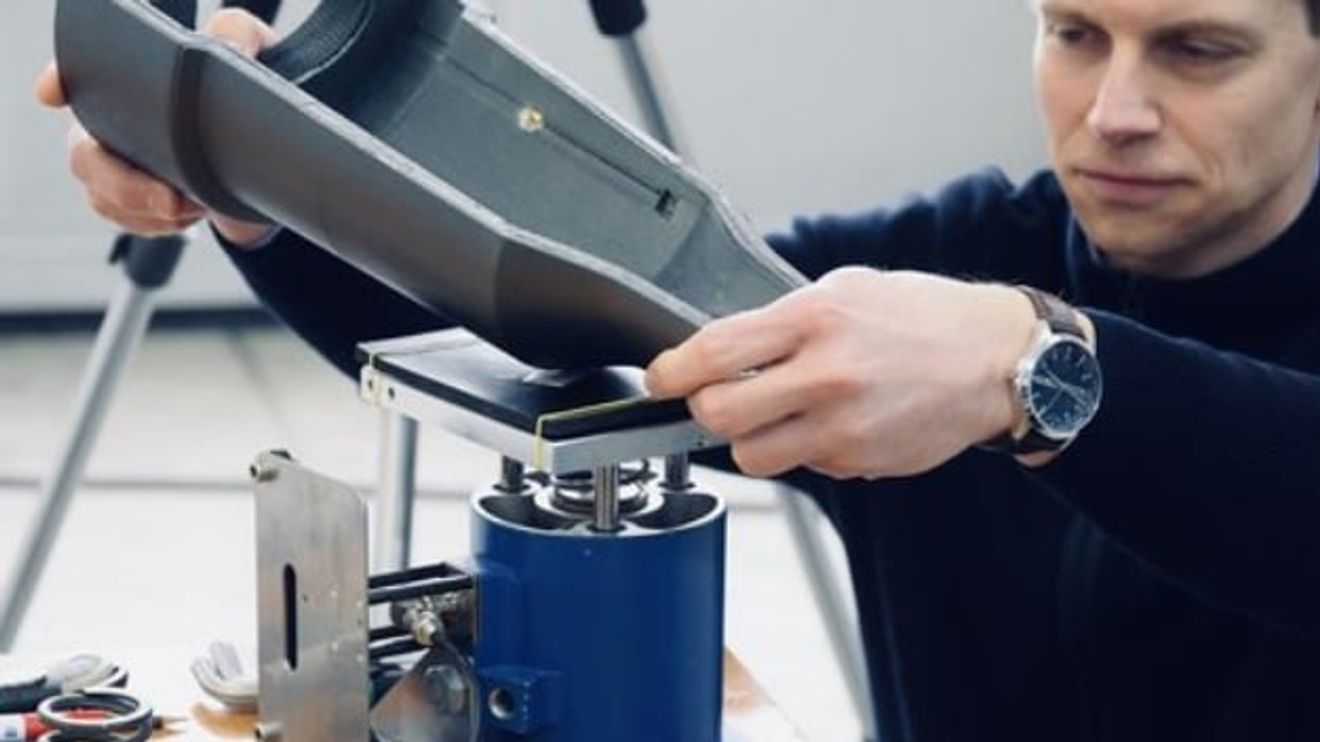
"In the course of digitalization, there is a high demand for flexible automation solutions. Collaboration between humans and robots is therefore becoming increasingly important in many areas of the European economy. However, this growing importance inevitably raises questions of safety, i.e. the protection of humans in a shared workspace," says Dr. José Saenz. The scientist heads the Assistance, Service and Industrial Robots Group at the Fraunhofer Institute for Factory Operation and Automation IFF in Magdeburg. The IFF is co-initiator of the European project 'Safety in Collaborative and Versatile Robots in Shared Spaces (COVR)', which is researching human-robot collaboration from a safety perspective and promoting its application in practice. Traditional safety devices are not sufficient in collaborative work situations: Forces, speeds and movements of the collaborative robots must be monitored, limited and the cobots stopped if necessary.
Subsidies for third parties
The aim of COVR is to support the wider use of collaborative robots in a variety of industries and sectors. "The project will provide more than five million euros in funding for third parties from the robotics industry to test our developed standardized safety verification protocols with their specific use cases. This will provide background research and experimental data to identify best practices. In total, 60 'experiments' with over 100 partner organizations from 14 European countries will be funded," says Dr. Saenz.
In one of the funded and supported COVR projects, for example, the company MRK Systeme developed a safety sensor system that detects people in the immediate vicinity of the robot in the shared workspace and can stop the robot in good time before it comes into physical contact with them. In the test, the robot was moved at various target speeds. In coordination with the Fraunhofer IFF, MRK Systeme developed a special electrode for the test, among other things, which produces a sensor behavior similar to that of a human hand. The company can now independently test new sensor prototypes and combinations of sensors and robots without having to use a person's own body as a test object.
This is an example of how the Fraunhofer IFF's EU-funded COVR project is advancing collaborative robotics technology. "For end users, manufacturers of robotic components and system integrators, the issue of safety has often been an obstacle up to now," says Dr. Saenz. European legislation puts the protection of employees first and foremost. Therefore, from the point of view of entrepreneurs, there is an urgent need for 'certification', i.e. guidelines for compliance with binding and fundamental health and safety requirements. However, "proving compliance is a major hurdle, especially for smaller companies," explains Dr. Saenz.
COVR aims to systematically reduce these hurdles. The project offers various ways to support companies: In addition to direct support, a freely available website has been developed with case studies for cobot applications, relevant standards and guidelines and risk analyses. In addition, 20 protocols have been written in the form of easy-to-follow step-by-step instructions to enable companies to carry out their own validation measurement of applications based on the respective device type and specific safety requirements.
Five research and technology organizations are driving COVR: the Danish Technological Institute, the Italian National Research Council, the French Alternative Energies and Atomic Energy Commission, Roessingh Research and Development from the Netherlands and the German Fraunhofer IFF.


You might also be interested in
Robotics&AUTOMATION 3/2021
Is an industrial robot without a cage really safe? What needs to be considered in the planning phase of human-robot collaborations? And what does a gecko have to do with robotics? The latest e-paper from Robotics&AUTOMATION provides the answers.
 read more...
Automated material transport with trailers
The MiR250 Hook from MIR can automatically pick up and move transport trolleys. The autonomous robot moves loads of up to 500 kg using a trailer system.
read more...Safe HRC from the planning phase
Without collision measurement and biofidelic measurement systems, it has not yet been possible to determine the maximum permissible speeds of a cobot. This is now set to change.
read more...FZI Research Center for Information Technology
Research for robots in everyday life
Service and assistance robots are increasingly finding their way into everyday life and will also take on more tasks in public spaces in the future. The BMBF is therefore funding the 'Transfer Center Robots in Everyday Life (RimA)' project with 2.25...
read more...Robotics&AUTOMATION 2/2021
The 'robot colleague' is establishing itself - in large companies, in SMEs, in private and public spaces. What trends are accompanying its appearance? What are the benefits of swarm robotics? How can it help to understand it as an edge component?...
read more...Karlsruhe Institute of Technology
New AI methods for picking robots
Researchers at the Karlsruhe Institute of Technology (KIT) are working with partners from Germany and Canada to make order picking robots more intelligent using distributed AI methods.
read more...Secure cobot installations
When it comes to safety, cobots place high demands on the knowledge of their human colleagues. A digital service developed by European research institutions aims to help companies share knowledge and carry out safe cobot installations.
read more...Mobile assistance robots in flow production
Together with partners from industry and research, robotics experts at the Fraunhofer IFF have developed new technologies that enable mobile assistance robots to perform assembly tasks even on moving objects such as in flow production.
read more...Human-robot collaboration / cobots
New ISO standard for the measurement of collision forces
In collaboration with numerous international partners, robotics experts at the Fraunhofer IFF have developed a new ISO standard that shows how contact forces and pressures on cobots will be measured in a standardized way in the future. The ISO...
read more...