

Merck and BASF
The NAMUR 'Robotics' working group
The automation of complex and individual activities requires a strong interlocking of robotics, digitalization and artificial intelligence. What does this mean for system integrators and manufacturers in Europe when it comes to operating inspection robots?

In the innovation competition 'Advanced Industrial Robotic Applications Challenge' (AIRA Challenge for short), the participating teams demonstrated the possibilities that mobile autonomous inspection robots open up for the chemical industry. The question now is how to translate this potential into an operational application. The robot manufacturers and their integrators have realized that requirements for modularity, explosion protection and machine safety are not 'nice to have' features, but essential for use.
A comprehensive normative situation or specific guidelines from which requirements can be derived are not yet available. The actual requirements in individual plants are also very different in relation to the actual application of the robot: for example, it makes a considerable difference whether the robot operates in a separate work area on its own or in coexistence with employees. If there are also special, work area and system-specific requirements, the degree of complexity is many times higher.
The NAMUR position paper
In order to give manufacturers and integrators a rough overview of the basic requirements, a specialist position paper was developed and published within NAMUR. It describes the challenges and requirements that need to be considered when integrating autonomous inspection robots - safety standards, robustness against environmental influences, modularity for the simple replacement of sensors, intuitive control, data security and data protection, reliable connectivity and cybersecurity. The service life of the robots and their repair options are also covered. The legal framework and compliance with the applicable regulations are crucial here.

Tunnel bridge according to Martin Schwibach, NAMUR: Joint approach and use of synergy effects across company boundaries for a rapid productivity phase.
© NAMUREC/EU conformity is always a mandatory requirement for productive use. Robots fall within the scope of the Machinery Directive (MD). An operational system requires a complete machine. Only after the robot has been integrated into a complete robot application - i.e. equipped with protective measures, sensors or manipulators (hardware) and software for an inspection task - is the system operational and becomes a complete machine for which conformity must be declared in accordance with the Machinery Directive. Ideally, robots are delivered as partly completed machinery, together with a declaration of incorporation describing the path to an EC-compliant application. The integration process begins with a risk analysis in accordance with DIN EN ISO 12100 from the manufacturer's point of view. It must be taken into account that a protective measure must be both proportionate and effective. The basic principle is that no more critical situations may arise as a result of measures, whereby technical measures must be given priority over organizational measures.
The equipment of the protective devices can vary greatly depending on the application. However, the basic requirement from the MRL for an emergency stop must be fulfilled. Depending on the choice of robot system, in the case of walking robots, for example, this can lead to the question of what happens if the emergency stop is activated on a staircase and an even more dangerous situation arises if the robot falls.
This example shows the complexity of integrating this technology. Open and standardized robot interfaces are necessary for the implementation of safety measures in order to achieve a complete robot application.
As this problem is a cross-company issue, activities are taking place within NAMUR to formulate proposals on the above-mentioned topics. In this way, synergy effects can be exploited by pooling requirements and expertise for the benefit of all companies. Companies from the user side as well as integrators and manufacturers of robots and safety technology are represented.
Robotics working group
Within NAMUR, members have formed the working group AK4.23
'Robotics' working group. This working group has set itself the goal of discussing concept developments and formulating requirements for inspection robotics as part of an exchange of experience, as well as participating in standardization issues. Topics include inspection robotics, such as walking robots, driving robots and drones. The topics will include
- Implementation concepts for the safe operation of innovative robot technologies
- General description of requirements for a mobile robot system
- Requirements for a safe robot application
- Criteria for use in hazardous areas
- Considerations regarding IT/OT security and data protection
- Consolidation of requirements
- Observation of developments on the market
Successful integration also depends heavily on the approach taken by the company in question. Acceptance and willingness to engage with robot technology are the basic prerequisites for the success of robot integration. In terms of expectation management, it is advisable to involve all those who will have a significant influence on the success of the project at the outset and to consider and discuss opinions.
Innovation competition
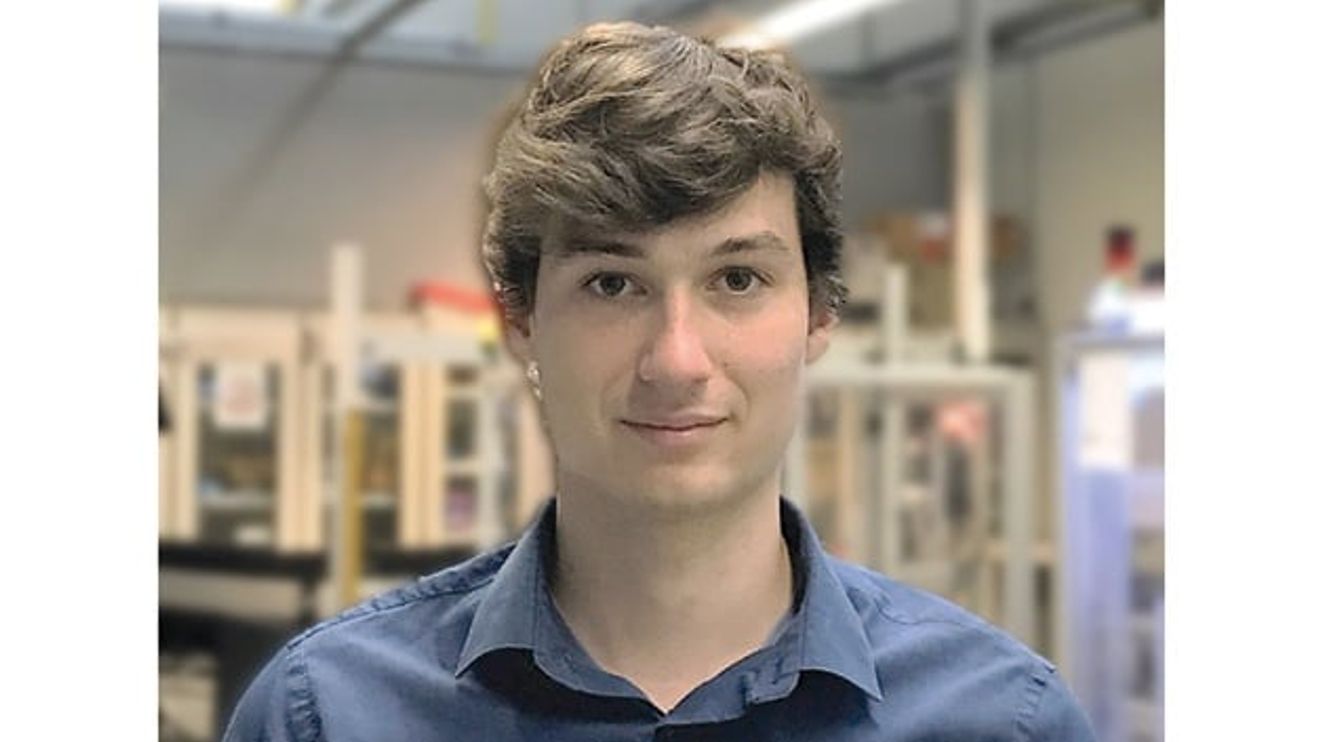
Yanick Kleppinger works at Merck in Darmstadt in the Automation and Robotics department as a project and EMR operations engineer and is an expert in mobile robotics.
© MerckParallel to the developments of the working group, another innovation competition will be held in 2024, this time on the topic of 'Teleoperation'. Under the motto 'Upgrade your service robot by teleoperation', challenging tasks representative of the industry will be set for which innovative technical solutions must be developed. In addition to autonomous navigation, the focus is on the teleoperated execution of complex tasks such as opening and closing doors, handling objects and performing delicate operations - all from a distance. The final will be held at the Achema trade fair in Frankfurt am Main in June.

Peter Welter is Automation Manager at BASF in Ludwigshafen and a global expert responsible for the Robotics & Mechatronics specialist group within Technical Expertise.
© BASFMobile robotics offers process automation companies considerable added value in the long term. Before this can happen, however, acceptance must be further increased and the necessary framework conditions created. Demographic change requires that this technology can be used safely within a clear timeframe. It is therefore essential to use the knowledge of experienced employees, foremen and plant managers in the plants for digital models and processes and to combine it with mobile robotics.


You might also be interested in
Robotics: German industry in third place worldwide
In Germany, robot density in the manufacturing industry is in third place behind South Korea and Singapore, according to the latest results of the World Robotics Report by the International Federation of Robotics.
 read more...
The e-paper special: looking for products of the year 2024
They've earned it: all 96 nominated products from 12 categories in their own e-paper. Browse through the individual areas and make your personal selection. You can also find out more about the companies and their solutions in the accompanying video...
read more...The AIRA Challenge
Robotics and the autonomy of systems promise high added value in the long term. The 'Advanced Industrial Robotic Applications Challenge' innovation competition was launched to see how the process automation market is prepared for this.
read more...Robotics in process automation
Robotics and the autonomy of systems promise high added value in the long term - especially with regard to demographic change. How can such systems support the digital transformation in the chemical industry?
read more...The AIRA Challenge
Robotics and the autonomy of systems promise high added value in the long term. The 'Advanced Industrial Robotic Applications Challenge' innovation competition was launched to see how the process automation market is prepared for this.
read more...Robotics in process automation
Robotics and the autonomy of systems promise high added value in the long term - especially with regard to demographic change. How can such systems support the digital transformation in the chemical industry?
read more...Industrial companies feel little
Concerns about the next corona wave are growing. The sickness rate is also rising. What does this mean for the country's industry?
read more...The IIoT in a test scenario
technologies from the fields of Industrial IoT and Industry 4.0 'just like that' in process engineering systems for chemical and pharmaceutical production? At Merck, they are first put through their paces in the plant's drinking water storage system.
read more...Flexible modular system
Shorter time-to-market is playing an increasingly important role in the process industry and this must be mapped early on in the product life cycle.
read more...