
Smartwatch
The IoT watch
A smartwatch for professional use: Trekstor wants its new IoT wearable to make its way into companies - including manufacturing. General Manager Hendrik Unkel talks about the technical details, how it works and possible application scenarios.
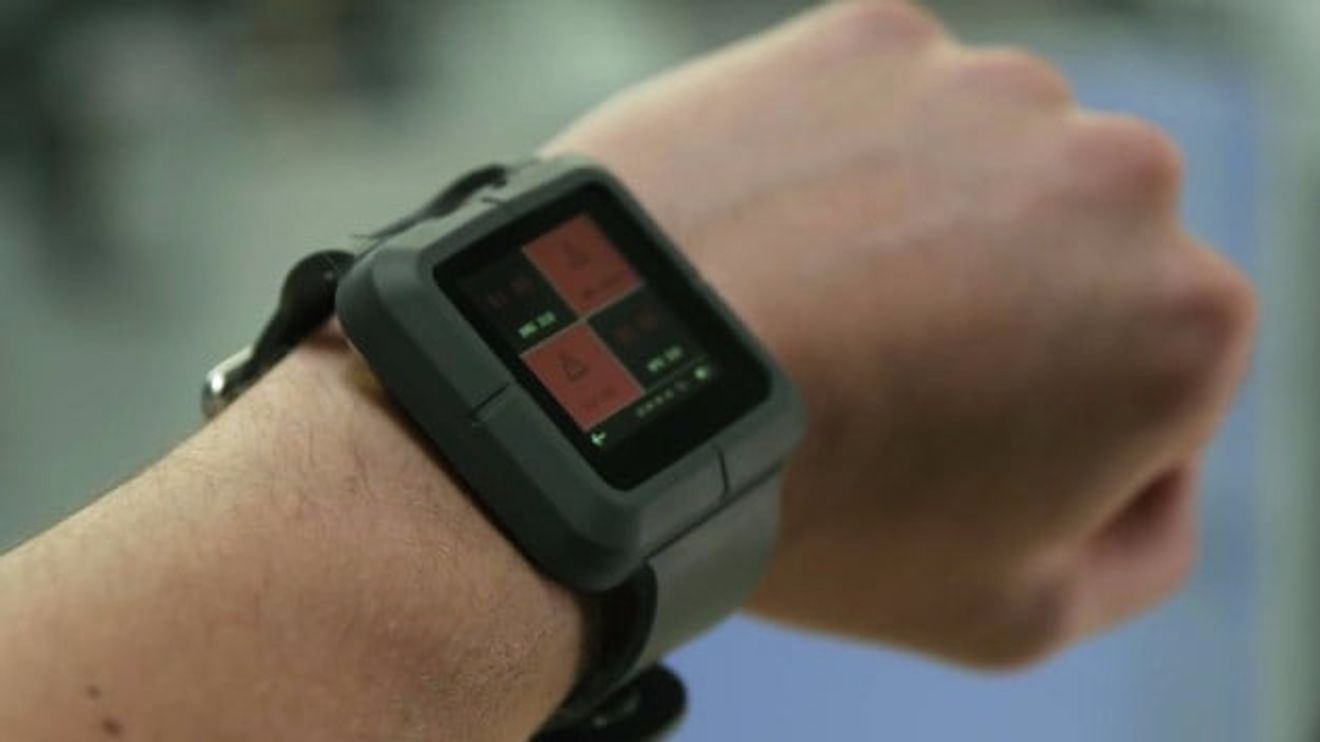
Mr. Unkel, a smartwatch is much smaller than a smartphone. How is the device operated?
The 'Trekstor Smartagent' can be operated via the touchscreen and voice commands. The 1.54-inch LCD touch display can also be operated with gloves, which means the wearable can be used in workshops or warehouses. Another option for operation is sending voice messages. Incoming messages are announced via the loudspeaker and a vibration alarm. The Smartagent has a Bluetooth and WLAN interface. A special feature is its compatibility with the Universal Windows Platform applications and the Microsoft Azure cloud service.
Thanks to this function, companies can access information not only within their own business premises, but also in real time, for example at a branch office or in the field.
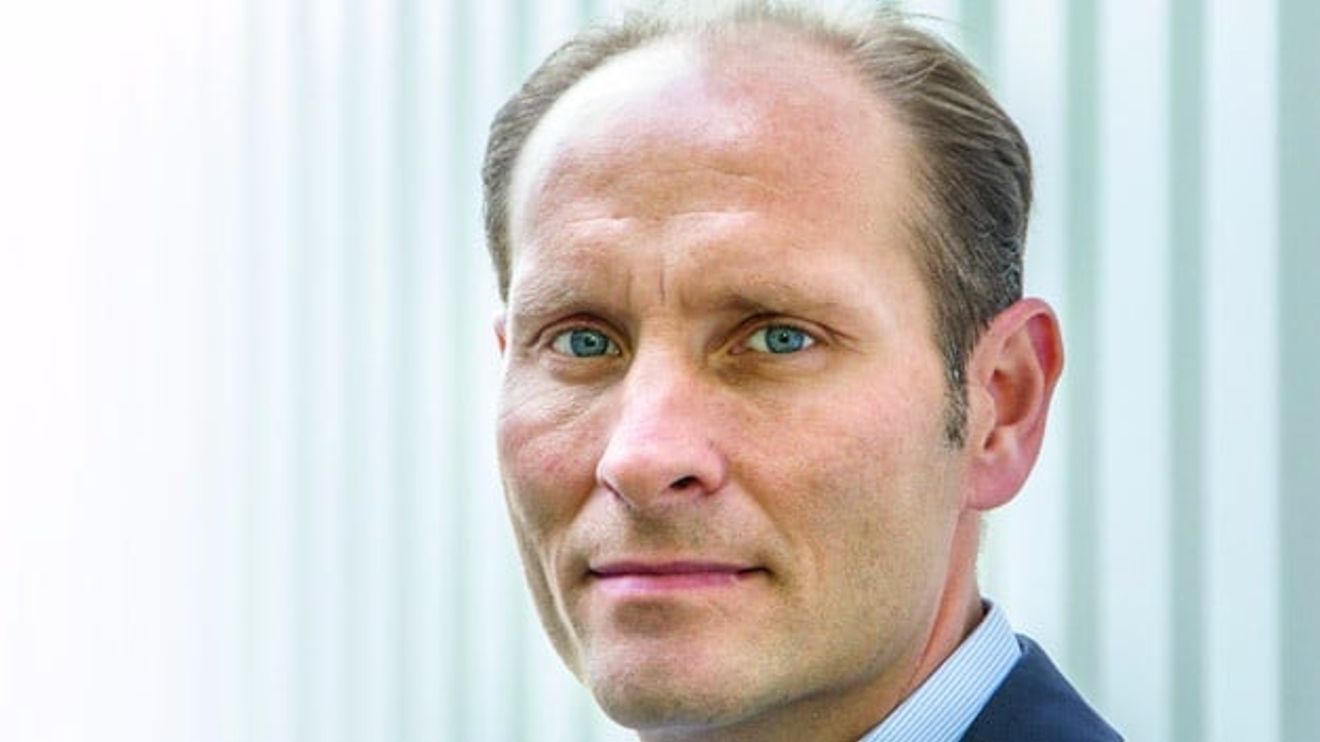
Hendrik Unkel: "The new wearable has a lot of potential for optimizing communication, resource management, safety factors and the efficiency of a company."
© Trek StorWhat interfaces does the smartwatch offer, for example to communicate with machines or other employees?
Communication is wireless via Bluetooth, NFC or dual-band WLAN. The latter offers the great advantage that the 5 GHz band is also used as an alternative to the often overloaded 2.4 GHz band. Bluetooth 4.0 is available both in classic mode for connecting traditional Bluetooth devices or devices with high data throughput - such as headsets for audio transmission - and in low-energy mode. For example, battery-powered BLE sensors can be connected. Another communication option is Near Field Communication (NFC) in accordance with ISO/IEC 14443, which can be used for operator authentication using a smart card or NFC tag. It is also conceivable that this could be used to identify components in production or employees - for example for time recording - or for communication and authentication with a cell phone. The autofocus camera can be used for inventory, documentation or reading barcodes and 2D codes, for example.
What does the inner workings of the smartwatch look like?
The inner workings are largely the same as those of a modern tablet or smartphone. A Qualcomm APQ-8009 quad-core Cortex A7 processor with a clock speed of up to 1.3 GHz and 1 GB of RAM ensure the smart agent's performance. The IoT smartwatch also houses an 8 GB flash memory. A large part of the volume is taken up by the battery. It has to be large enough to ensure a reasonable battery life, which in our device was between ten and fourteen hours depending on the usage scenario. However, this should not be compared with consumer devices that are linked to a cell phone and have a slimmed-down and usually proprietary operating system, as our smart agent works independently. Otherwise, all the other components of a tablet, such as display with touchscreen, power management, antennas with the corresponding front ends, sensors, loudspeaker, vibrator, camera and buttons are available in the smallest possible space. Thermal management was a particular challenge during development, as the device worn on the body must not get too warm and must deliver high performance at the same time.
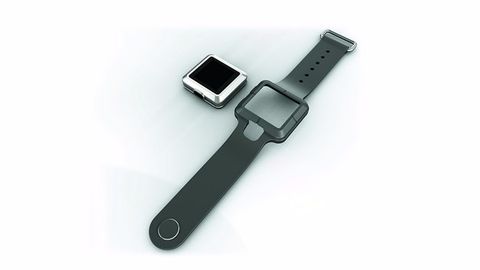
The IoT wearable measures 47 mm x 44 mm x 12 mm and weighs 60 g. It only becomes a smartwatch with the silicone wristband.
© Trek StorHow is the device protected against dust, dirt and water?
Thanks to the IP67 standard, the wearable is functional at temperatures from +60 to -20 °C. The aluminum housing is also protected against humidity, dust and brief immersion in water up to a maximum depth of 1 meter thanks to the IP67 protection class. A robust silicone wristband and case also protect the smart agent from external influences. This means our wearable can be used in a wide variety of environments, whether in production, in cold storage, on construction sites or in commercial kitchens.
What does the Windows 10 IoT Core operating system offer?
In principle, any Windows 10 UWP application available for ARM devices can run on this smallest version of Windows 10 - with the restriction of the small screen. With individually customizable user profiles, the operating system enables a detailed definition of read and write access rights and comprehensive information management. It also enables the seamless integration of artificial intelligence into all processes via Azure Cognitive Services.
What are specific application examples in manufacturing?
Companies from various industries are using IoT solutions to advance their digital transformation and optimize processes. Production and maintenance, retailers, hotels and the energy sector in particular are benefiting from this development.
In manufacturing, for example, processes can be significantly improved by using sensors to predict maintenance requirements in good time and thus reduce unplanned downtime that paralyzes production. In this case, the responsible employees receive an automatic message on their smart agent to carry out the necessary maintenance without delay. In addition to passing on information to the employees that maintenance needs to be carried out, they can also communicate the completion of the work by touching the Smartagent display once the maintenance has been carried out. The maintenance manager can then promptly deploy the employee for other work and switch the system to maintenance status.
In addition, the scheduling of all employees during a shift can be organized much more efficiently and at short notice. Imagine a production hall with a large number of employees. In the course of a shift, delays occur at a certain work step. The shift supervisor in charge can now send individual employees to exactly this work step by sending a corresponding message to the smart agents of the necessary employees. They receive the corresponding message without any delay and are therefore able to bring the production process back into the desired flow.
Thanks to the built-in camera, damage to machines can be photographed and the images sent immediately. This allows supervisors to quickly evaluate whether and which measures need to be carried out on the machine. The implementation of NFC also offers a wide range of possible uses. This ranges from simple time recording to individualized key concepts, where each employee is individually assigned which rooms they are allowed to enter.
This small selection of examples shows that our smart agent can be used in many areas of production and makes the use of resources considerably more efficient.
IoT solutions make it easier to collect and manage large volumes of production data in the cloud, not just in a single factory, but across multiple production sites. This is where the smart agent helps by displaying essential production information and predictive projections using ad hoc voice commands.
Does Trekstor offer other devices in addition to the Windows version?
Yes, we have also developed a smart agent based on Android 5.1 Lollipop. This offers the same functionality as the Windows version and is based on an Intel Atom x3 C3130 processor.
When will the devices be available?
Both devices will go into mass production in the third quarter of this year and we are currently seeing strong interest, not only from the manufacturing sector, but also from the hospitality and healthcare sectors.


You might also be interested in
Double security through redundancy
The 'Safety Key' from Hy-Line allows the simple integration of safety-relevant switches in glass displays.
 read more...
Operation via touch, glove, pen or digitizer
Getac launches the next generation of 'F110' and 'K120' tablets: The new F110 is suitable for use in a variety of harsh outdoor and indoor scenarios.
read more...Flexible visualization
'Prime Panel Touch' and 'Prime Panel Extend' from Schubert System Elektronik (SSE) are suitable for sophisticated visualization concepts in industry.
read more...Support arm panel expands portfolio
The 'TT 1564' multi-touch operating panel for mounting arm installation extends the Sigmatek range.
read more...Managing Board expanded
Kontron expands its Management Board with Philipp Schulz and Dr. Johannes Fues. As COO, Schulz will be responsible for the Aerospace and North America business units, while Dr. Fues will assume the position of COO for the GreenTec business unit.
read more...Tablet for the Ex area
With the 'Pad-Ex 01 P12', Pepperl+Fuchs is launching a new tablet for professional use in potentially explosive atmospheres in Zone 2/22, Division 2.
read more...Modular embedded touch HMI
Irlbacher, provider of free-form touch solutions, has a new solution kit for modular embedded HMIs.
read more...Control elements that can be used for security
The control element PIToe ETH with activatable Ethernet port from Pilz protects freely accessible Ethernet interfaces in industry against unauthorized access.
read more...Control panel series updated
Kontron has developed a new generation of its Control Panels which, thanks to the more powerful Arm NXP i.MX8M Plus processors, provide a significant performance boost compared to previous models.
read more...