
System optimization / machine learning
Avoid machine downtimes with the analysis tool
Researchers at Fraunhofer IPA have developed an analysis tool that uses self-learning algorithms to find defects in high-speed production systems and perform machine benchmarking. Now they are using this technology to make themselves independent.
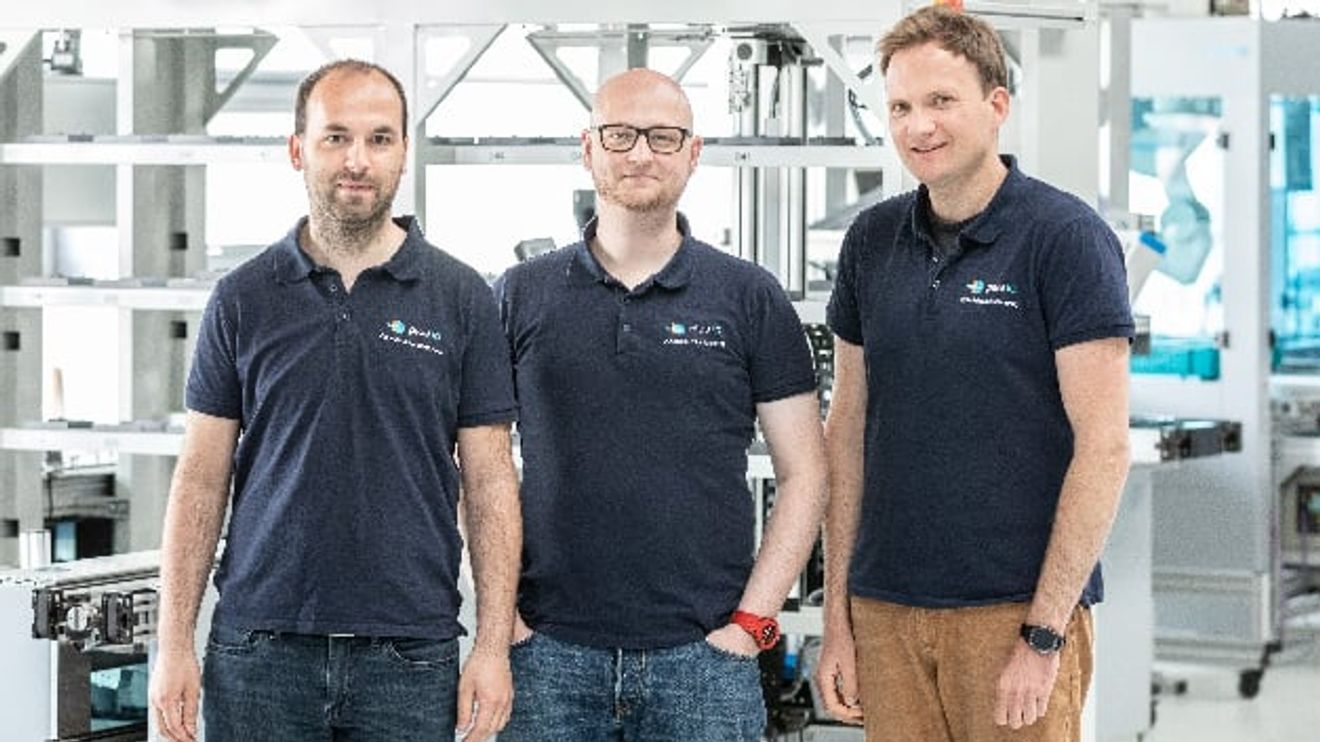
The pharmaceutical and consumer goods industries in particular work with capital-intensive production facilities and are dependent on maximizing productivity at all times. Otherwise, there is a risk of cost pressure and financing gaps, as well as the fact that many production systems comprise a large number of stations and work so quickly that the causes of errors cannot be detected with the naked eye.
In 'smart system optimization', which Felix Müller, Group Manager Autonomous Production Optimization at Fraunhofer IPA, has developed together with his team, a powerful connector accesses the data in the machine control system at high frequency via the respective manufacturer protocol. This creates a continuous database that several self-learning algorithms evaluate synchronously. These recognize in detail where faults are present in the production system, how they are connected and what priorities they have for rectification. In this way, defects that lead to the failure of the entire system can be rectified more quickly or even predicted.
Shannon - an intelligent worker assistance system
However, it is not always clear what to do if an error threatens to occur. In addition, there are follow-up messages from the system that make the situation even more confusing for the operator. For this reason, Müller and his team have developed 'Shannon', an intelligent operator assistance system for complex production systems that is based on smart system optimization. Previously, it was often up to the machine operators to decide what to do to rectify a fault. Now, however, the affected machine sends them detailed step-by-step instructions on their smartphone or tablet. The database and the links between faults and solutions are constantly expanding during system operation.
This gives plant operators the opportunity to create their own instructions, for example for rectifying faults. In addition to text, these instructions can also include photos and videos. The system operator can also provide feedback on the information provided, which is used to improve it. System operators are also actively encouraged to contribute their knowledge, for example when describing detected but unknown events. In this way, a clearly understandable and consistently linked knowledge database is built up over time, consisting of faults, events and solutions. Shannon is currently being used as a tablet and smartphone app in several factories, where it has significantly reduced the time it takes to rectify faults.
Benchmarking increases efficiency by up to 18 percent
Automated machine benchmarking is also feasible with smart system optimization: In many production halls, there are dozens of identical or similar machines that always carry out the same processing cycle. One example of this is injection molding, die casting, blow molding and thermoforming machines. Although they all have the same design, some work slower than others. This is usually due to wear on certain components, varying sensor behavior or different tool settings and material fluctuations.
In machine benchmarking, the overall process in a machine is first defined and broken down into individual steps. The high-frequency connector on the machine controller then generates a database that is evaluated by a machine learning algorithm package. This happens simultaneously with all connected machines and is merged virtually into an ideal process sequence. From this, the tool immediately recognizes when a machine is running slower than intended and links this to a technical cause. Users can thus not only rectify faults before they occur, but also achieve an optimized cycle time for the connected machines by merging the best individual steps. Depending on the machine, this has led to cycle time reductions of between two and 18 percent in previous prototype applications. The application has now been transferred to a continuously learning software called Darwin.


You might also be interested in
Smart monitoring with AI
Image processing systems that react to errors in real time are an essential component of automated inspections. What contribution can artificial intelligence make to this?
 read more...
Measurement technology / sensors
Sensor+Test 2019 focuses on process automation
This year's Sensor+Test from June 25 to 27, 2019 will bring around 530 international exhibitors to Nuremberg. Among other things, they will be providing information on this year's special topic of process automation.
read more...Best practice of AI in research & development
The Laboratory for Machine Tools and Production Engineering (WZL) at RWTH Aachen University has conducted a benchmark study on 'AI in Research & Development (R&D)' with an industry consortium and the Complexity Management Academy. On May 23,...
read more...Beckhoff implements AI in Twincat
Beckhoff has announced a solution for machine learning that is seamlessly integrated into the Twincat 3 controller and is therefore also suitable for the demanding motion sector.
read more...'Artificial Intelligence Forum 2019'
"Neural networks are dumb as a post"
Artificial intelligence is very hesitant to find its way into industrial applications. Expectations of the technology are high. They are rarely fulfilled. However, those who approach the topic with the right premises can reap many benefits.
read more...Edge AI HPCs for Vision AI and GenAI
Advantech has announced the 'AIR-410' and 'AIR-420', next-generation compact Edge AI high performance computers (HPCs). Combining AMD Ryzen 7000/8000/9000 series processors, scalable GPU support and Advantech's 'Edge AI SDK' software, the systems...
read more...Siemens presents technologies to accelerate industrial AI
At CES, Siemens presented technologies to accelerate industrial AI: new digital twins, AI co-pilots, an Industrial AI Operating System and applications in manufacturing, energy and life sciences.
read more...Hitachi takes over Synvert
Hitachi Group has signed an agreement to acquire Synvert, a Germany-based company, as a wholly owned subsidiary of its US subsidiary GlobalLogic from Maxburg, a private equity fund focused on founder-led technology companies in the German-speaking...
read more...Proalpha takes over Insiders Technologies
The Proalpha Group, provider of business applications for SMEs, acquires Insiders Technologies and significantly expands its 'Industrial AI Platform' with AI applications and services for digital document processing.
read more...