

Belden - SPE - Part 2
The opportunities of SPE technology
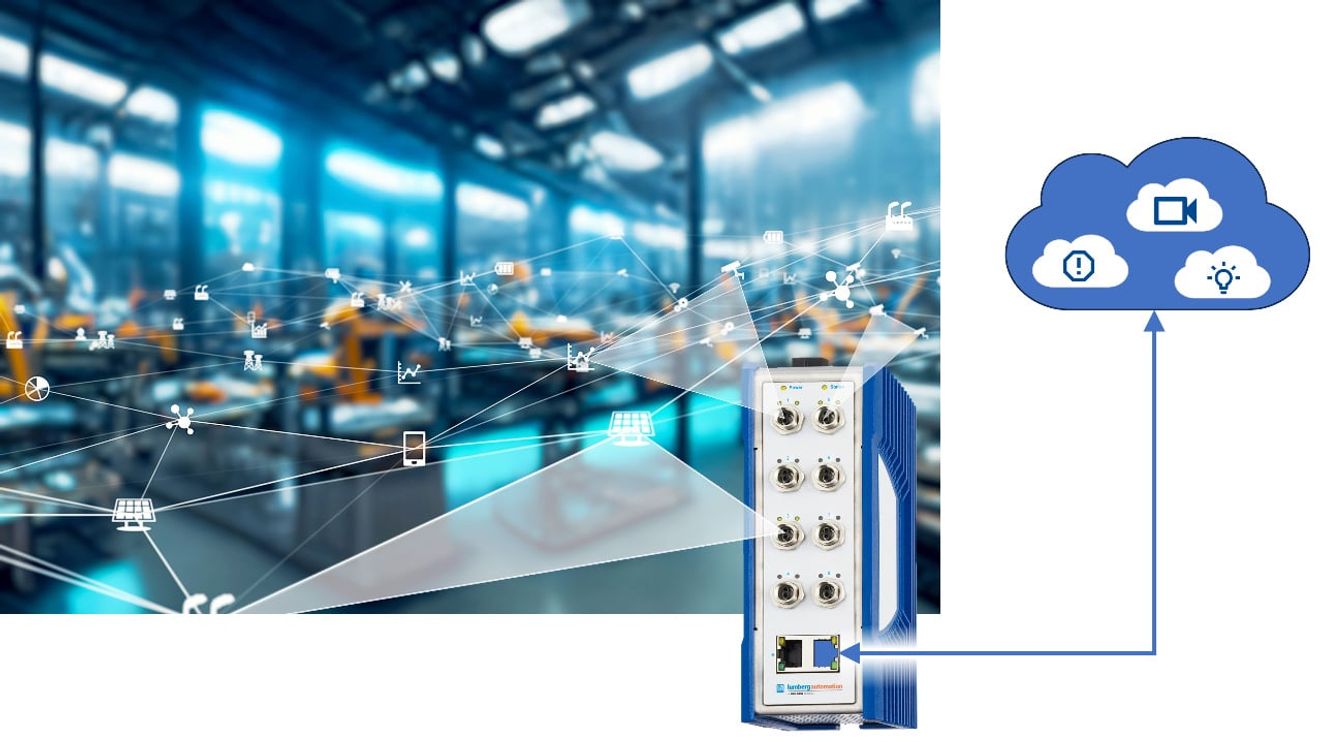
Single-pair Ethernet (SPE) allows Ethernet technology to be used right down to the level of sensors and actuators. This makes it much easier for various user groups to access and view these devices.
The first part of this series on Single-Pair Ethernet (issue 04/2024, from p. 54) introduces five technical features that can be used to assess the relevance of SPE for an application. These features include seamless communication and bandwidth, the general advantages of Ethernet technology, range, a feature of Ethernet over fiber optics and Single-Pair Ethernet, and remote power, a feature of copper-based Ethernet. The fifth feature refers to the SPE-specific combination of physical properties such as size, weight and robustness, which enable small device sizes and flexible cables for use in industrial environments. This special feature enables the use of Ethernet and thus seamless communication down to the sensor-actuator level. Depending on the cable length, bandwidth and, if remote power is used, the current consumption of a sensor or actuator, existing two-wire cabling previously used to transmit analog or digital signals can be reused in some cases.
The evaluation of the five technical features must be carried out objectively for the respective application and the existing environment. The final decision for or against SPE technology and its specific characteristics is primarily made by personas who can perform their tasks differently due to the change in communication technology. The different personas influence the weighting of the features presented and thus contribute to the transformation of the technology.
This part of the series highlights five different personas and their interests and opportunities through SPE technology. Finally, economic considerations must also be taken into account when choosing a communication technology.
Construction and installation

In the initial phase of a system, the choice of communication technology has a major influence on the design and approval of the system. Weight, cable routing and the installation of data and power supply lines as well as fire protection must be taken into account. In addition, subsequent maintenance must also be taken into account. In some applications, SPE offers advantages over today's physical transmission standards.
Compared to both 4- and 8-core copper-based cabling, SPE cables can save weight and simplify cable routing thanks to smaller outer diameters and bending radii. In addition to the bending radius, copper-based transmission offers advantages over fiber optic-based solutions under dirty environmental conditions and vibrations. Thanks to the remote power supply capability of SPE, devices can be supplied with power directly via the data cable. This can be done either in the same way as Power over Ethernet (PoE) via the data pair or via hybrid cables for higher outputs of up to several kW.
An illustrative example of the use of SPE in a critical and weight-sensitive environment is the construction of a train. Here, the use of SPE cables for networking the various control, monitoring and passenger information systems within the train can offer significant advantages. The reduced cable cross-sections and lower weight of SPE cables simplify the design of the cable routes by taking up less space and increasing flexibility.
At the same time, the remote power supply enables efficient power supply to sensors, cameras and displays via the same cables that are used for data transmission. This leads to a significant reduction in the overall weight of the train, which in turn improves energy efficiency and performance, as a lower mass is easier to accelerate and decelerate. In train applications, vibrations lead to increased stress on all components, and SPE offers a further advantage here thanks to lighter and more flexible cables. Overall, SPE enables an optimized cable infrastructure in the train, which contributes to improved operational efficiency, safety and passenger experience.
Network administration
As soon as the system is installed, a network administrator must distribute the addresses and authorizations of the communication participants in the network. The features of seamless communication and remote power supply play a central role here. These SPE features play a key role in simplifying network installation and maintenance while supporting common security mechanisms. A standardized IP-based communication platform enables seamless communication and thus simplified integration and management of network components down to the sensor/actuator level. This enables, for example, end-to-end authentication and encryption across all network levels, which reduces the complexity of network commissioning and supports the efficient use of security mechanisms such as 802.1X. SPE's remote power supply also helps to simplify the installation and maintenance of devices by eliminating the need for separate power supply cables, which is particularly useful when setting up network components in hard-to-reach or remote areas.
An example of this is the creation of a secure network in a large warehouse, where SPE is used to integrate a variety of surveillance cameras and access control systems. By using SPE, these devices can be connected with data and power over a single cable, significantly reducing installation costs and complexity, while making it easier to comply with security standards through the use of 802.1X. For all network-enabled devices, however, this means additional effort in implementing the required functions compared to fieldbuses and potentially requires more hardware resources, such as computing power or memory.
Programming the application

For application engineers involved in programming systems and carrying out factory acceptance tests (FAT), the seamless communication and bandwidth features of SPE are particularly important. SPE supports efficient, end-to-end IP-based communication that enables direct and simple networking of sensors, actuators and control units. This simplifies the programming and integration of system components as there are fewer restrictions in terms of compatibility and connectivity. For example, an application engineer can switch flexibly between sensor manufacturers without having the connection as a central selection criterion. At the same time, the switch from fieldbus to Ethernet technology provides end devices with more bandwidth so that additional diagnostic data can be retrieved. In contrast to 4- and 8-wire Ethernet connections, SPE enables the use of compact connectors and lighter cables. Compared to fieldbuses, however, SPE requires the implementation of a complete IEEE network stack and therefore leads to additional development work. The ODVA has accepted this challenge and has already responded with a reduced functional scope of EtherNet/IP for devices with severe hardware limitations, so-called 'constrained devices'. This includes CIP security with pre-shared keys and control data exchange exclusively via UDP.
Operation of the application
For application operators tasked with the control, maintenance and servicing of systems, the remote power supply and seamless communication features of (SPE play a central role. Remote power makes it possible to supply end devices such as sensors and actuators with power via the Ethernet cable, which simplifies installation and maintenance, especially in areas that are difficult to access or have a large spatial footprint. This is even more significant in the context of remote monitoring and control of installations using SCADA systems, which require reliable and parallel communication for process control and monitoring tasks. The seamless communication offered by SPE is crucial here, as it ensures uniform IP-based networking right down to sensor/actuator level. This end-to-end connectivity not only facilitates the integration of different system components, but also supports the parallel transmission of control commands and real-time data acquisition for SCADA systems. A concrete example of this is the remote control and monitoring of a distributed power generation system. By using SPE, application operators can monitor the output of solar panels and wind turbines in real time and simultaneously send control commands to inverters and load management systems, thus ensuring optimum energy yield. The combination of remote power supply and seamless communication enables efficient, reliable and cost-effective operations management, which is essential for modern infrastructure management. Until now, remote monitoring and control has not been implemented directly with sensor data, but the controllers in the processes have provided aggregated data to the SCADA systems. This has reduced the demands on the sensors in fieldbus applications, but requires regular adaptation of the control programs in order to extract the currently relevant data.
Optimization of the application
For data scientists involved in data analysis, predictive maintenance and the optimization of control in plants, the bandwidth and seamless communication features of SPE are particularly important. The high bandwidth of SPE enables the fast transmission of large amounts of data required for analysis and machine learning. This is crucial for gaining real-time insights and developing accurate predictive models. Seamless communication also facilitates the integration of data from different sources via a unified interface, reducing the complexity of data collection and enabling more comprehensive data analysis. A practical example of this is the optimization of production processes in a manufacturing plant. A data scientist can use SPE to collect data from sensors on machines at high frequency and use this information to develop predictive maintenance algorithms. By analyzing this data, potential failures can be identified and maintenance work can be proactively planned before unplanned downtime occurs. The combination of high bandwidth and seamless communication enables efficient data collection and analysis, resulting in a significant increase in plant availability and optimization of operational processes. In current fieldbus environments, the sensor connections are isolated by controllers that act as gateways. As a result, data scientists cannot retrieve the sensor data in the required resolution. This limitation restricts their role in current fieldbus environments.
| The next part of this article series |
|---|
| The next part of the series looks at how end-to-end Ethernet enables IP-based communication between all end nodes and seamless linking of network segments without gateways using standardized semantics. The advantages for the interest groups defined in the article of such a transparent Ethernet-based network down to the sensor/actuator level will also be highlighted. |


You might also be interested in
Smart control cabinets thanks to new Ethernet/IP technology
Rockwell Automation is launching an Ethernet/IP control cabinet solution. The aim of this further development is to meet the growing demand for smarter, faster and better networked production processes.
 read more...
SPE switch for cost-efficient cabling
Single Pair Ethernet (SPE) is making its way into the ICP Germany portfolio. The 'ITPS-141TX' is a 5-port unmanaged SPE switch.
read more...Unmanaged SPE switch
The new unmanaged switch '10Base-T1L SPE' from Weidmüller offers a range of one kilometer and power transmission with class A Profinet conformity.
read more...Solutions for more interoperability in the industrial Internet
In Industry 4.0, sub-processes are being integrated ever more deeply and access to data is being improved in order to optimize workflows. Communication in the infrastructure plays a decisive role, and seamless integration and interoperability are...
read more...The top articles in July 2024
Innovative spirit and entrepreneurial thinking characterize the most-read articles from July. Find out more about competitive advantages through AI, click through award-winning developments and read more about model-based design and quantum sensor...
read more...New management for Asia-Pacific business
Mabel Low takes over the position of Managing Director and Corporate Regional Manager at Harting Singapore Pte. Ltd.
read more...TSN - backbone for virtualized control systems?
It is currently a major vision: the virtualization of control systems. This and the next article in this series will address this topic. The decisive prerequisite and content of this article is the connectivity of the control system right down to...
read more...SPE - The cost and benefit aspects
Single Pair Ethernet is a technological extension of the Ethernet standard with a lightweight two-wire connection solution. But where can its use actually be expected for economic reasons? What hurdles still need to be overcome?
read more...Industrial Ethernet dominates
Every year, HMS Networks conducts a market analysis of industrial networks. The latest study shows that the market for industrial networks is continuing to expand, with expected growth of 7% in 2024.
read more...