

Three questions for ...
Supply Chain Act - overdue or superfluous?
The planned German Supply Chain Act makes companies more responsible if suppliers violate human rights and environmental standards. We asked the industry associations VDMA, VDW and ZVEI what exactly this means for industry and companies.
In mid-February, three government coalition ministries agreed on a supply chain law. The compromise stipulates that from 2023, companies will be liable for violations of human rights and environmental standards by suppliers if due diligence obligations are neglected. According to the agreement, companies will have an overview of their entire supply chain, but will be responsible in stages. If a company becomes aware of a grievance in the supply chain, it should be obliged to take remedial action. The aim of the law is also to combat exploitation and child labor in global supply chains.
We asked the industry associations what impact the planned supply chain law will have on companies and employees in Germany. The "Three questions to ..." on the Supply Chain Act were asked by
Brodtmann, VDMA: "It is not possible to influence wage levels and social legislation in other countries"
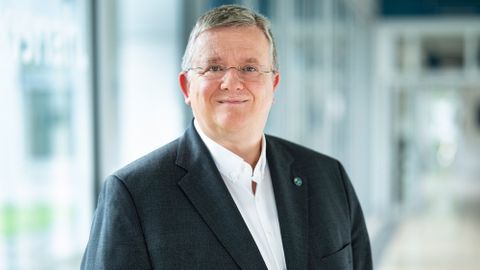
Thilo Brodtmann, Managing Director of the VDMA
© VDMAWhat does the Supply Chain Act mean for German companies?
Brodtmann: In principle, there is a corporate responsibility to respect human rights, which we recognize. The mechanical and plant engineering industry, the SME sector, is committed - out of decency and conviction - to good and safe working conditions and respect for and compliance with human rights worldwide. Many entrepreneurs feel explicitly committed to the Christian world view. It is common business practice to address grievances abroad and to influence their elimination or improvement as far as possible.
Despite numerous corrections in the draft bill for a supply chain law presented by the Federal Ministry of Labor, this law will lead to more bureaucracy for companies, which will hardly help the people affected by the negative effects of a lack of human rights standards. This is exacerbated by annual reporting obligations and the threat of sanctions such as fines or exclusion from public procurement.
"There is cause for concern that large companies are passing on their due diligence obligations to smaller German companies."
The undefined legal terms such as 'reasonable' or 'capacity to influence' are causing headaches. There is a lack of clear parameters and guidelines as to when due diligence obligations have been adequately fulfilled or the ability to exert influence has been sufficiently exhausted.
There is cause for concern that large companies are exploiting their market power via corresponding contractual clauses and passing on their due diligence obligations to smaller German companies in the supply chain. The VDMA is therefore calling for a 'white list' as a reference point for the legally prescribed risk assessment, which at least excludes suppliers from countries with a democratic constitutional model from the assessment.
What impact will the Supply Chain Act have on employees in Germany?
Brodtmann: That is still difficult to assess. Under certain circumstances, Germany could become less attractive as a production location. There is a particular risk if companies have foreign parent companies; these could withdraw their subsidiaries from Germany. The competitive disadvantages due to increasing compliance costs could have negative consequences, particularly for SMEs.
The question must be asked: Where do we want to produce high-quality industrial and capital goods in the future? In countries with high standards or do we also want to relocate this abroad and only focus on services?
What impact will the Supply Chain Act have on the choice of international partners in production, assembly and logistics?
Brodtmann : As the draft law specifies very comprehensive human rights due diligence obligations, there is a risk of withdrawal from countries in which human rights are not implemented de jure or de facto. One challenge here, for example, is collective labor rights, which are not in line with the legal framework in many countries. A German company cannot enforce these in countries such as Russia or China and will look for alternatives where possible.
The same applies to the requirement to receive equal pay for work of equal value. It is not possible to influence wage levels and social laws in other countries, or even to define what constitutes an appropriate wage in the respective countries.
All of this can have far-reaching consequences for existing supply chains and negative effects on economic and social development, particularly in the less developed countries of the South. With its products, the mechanical and plant engineering industry is already making a significant contribution to increasing the well-being of mankind worldwide, including through its technology for access to clean drinking water, water treatment plants, systems for the use of renewable energy sources, intelligent agricultural technology or environmentally friendly and resource-saving production. This development should not be torpedoed by well-intentioned but technically still improvable laws.
Dr. Schäfer, VDW: "Another bureaucratic monster is being created, especially for SMEs"
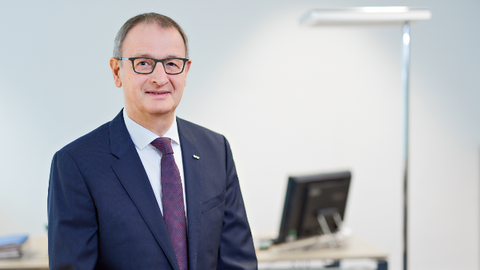
Dr. Wilfried Schäfer, Executive Director of the VDW
© VDWWhat does the Supply Chain Act mean for German companies?
Dr. Schäfer: The Supply Chain Act is planned for the beginning of 2023. It will oblige companies to check that their suppliers respect human rights and comply with humane working conditions and environmental standards. According to the latest agreement between the Ministry of Economic Affairs, the Ministry of Labor and the Ministry of Development Aid, it will initially apply to companies with more than 3,000 employees. At the beginning of 2024, it will then be extended to companies with 1,000 or more employees. In the machine tool industry, more than one in ten companies would formally be affected by level 2. However, smaller companies would also be indirectly affected because they may have to confirm compliance to their own customers. It is primarily the task of politics and not the economy to enforce these concerns.
"Concerted action within Europe would ensure that German companies are not at a competitive disadvantage"
Companies would be required to set up a risk management system, the obligation to take remedial action in cases of suspicion and extensive documentation. For SMEs in particular, this will create yet another bureaucratic monster in a business environment that is already full of rules and regulations. Medium-sized companies have neither the means nor the capacity to control the supply chain down to the last link. This is easy to understand when you consider that a machine consists of many thousands of components and parts from a wide variety of sources. And it may often be very difficult or impossible to provide complete and transparent proof that none of the standards mentioned have been breached, from the raw materials through production to the end product. This is all the more true the further away the suppliers are located. Companies that violate the regulations can be fined and temporarily excluded from public tenders.
In the current bill, it was at least possible to ensure that the requirements only apply to direct suppliers. Civil liability will be waived. The European Commission also intends to present a draft law on corporate due diligence this year. Concerted action within Europe would at least mean that German companies would not be at a competitive disadvantage and is therefore always preferable to going it alone at national level.
What impact will the Supply Chain Act have on employees in Germany?
Dr. Schäfer: The Supply Chain Act focuses on the duty of care towards foreign companies, primarily in Asia, Africa and South and Central America. That's why I don't see any direct impact on local employees. However, with the Supply Chain Act, companies will have to shoulder further burdens in a very tense economic situation and deal with the preparations. This could tie up resources that are urgently needed to boost business and therefore potentially affect the success of the company. It could also hamper investment and research and development activities, indirectly affecting employees.
What impact does the Supply Chain Act have on the choice of international partners in production, assembly and logistics?
Dr. Schäfer: Broadly speaking, the machine tool industry sources castings, steel and electronics. Most of the supplies come from Germany and Europe because the companies have very high quality requirements. The standards there are similar to ours. If the companies work with suppliers from other countries, for example in their own production or assembly in Asia or South America, where local content requirements are also imposed, I am convinced that they pay attention to how the companies work when choosing a partner, even without a law. Nevertheless, the occupational health and safety and environmental standards of many countries are not comparable to ours. However, with fair cooperation and binding agreements in the areas mentioned, improvements can be achieved more quickly than with a bureaucratic monster, which is not intended to improve local conditions, but to make it easier for employees and NGOs to take legal action in German courts.
Weber, ZVEI: "The commitment of German industry in developing and emerging countries would be jeopardized"
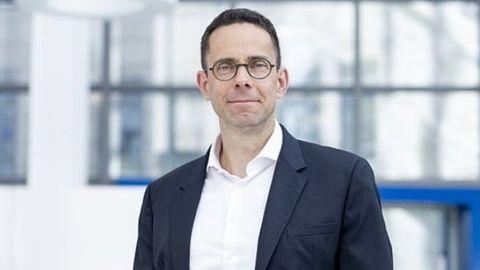
Wolfgang Weber, Chairman of the Management Board of the ZVEI
© ZVEIWhat does the Supply Chain Act mean for German companies?
Weber: The law is intended to oblige companies based in Germany to prevent third-party activities in their supply chains - including those with which they have neither contractual relationships nor are aware of - that have a negative impact on human rights. In plain language, this means that companies are currently often left alone when it comes to end-to-end, product-related monitoring of the supply chain. SMEs in particular are barely able to do this.
The planned restriction of the applicability of the 'rules for due diligence in supply chains' to companies with currently more than 3,000 employees, and in a second step 1,000 employees, does not help here either.
The ZVEI supports the actual aim of the law to strengthen human rights worldwide. In our opinion, the German law should give way as quickly as possible to an EU approach, which is already in preparation in Brussels. The protection of human rights is best served if the EU acts as one and, in cooperation with the business community, sets standards that can be implemented equally by all companies. 27 different national regulations in the EU member states to regulate the supply chain, for example for one and the same measuring device that does not come from the EU, once again complicate the EU internal market through excessive bureaucracy instead of strengthening it.
The ZVEI is also calling for an approach that brings EU member states and industry together to safeguard human rights. The EU and member states should support companies by drawing up a 'human rights negative list'. This list can be based on the existing EU sanctions regulations, which are already mandatory for all European companies. Such a regulation can be implemented by companies quickly and, above all, with legal certainty and achieve positive effects in terms of respecting human rights in supply chains.
What impact will the Supply Chain Act have on employees in Germany?
Weber: Many ZVEI member companies have branches or production facilities abroad. The protection of human rights and appropriate working conditions are always a top priority - regardless of the country in which the employees work. Employees in Germany are already very well protected by national legislation.
What impact does the Supply Chain Act have on the choice of international partners in production, assembly and logistics?
Weber: Globalization and the international division of labor lead to local value creation and prosperity through the establishment of local production facilities or the purchase of (intermediate) goods manufactured abroad, provided that human rights, environmental protection and the prohibition of child labor are strictly observed. All of this is supported by the electrical industry through the ZVEI Code of Conduct and is a matter of course for the sector.
"The consequence would be a 'quasi-boycott' that is counterproductive in terms of development policy."
The involvement of German industry in developing and emerging countries would be jeopardized if the integration of these countries into a supply chain or value chain were to lead to risks for companies that could hardly be controlled. The consequence would be a 'quasi-boycott' that would be counterproductive in terms of development policy if companies had to withdraw. Such an attitude is likely to worsen the situation of local people.
An industrial company is not contractually bound to most suppliers and intermediaries in a supply chain, as it usually buys its components from European wholesalers or component manufacturers. The first step is therefore to create indirect contractual relationships. For the manufacture of and trade in primary products in the supply chain, this also includes specifications on human rights and working conditions as well as explicit bans on child and forced labor, for example. The ZVEI has published proposals for action in this regard.


You might also be interested in
What German companies can expect
The German Supply Chain Act comes into force at the beginning of the year. Business complains about the high costs involved, while non-governmental organizations consider the law to be too lax.
 read more...
3 questions for ... Edge Computing experts
Mastering the data flow
No one can avoid edge computing at the moment. What advantages does the technology bring to the manufacturing industry? What do users need to be aware of? We asked selected industry experts these questions, among others, and here are the answers.
read more...Supply bottlenecks slow down upswing
Strong export growth expected in 2021 despite uncertainties
The industry is complaining about a lack of materials, which is slowing down production. Container capacities for transporting goods are hard to come by. How are Germany's exporters getting through the second year of coronavirus?
read more...Double-digit growth in machinery exports
Machinery and plant exports increased by 23.5% in the second quarter. This was reported by the VDMA. The supply chain situation remains tense.
read more...German companies often lose out
Warehouses cost money. For this reason, manufacturers have started to shift warehousing to the transportation chain. However, this only works as long as the required parts are available and deliveries arrive on time. This is exactly what is...
read more...Material bottlenecks impact mechanical engineering
The shortage of materials is hampering production in the German mechanical engineering sector. Despite these circumstances, the VDMA does not believe that its sales forecast is at risk.
read more...5% production growth expected for 2021
The ZVEI expects production growth of 5% for the current year. The association is confident that the electrical industry will be able to make up for most of last year's decline in production.
read more..."Three questions for..." - in December
The company roadmap to TSN
Time Sensitive Networking - TSN for short - is in the process of establishing itself as a real-time Ethernet standard. What is the state of play in the industry? As part of the "3 questions for ..." series, we asked experts from companies about this.
read more..."Three questions for..." - the July edition
The paths of drive technology
Comprehensive networking opens up new possibilities for automation technology. In our online series "Three questions for..." we asked automation industry experts about the potential of the Industrial IoT for drive technology.
read more...