
"Three questions for..." - in December
The company roadmap to TSN
Time Sensitive Networking - TSN for short - is in the process of establishing itself as a real-time Ethernet standard. What is the state of play in the industry? As part of the "3 questions for ..." series, we asked experts from companies about this.

Together with 5G and OPC UA, this technology will have a major impact on the communication technology of tomorrow in the industrial, automotive and audio-video-consumer application areas. In particular, the members of the OPC Foundation's Field Level Communication working group are working on using TSN to develop an open IIoT communication solution between sensors, actuators, controllers and the cloud.
In our interview series, we hear from leading figures in automation about their views on TSN, assessments of the development and their own plans.
Our questions were asked by:
Thomas Lantermann, Senior Business Development Manager at Mitsubishi Electric
Wolfgang Leindecker, Member of the Management Board, TTTech Industrial Automation
Nils Bücker, Product Management Network Infrastructure at Pilz
Bernd Fiebiger, Principal Developer System Analysis/Systems Engineering at Kuka
Mitsubishi Electric: "One cable and everything works"
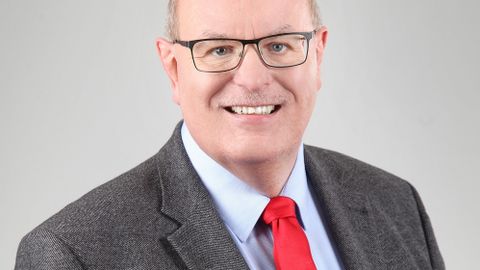
Thomas Lantermann is Senior Business Development Manager at Mitsubishi Electric.
© Mitsubishi ElectricIn his 30-year career at Mitsubishi Electric, Thomas Lantermann is now responsible for the expansion of strategic partnerships for the Mitsubushi Electric e-F@actory Alliance and is also involved in the implementation of smart factory solutions. What does his roadmap for TSN look like?
What is your company's position on the future communication standard Time Sensitive Networking (TSN)?
Lantermann: With the CC-Link IE TSN industrial Ethernet network, Mitsubishi Electric was able to present its first TSN-based solution at the Hannover Messe in 2019. This is based on relevant international standards for TSN and was combined with the CC-Link network. This shows how important these international standards are for Mitsubishi Electric. They enable consistency between the IT and OT (Operational Technology) levels in industrial production. It therefore fulfils an important requirement for the digitalization of industrial production in the sense of Industry 4.0.
In the meantime, Mitsubishi Electric has greatly expanded its product portfolio with CC-Link IE TSN-capable components and now offers a well-rounded portfolio. This means that only one network is required: from the PLC with decentralized I/Os, robots and inverters to fast servo/motion connections. The advantage for our customers is the principle of simplicity, which means they don't have to worry about the various cabling and protocols. All they need is this one TSN network, one cable and everything works together.
What do you currently consider to be the most important and urgent points when it comes to the development and introduction of the standard?
Lantermann: This simplicity! One cable and everything works, even for the integration of components from other manufacturers that support CC-Link-IE-TSN. The configuration of a mixed TSN network requires precise coordination of the components. This is why the approach of centralized and decentralized configuration of the network is being discussed. Mitsubishi Electric is therefore working with the organizations LNI 4.0 Testbed in Augsburg and IIC (Industrial Internet Consortium) in Stuttgart. The interoperability and configuration of the network are being discussed and tested here. The aim is to achieve plug and work, as with USB devices in the IT sector.
What specifically are you working on in your company with regard to TSN; what does your roadmap look like in this respect?
Lantermann: All new automation devices from Mitsubishi Electric have CC-Link IE TSN on board. Existing devices will be retrofitted with CC-Link IE TSN step by step. We want to make the advantages of TSN available to our customers as quickly as possible. One network for all applications, from the cloud and PLCs to servo motion and robots.
Another aspect is the combination of OPC UA and TSN. This opens up new possibilities for digitalization and the path to Industry 4.0. The transparent exchange of data, without the hindrance of proprietary manufacturer networks, makes it easier for customers to implement preventive maintenance, data analysis and the resulting optimizations.
TTTech: "OPC UA over TSN as an essential foundation for successful digitalization in the factory"
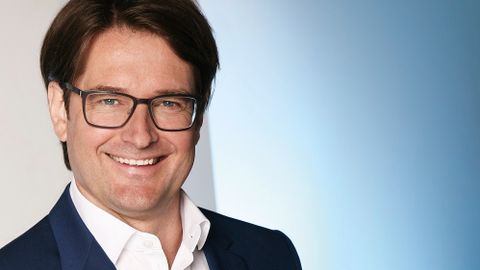
Together with a wealth of experience in automation and IT, Wolfgang Leindecker, member of the Management Board of TTTech Industrial Automation, has extensive expertise in the field of IIoT. In this interview, he explains how he assesses the influence of TSN technology on the future Internet of Things.
What is your company's position on the future communication standard Time Sensitive Networking (TSN)?
Leindecker: TSN products have been an integral part of TTTech Industrial's portfolio for years. Together with leading companies in the automation and IT industry, we have driven forward the establishment of OPC UA over TSN as a standardized communication protocol for Industry 4.0 applications. We see an open, cross-industry and manufacturer-independent standard as an essential basis for successful digitalization in the factory. The compatibility of solutions from different manufacturers gives customers great freedom of choice and flexibility, enabling them to exploit the benefits of industrial automation.
What do you currently consider to be the most important and urgent points in terms of the development and introduction of the standard?
Leindecker: The OPC Foundation initiative, in which we participated, is now being continued as the Field Level Communications Initiative. The majority of the global market has now recognized OPC UA over TSN. However, it is not only important that the major manufacturers use OPC UA over TSN for their products. There are still many companies whose machine parks are not yet equipped with digitalization technologies. On the one hand, this may be because there is currently no need for it, but on the other hand, digitalization is also associated with investment and high costs. As a provider of TSN solutions, we have to convince these customers of the benefits of OPC UA over TSN and make it easier for them to take their first steps towards digitalization.
What specifically are you working on in your company with regard to TSN; what does your roadmap look like in this respect?
Leindecker: We offer a TSN product line that includes firmware and software for industrial Ethernet switches, switch chips and Ethernet interfaces. Manufacturers of electronic components for industrial automation use our TSN products to make their own devices TSN-capable. We also have network planning software in our portfolio that makes it easy to set up TSN networks. This means that we are already part of a supply chain of TSN products that will be needed in automation in the coming years.
For anyone interested in TSN technology, we offer a TSN starter package that allows you to set up, configure and test TSN networks quickly and easily. Our focus is on reducing the effort involved in integrating and using TSN and supporting the development of TSN systems.
Pilz: "Protection of man and machine is an essential component"

As an expert in industrial automation networks, dealing with Ethernet technologies and developments is part of Nils Bücker's remit in Product Management Network Infrastructure at Pilz. His current assessments and goals.
What is your company's position on the future communication standard Time Sensitive Networking (TSN)?
Bücker: In view of the 4th industrial revolution and the resulting increase in customer requirements for modern automation systems, we are strategically expanding our range of solutions. This ranges from the physical infrastructure to the transfer of data to the cloud and its processing. All the different applications with their specific facets require standardized transmission technology and the control of data flows in such convergent networks. For us, the protection of people and machines remains an essential component of such solutions.
It is not only the current state of the art that must work reliably in convergent networks: The increasing demands on distributed control systems for functional safety and their response times also require TSN mechanisms for real-time capable Ethernet networks.

Key building blocks of the future network Industry 4.0 are OPC UA via TSN at the control and field level and I/O-Link at the sensor level. Pilz's commitment is to offer products and solutions that are always state of the art, remain easy to use and fit into any automation architecture.
© MushroomWhat do you currently consider to be the most important and urgent points regarding the development and introduction of the standard?
Bücker: In order to make the mechanisms of TSN usable for deterministic communication for a wide range of applications in a convergent network, it is essential to configure the components. The associated standards and tools are still under development or require further fine-tuning. The aim is for users to be able to exploit the advantages of TSN as automatically as possible and thus make optimum use of the available network resources when a wide variety of applications coexist.
What specifically are you working on in your company with regard to TSN; what does your roadmap look like in this respect?
Bücker: We are gradually introducing various functions from the TSN standards for our distributed automation system PSS 4000, which is based on Pub/Sub. We want to optimize the fail-safe response times for distributed control systems on the basis of our real-time Ethernet - and in future also on the basis of OPC UA Safety - and ultimately also guarantee them thanks to the scheduling mechanisms of TSN.
Kuka: "Standardization is driving TSN forward"

As an expert in robotics and control technology, Bernd Fiebiger represents Kuka in various working groups in the Industry 4.0 platform, the VDMA and the OPC Foundation, thus driving forward manufacturer-independent communication.
In his role as Principal Developer System Analysis/Systems Engineering, Fiebiger has been working on IIoT technologies at Kuka for several years.
What is your company's position on the future communication standard Time Sensitive Networking (TSN)?
Fiebiger: As a robot manufacturer, we are monitoring the development of TSN for use in the industrial environment.
As we have to support a variety of communication technologies, only a standardized use of TSN makes sense for us.
Within the OPC Foundation Field Level Communication Initiative (FLC), we are working to enable the standardized use of TSN with OPC UA for process and factory automation.
What do you currently consider to be the most important and urgent points in terms of the development and introduction of the standard?
Fiebiger: The OPC-F FLC initiative will define the use of TSN (based on the emerging IEC/IEEE 60802) by extending the OPC UA specifications.
This is important because TSN supports many features that may not be necessary for our requirements and some features can be implemented differently. Within this framework, the FLC initiative will also define how devices and machines can connect to each other to exchange data and interact with each other.
A recently published technical paper from the FLC initiative shows what will be possible with OPC UA and TSN.
What specifically are you working on in your company with regard to TSN; what does your roadmap look like in this respect?
Fiebiger: TSN is a communication technology that we naturally also want to integrate, but only once all the necessary standards are available for use.
That is why we are supporting the creation of these standards so that we are ready to go.


You might also be interested in
A brief portrait of Bernd Fiebiger and the Kuka company
A brief portrait of Bernd Fiebiger and the Kuka company
 read more...
3 questions for... TTTech Industrial
"Flexibility & user-friendliness compete with each other"
User-friendliness and flexibility in applications compete with each other at the edge. Georg Stöger from TTTech Industrial talks about why this is the case and how users can get both.
read more...3 questions for ... Edge Computing experts
Mastering the data flow
No one can avoid edge computing at the moment. What advantages does the technology bring to the manufacturing industry? What do users need to be aware of? We asked selected industry experts these questions, among others, and here are the answers.
read more...TTTech Industrial Automation AG
Edge computing for your production with Nerve Blue
In response to the challenges faced by machine builders and plant operators in a rapidly changing industrial landscape, TTTech Industrial has developed an open and flexible edge computing platform.
read more...Flexibly combinable drive controllers
With the drive controllers PMC SC6 and PMC SI6, Pilz is adding space-saving, scalable systems for either single or multi-axis applications to its portfolio of servo amplifiers. Both can be flexibly combined and quickly put into operation.
read more...What is behind the organization
The Edgecross Consortium
Decentralized data processing at the transition from production to the IT world - the Edgecross Consortium from Asia has been dedicated to this topic since the end of 2017. But what is behind this organization and what are its goals?
read more...Supply Chain Act - overdue or superfluous?
The planned German Supply Chain Act makes companies more responsible if suppliers violate human rights and environmental standards. We asked the industry associations VDMA, VDW and ZVEI what exactly this means for industry and companies.
read more...Call for Papers - Submit presentations by April 30
In recent years, the TSN/A Conference has developed into the international information and discussion platform for real-time Ethernet par excellence. Become part of the community and submit your presentation!
read more...Psychosocial aspects of human-robot collaboration
How can robots be used outside of production? Kuka is researching this in collaboration with the BMBF, the German Sport University and RWTH Aachen University. The RoboGym shows what it can look like in reality.
read more...