

"Three questions for..." - the May edition
Corona: Change as an opportunity
People react differently to the coronavirus and its consequences. What is it like in everyday working life? In the new part of our "Three questions for..." series, we look at this topic and asked automation experts for their opinions.

"Crisis is a productive state. You just have to take away the taste of catastrophe," Max Frisch once said.
The description of the new edition of our "Three questions for..." series could not be more apt. This month, we are looking at how people in a wide range of companies in the automation industry are dealing with the coronavirus pandemic and its consequences. What does it mean for their working methods, daily routines and, last but not least, communication with colleagues or customers, and where have opportunities even opened up in the meantime?
We asked the following automation experts about these questions as guests in our new series:
Oliver K. Stöckl, Managing Director Endress+Hauser Messtechnik
Helmut Schmid, Managing Director Universal Robots (Germany) & Regional Sales Director Western and Northern Europe
Frank Behrens, PR & Advertising Manager Central Europe at RS Components
Dieter Schink, Managing Director of Elektro-Bauelemente May KG
André Hartmann, Sales Manager Germany at Bihl+Wiedemann
Rudolf Müller, Managing Director of Janitza electronics
Carsten Stumpf, Vice President Kawasaki Robotics Germany
Endress+Hauser: "The Endress+Hauser spirit also works in the home office"
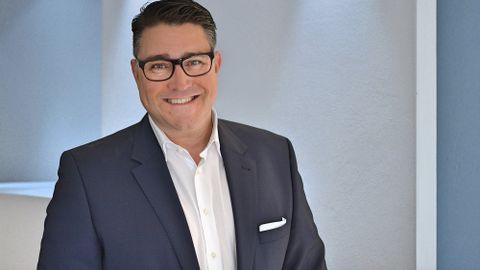
The pharmaceutical and food industries are among Endress+Hauser's target markets. In light of the exceptional global situation, Oliver K. Stöckl, as Managing Director of Endress+Hauser's German sales company, is not only responsible for adapting the company and all its employees to the new circumstances, but also for continuing to support customers - including many from system-relevant sectors - in real time and maintaining the high quality standards. Oliver K. Stöckl tells us in a brief interview what measures have been taken to achieve this and what role digitalization plays in this.
How has the work in your company and especially for you personally changed in recent weeks?
Stöckl : At peak times, up to 10,000 Endress+Hauser employees worldwide work from home, including the majority of employees at the German sales company. Our workforce quickly adapted to the situation, which helped us to quickly find a new modus operandi in any case. I am very pleased that the changeover worked so well, how quickly people were able to adapt - and also how well our IT was prepared for it.
We introduced the "Digital Work Place" some time ago and now have numerous digital options and tools for exchanging data, collaborating and communicating with each other, both internally and externally with our customers.
Direct contact with our customers is very important for our work. That's why the first question on my agenda is what we can do to provide our customers with the best possible support, even in this exceptional situation. After all, many of our customers, for example food producers, pharmaceutical companies or customers from the water and wastewater sectors, are part of the system-relevant infrastructure and their systems are working at full capacity.
"If our customers need our service technicians at their plant, then it is possible for us to be physically present"
We must support these customers and all others with their challenges to the best of our ability! The package of measures now looks like this: we will only be active on site in justified exceptional cases, with maximum customer and employee protection, and otherwise provide maximum support by email, telephone or even cyberpresent via app with video transmission. For technical support, we currently offer the visual app free of charge to support our customers. If our customers need our service technicians in their system, it is possible for us to be physically present. Where physical presence is not necessary, we can help via video transmission or by telephone.
Our field service and our office service are available as normal. However, instead of being on site with customers every day, our employees now keep in close contact via video calls or phone calls and we realize how important this is for our customers. I was particularly proud that many customers thought we were working in the office when we had already been working from home for two weeks. They hadn't noticed that anything had changed in the way we worked or the support we provided!
I have also been working from home for 8 weeks now. Despite the fact that video conferencing works perfectly, I miss the personal interaction with my colleagues - from person to person. On the other hand, I enjoy being much more involved in family life than I could be during "normal" office days.
How can this exceptional situation be mastered, perhaps even used positively, and how are you personally dealing with the current situation?
Stöckl : The coronavirus crisis is causing suffering for people around the world, putting jobs and livelihoods at risk. Overall, this is very negative and the crisis will have a major, lasting impact on society. From an overarching perspective, we can see that the digitalization of society is making great strides and digital tools are being used everywhere. This will certainly have a lasting impact on our working world and private lives.
We will now certainly have to examine how the crisis continues to affect our customers and our business. While some companies have gone into short-time working, others are continuing to work full-time, albeit sometimes under strict precautionary measures. Endress+Hauser also belongs to the second group.
On the one hand, I am happy that we have a lot to do, but on the other hand, I also feel personally responsible for the health of our workforce, which is why we place great importance on protecting our employees and our customers. To this end, we acted quickly and decisively and, as already mentioned, moved all functions with office workstations to the home office. We are providing face masks and have implemented strict hygiene protection measures for all those remaining in the offices.
If you want to take something positive out of the crisis, then it is the cohesion of society as a whole, which is becoming noticeable. We are also noticing a strong sense of solidarity at Endress+Hauser - our employees are also using their digital tools internally to stay in touch. The Endress+Hauser spirit also works in the home office!
"If our customers ultimately feel that they have received good support from us even in these times, we have certainly done a lot of things right"
Important for our customers: Our sales and service contacts are fully available from the home office. We are also able to deliver and our global production network is working.
If our customers ultimately feel that they have received good support from us, even in these times, then we have certainly done a lot of things right. One thing is clear: digitalization and our digital services are currently receiving a major boost. Regardless of the form - digital and via app or on the phone - it is now very important to work together and support each other. We need to be flexible and agile in order to master the challenges.
I personally also stay in close digital contact with my employees; I'm no different to the others. This is a new situation and I am using all the communication channels available to me for one-to-one meetings and for coordination with the management team.
Where do you see the biggest challenges for the coming months in terms of your work/your job?
Stöckl: We don't expect everything to be back to normal by the end of the year. That's why we are keeping a very close eye on how the situation is changing for our customers - when in doubt, changes can happen very quickly and needs can change. We then have to decide how we can continue to provide the best possible service for our customers, regardless of whether they have restrictions in their operations or not.
For Endress+Hauser, we have to decide how we will map this internally, how we will protect our employees and also address their individual needs, such as childcare.
We are planning the return to normality step by step and making decisions on when this is necessary. To do this, we run through various scenarios and when a situation arises, we are ready to act.
Universal Robots: "Creative solutions for new problems"

Helmut Schmid, Managing Director Universal Robots (Germany) & Regional Sales Director Western and Northern Europe.
© Universal RobotsAs General Manager and Managing Director of Universal Robots, Helmut Schmid was able to expand the company's success in the rapidly growing markets in Western Europe. In order to build on this success, various trade fair appearances were planned this year to support the company's market presence.
In a brief interview, we were able to find out from Helmut Schmid how he is now pursuing the goals he has set himself and what changes this has brought about in terms of addressing both employees and customers.
How has the work in your company and especially for you personally changed in recent weeks?
Schmid: Most of our employees are also currently working from home. This ensures that we can continue to provide our customers and partners with expert advice and support. It also means that our production in Odense can continue. Meanwhile, most of our coordination has shifted to the virtual world, which is working very well. Overall, the last few weeks have put us in a position where we have had to find creative solutions to new problems more often than usual - and that has also worked out wonderfully.
How can this exceptional situation be overcome, perhaps even used positively, and how are you personally dealing with the current situation?
Schmid: The state of emergency requires us to spontaneously take a new path. We managed to do this with our virtual Cobot Exference: On the day that the Hannover Messe was postponed, we sat down together and thought about what we could do. Trade fairs are important to us, and direct interaction with customers and partners means a lot to us. We therefore decided without further ado to launch a virtual trade fair. Within a few weeks, we had it up and running. Visitors were able to chat with UR experts and UR+ partners at 17 exhibition stands, while a lecture program offered extensive input on HRC topics. We achieved a four-digit number of participants, many of whom were dealing with the topic for the first time. The positive response shows that we struck a nerve. This is definitely a positive aspect that we were able to take away from the crisis.
Where do you see the biggest challenges for the coming months in terms of your work/your job?
Schmid: Cobots are characterized by the fact that, unlike conventional industrial robots, they can work directly with humans. The haptic moment is therefore particularly important: users have to try out the robots to know what it feels like to work with them. We have come up with a special solution to enable interested companies to take a look at the cobot in their own company despite the current protective measures: We send a model to the interested companies and our experts are then connected remotely to run through various application scenarios and give an impression of the application.
RS Components: "The key to the solution lies in creativity"
As PR and Marketing Manager for RS Components, Frank Behrens communicates with people from a wide variety of areas on a daily basis: internally with colleagues, journalists, media representatives and customers. Language and active dialog are his specialty. So we wanted to know from him what it's like when communication has to find other ways?
How has the work in your company and especially for you personally changed in recent weeks?
Behrens: The biggest change is, of course, that many valued colleagues are no longer just a step away. Even though we naturally work in globally networked contexts, direct human contact is very inspiring, especially in our new office in Frankfurt. Added to this is the fact that the central location brings many visitors to us, who also bring new influences, even if they may have traveled here for a completely different purpose. Now the pattern tends to be one of spatial isolation and always balancing tasks that arise in the family sphere. However, thank goodness for modern telecommunications. This allows teams to gather around each other, at least virtually.
Then there is the unclear time horizon. Nobody knows how long the restrictions can be maintained. With a clear end point, a lot can be endured. With Covid-19, however, the end is open. We have to prepare ourselves for an indefinite period of time for the fact that a large part of our working lives will no longer take place in this way. We need to find solutions that can last, but that can also be quickly reversed.
How can this exceptional situation be overcome, perhaps even used positively, and how are you personally dealing with the current situation?
Behrens: As always in life, the key to finding a solution lies in creativity. There is little point in bemoaning what has been lost. There are many new possibilities. Instead of the visit, I find that the video call takes on a new quality and commitment. Whereas in the past, the call was often a subordinate tool that was sometimes not given the attention it deserved, it is now the vital interface to the outside world. This increased appreciation creates new opportunities for engaging exchanges. Many people also take more time for such conversations, as time budgets can be weighted differently due to the fact that travel is no longer necessary. This creates a very engaging exchange, even if from a distance.
"The content of the conversation determines its relevance"
In addition, certain social media are receiving an even greater boost. In my opinion, this is particularly true for YouTube. I think that a major breakthrough has been achieved here for the B2B sector. A new channel of moving image communication is emerging here, which lies between the 1:1 conversation and the professional cinematic presentation. The improvisational and spontaneous nature of the channel establishes a new quality of addressing a specially interested target group in the form of a "workshop discussion". The "fireside chat" comes to everyone's home in a low-threshold way and the content determines the relevance and not necessarily just the shell of the professional production. But there has also been an irreversible surge in digitalization in general.
Where do you see the biggest challenges for the coming months in terms of your work/your workplace?
Behrens : In the coming period, the challenge will clearly be "back to work". We have to ask ourselves how we will deal with the fact that we are going back to everyday life and yet still have to meet very specific protection criteria. Despite all the easing of restrictions, as Chancellor Angela Merkel said: "We will still be living in a pandemic". We need to define and implement effective measures. Technical innovations are particularly important, from simple people counters at the entrance to more complex sensor technology.
In terms of communication, we need to communicate in a truly relevant way. A simple "business as usual" is certainly not the right answer. We are therefore in daily contact across departments, for example, to develop new ideas and drive projects forward in this direction. This ranges from a problem-specific product selection homepage to case studies and product innovations.
Elektro-Bauelemente May KG: "Mastering challenges as a team"

In order to offer his customers and partners the best possible service and at the same time enable employees to successfully complete their tasks, Dieter Schink, as Managing Director of Elektro-Bau-elemente May KG, is concerned per se with optimizing business processes. In this brief interview, Dieter Schink tells us how the company is able to meet this requirement and at the same time develop processes that are harmonious for all sides.
How has the work in your company and especially for you personally changed in recent weeks?
Schink: Although sales are down, short-time working is not an issue for us at the moment. Of course, we hope it stays that way and have adapted the company and our working methods to the current situation. Many of our employees are now working from home and this is working surprisingly well. To be honest, we were a little surprised that this changeover went so smoothly straight away and that operations are running almost normally. So far, we have been able to overcome the challenges of the past few weeks very well as a team.
How can this exceptional situation be mastered, perhaps even used positively, and how are you personally dealing with the current situation?
Schink: The current situation is without question an exceptional situation that challenges us every day, and one that we will certainly have to deal with for some time to come. But as the saying goes: you grow with your tasks. In this situation, we have set ourselves the task of becoming even faster, for example in the preparation of quotations, the processing of orders, assembly orders and the implementation of modifications - further optimizations in all areas.
Like many of my employees, I have been working from home for seven weeks now. However, contact with colleagues has become even more intensive as a result. Business meetings, but also personal discussions, take place regularly not only by telephone, but often also via the well-known messaging services over the Internet. Fortunately, these technical possibilities exist nowadays, but we all still miss the personal contact with each other.
Where do you see the biggest challenges for the coming months in terms of your work/your workplace?
Schink: Our warehouse is still well stocked, but the biggest challenges will certainly be to maintain our high delivery readiness. This requires intensive discussions with our partners or procurement via other channels. If there are any supply problems, we will do everything we can to find solutions together with our customers. Our consultants' very good specialist knowledge can certainly also help if product alternatives need to be found.
From the very beginning, it has been part of our corporate culture to see customers and suppliers as partners, without whom our company would never have reached the age of 65. In these difficult times, we are being rewarded for this. Discussions and contact with our customers and suppliers have now become even more intensive and, in some cases, more personal. Thank you for that, it feels good!
Bihl+Wiedemann: "We are emerging from the crisis stronger"
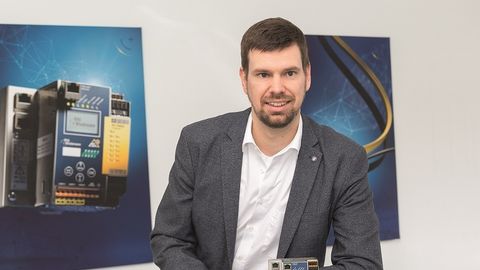
As Sales Manager at Bihl+Wiedemann, André Hartmann is used to daily contact with customers, interested parties and colleagues via various channels. This includes meetings at various trade fairs, events and on-site customer appointments, where personal contact can play a major role. In this short interview, André Hartmann tells us how he has managed to adapt his usual mode to the crisis situation and what positive insights he has gained.
How has the work in your company and especially for you personally changed in recent weeks?
Hartmann: The main difference compared to the time before the coronavirus pandemic is the fact that I, like most of my colleagues, have been working from home for several weeks now. If you're not used to this because you used to travel a lot as a sales representative and otherwise spent most of your office time in the company, it's a big change. The short distances to colleagues to discuss something, the conversations in the corridor and, of course, the meetings in the company are suddenly gone and you suddenly need alternative ways to communicate. And due to the situation with the daycare centres and schools, many people - myself included - are also faced with the issue of organizing childcare.
How can this exceptional situation be overcome, perhaps even used positively, and how are you personally dealing with the current situation?
Hartmann: We have reacted very flexibly to the new situation. On the one hand, we have managed to give most employees in the company the opportunity to work from home within a few days. This allows colleagues to organize their working hours as flexibly as necessary, especially given the individual challenges of childcare. On the other hand, we have also learned many new things in recent weeks. For example - to pick up on the topic of 'alternative communication options' once again - tools such as video conferencing etc. are now being used much more frequently than before.
How can this exceptional situation be overcome, perhaps even used positively, and how are you personally dealing with the current situation?
Hartmann: I think it's currently very difficult to make a statement about the future here, as the framework conditions are currently changing almost on a weekly basis. Questions such as when it will be possible to travel again or when it will be possible to hold trade fairs, events, customer appointments or meetings in person again rather than only virtually are of course having a major impact. However, I think that our industry is still doing relatively well because we can continue to work relatively normally and are nowhere near as severely affected by the legal restrictions as the tourism or hospitality industries, for example. I believe that we will emerge from the crisis stronger as a company.
Janitza electronics: "Show solidarity and value your own health"
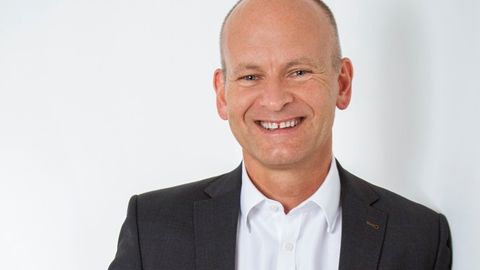
With his previous career in product marketing and as a sales manager, Rudolf Müller, Managing Director at Janitza electronics, knows all about the need to develop and visualize new products and to present them to potential customers in the right environment in a timely manner. In this interview, Rudolf Müller tells us how priorities do not change but shift and which other values play a major role in this, even directing our own view to other things.
How has the work in your company and especially for you personally changed in recent weeks?
Since face-to-face meetings were hardly possible, everything has been done almost exclusively via web meetings and phone calls in recent weeks. The absence of many employees due to home office gives the impression of a standstill and "deep relaxation" in the office - the parking spaces are free, meeting rooms are available and the corridors are empty. Unfortunately, this also means that interpersonal relationships and the brief exchange of information fall by the wayside - the "informal chat in the kitchenette", so to speak.
How can this exceptional situation be overcome, perhaps even used positively, and how are you personally dealing with the current situation?
Müller: We are running production in a two-shift model for the first time since the company was founded. By working from home and avoiding face-to-face meetings, we have massively accelerated digitalization: among other things, through various web tools, internal and external web conferences, webinars for training and further education as well as product and application webinars for customers. As a result, we also have certain ratio potential and are even better equipped for the future.
For me personally, it is now important to convey confidence that we can still achieve our goals - even if we may now have to be more creative than usual. Above all, it is important to show solidarity, to come to our senses, to take special care of the health of our employees and to value our own health more than is usually the case.
Where do you see the biggest challenges for the coming months in terms of your work/your workplace?
Müller: The biggest challenge and the ultimate goal is to maintain the health of our employees and to preserve our jobs in the long term. After the shutdown and the associated loss of customer visits, trade fairs and meetings, it is important to maintain motivation and confidence!
Kawasaki Robotics: "The crisis is giving a huge boost to automation across Europe"

For Carsten Stumpf, one of the current challenges is to steer Kawasaki Robotics through the crisis. Thanks to his previous career stages, which initially took him into network administration, sales and marketing on his way to becoming the current Vice Manager, he is able to view the necessary requirements of employees and customers from different perspectives.
In this interview, he tells us how he manages to network all divisions and adapt them to the new situation using alternative methods in order to come out of the crisis stronger together.
How has the work in your company and especially for you personally changed in recent weeks?
Stumpf: The crisis has definitely had a clear effect on our business: the market situation in Germany is characterized by caution, uncertainty and low investment. And as the European headquarters in Neuss, we are of course also feeling the restrictions on the movement of goods within Europe. The loss of trade fairs and customer visits is definitely a cutback for us in terms of sales. However, we are remaining active, supporting our customers, exploring new avenues and preparing for the time after the crisis - but as in almost all industries, we need to persevere until the situation eases.
"The creative flow is partially interrupted"
On a personal and business level, this means that many meetings are being postponed and our communication channels are changing. Like my colleagues in technology, service and sales, I'm spending an unusual amount of time in the office or working from home rather than with customers. Necessary meetings are preferably held via web meetings or conference calls.
This sometimes interrupts the creative flow that is important and necessary in some projects, which is a great shame. However, we always find a way to get back on track.
How can this exceptional situation be overcome, perhaps even used positively, and how are you personally dealing with the current situation?
Stumpf: Like countless companies around the world, the coronavirus crisis has forced us to rethink in many ways. But I can say that whether it's general precautionary measures, alternative communication channels or digital offerings - acceptance is high. We remain in close contact with each other via video conferencing, remote maintenance and other measures, but of course also with customers and partners throughout Europe, including for technical support. And new digital concepts such as remote maintenance via smart glasses or our Academy training courses, which are now fully available as webinars, have been very well received by our customers.
Where do you see the biggest challenges for the coming months in terms of your work/your workplace?
Stumpf: There's no question about it: we naturally realize how dependent we are on the international movement of goods or trade fair appearances and personal contact with customers. We can't and don't want to replace the latter in particular, but we are of course using the crisis to test new concepts and put the tried and tested to the test. We also need to get through the current dip in business and wait patiently for the crisis to end without losing valuable time for the further development of the business and the market. There is no doubt that the coronavirus crisis will give an enormous boost to automation throughout Europe - both to protect employees and make us less vulnerable, but also to strengthen Europe as a production location in the long term and reduce dependencies. However, we will only see this effect in the medium term, after the crisis. An important focus for us in the coming months will therefore be to prepare for this upturn and to meet the rising demand in a targeted manner.


You might also be interested in
A brief portrait of Dieter Schink and the company Elektro-Bauelemente May KG
A brief portrait of Dieter Schink and the company Elektro-Bauelemente May KG.
 read more...
A brief portrait of André Hartmann and the Bihl+Wiedemann company
A brief portrait of André Hartmann and the Bihl+Wiedemann company
read more...A brief portrait of Rudolf Müller and Janitza electronics
A brief portrait of Rudolf Müller and Janitza electronics
read more...A brief portrait of Carsten Stumpf and the company Kawasaki Robotics
A brief portrait of Carsten Stumpf and the company Kawasaki Robotics
read more...Management summarized at DACH level
RS Components is underlining the importance of the German-speaking market for the company with a key personnel decision and is bundling its management in this important growth region. Ralf Hellwig is the new Managing Director DACH.
read more...Supply Chain Act - overdue or superfluous?
The planned German Supply Chain Act makes companies more responsible if suppliers violate human rights and environmental standards. We asked the industry associations VDMA, VDW and ZVEI what exactly this means for industry and companies.
read more...Sales fall, profit remains stable
Endress+Hauser has come through the crisis year 2020 well. However, the Group's consolidated sales fell by almost 3 %, strongly influenced by exchange rate effects.
read more...Flowmeter with IoT function
Nivus offers the 'Nivuflow' devices with a mobile radio modem with worldwide approval. The manufacturer's IoT concept allows the operator automatic data transmission in conjunction with many visualization and logging options.
read more..."Three questions for..." - in December
The company roadmap to TSN
Time Sensitive Networking - TSN for short - is in the process of establishing itself as a real-time Ethernet standard. What is the state of play in the industry? As part of the "3 questions for ..." series, we asked experts from companies about this.
read more...