

New safety standard
IEC 62368 replaces electrical safety standard IEC 60950
The electrical safety standard IEC 60950 will be discontinued at the end of 2020 and replaced by the more flexible IEC 62368 standard. This may cause problems for some devices and applications, including power supplies.
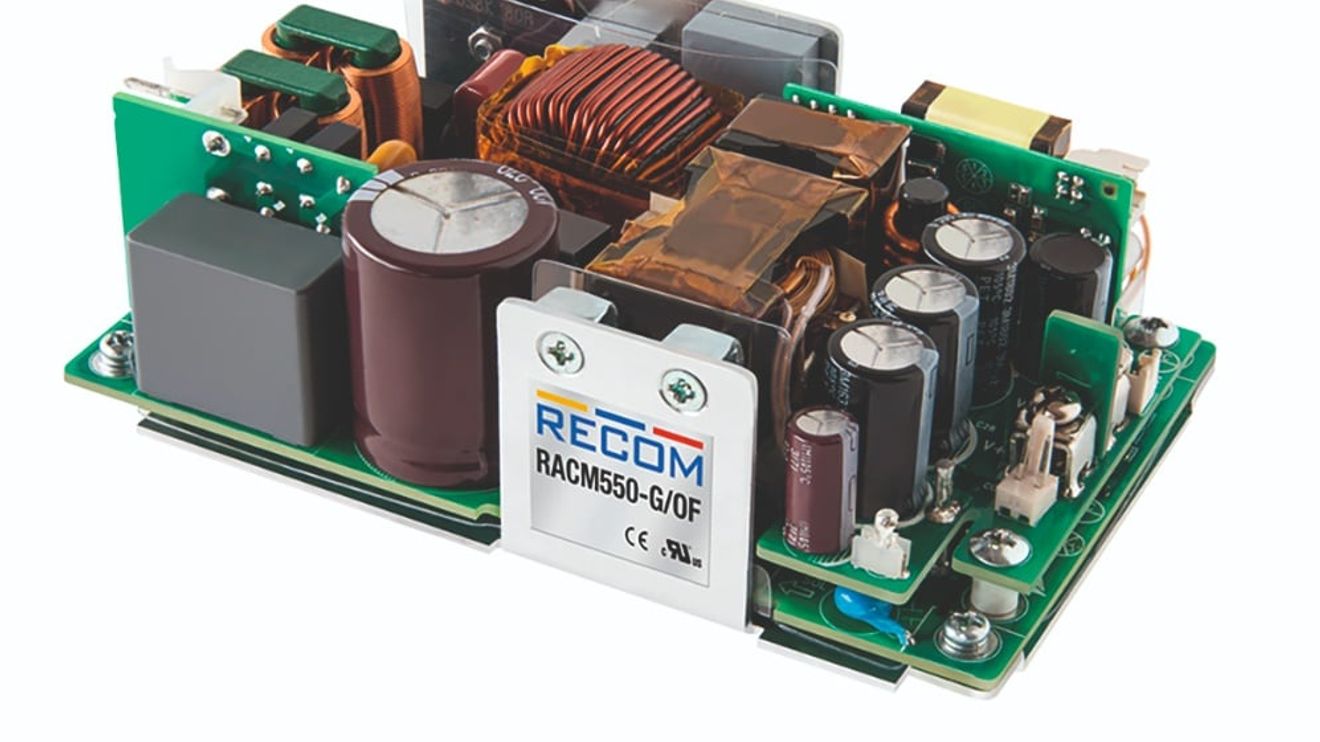
Certified according to various safety standards: The contact-cooled AC/DC power supply unit RACM-550 from Recom.
© RecomSome well-known safety standards will soon be obsolete. Probably the biggest and most comprehensive change is the imminent discontinuation of IEC 60950 and IEC 60065 at the end of 2020, which are to be replaced by IEC 62368. This standard deals with the safety of information technology equipment, including electrical business equipment. Both standards have been extensively amended over the years to keep pace with technology and have also been applied in other new areas where there were no application-specific standards, such as industrial automation.
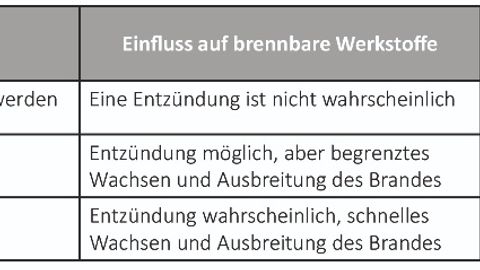
The reason for the replacement of these standards is the merging of functions in modern electronics. The new IEC 62368 standard is not only an update of the previous standards with a broader scope, but also includes a fundamental change from "prescriptive" to an HBSE (Hazard Based Safety Engineering) approach. This requires the manufacturer of the product to identify and classify potential hazards that may arise from energy sources, including electric shock, fire, chemical, mechanical, thermal and radiation hazards(Figure 2). These three classes largely comprise the protective measures to be applied. The extent and type of safety precautions also depend on the person who has access to the equipment and is classified as "layman", "instructed" or "qualified". However, a documented risk analysis of the use of a component certified to IEC 62368 in a potential application is not required, as is the case with medical standards such as IEC 60601-1.
Greater flexibility and easier handling
Although new terms and categories of hazards and users are introduced, IEC 62368 is intended to be better adapted to the new technologies. In fact, in some areas the requirements are less stringent than in IEC 60950; for example, to allow the use of Fully Insulated Wire (FIW) in transformers. As IEC 62368 is less prescriptive, it also offers more flexibility in achieving the appropriate level of safety for a particular application. However, manufacturers of equipment power supplies are finding that there is sometimes a requirement to assess and document the power supply in its particular application in terms of hazard in order to simplify certification for the end device. The only practical way to achieve this is through certification to the relevant application-specific standards. If the power supply is intended for general purposes and certified to IEC 62368-1, the cost of multiple certifications for all potential applications is high, which can ultimately lead to higher sales prices and delays in product launch.
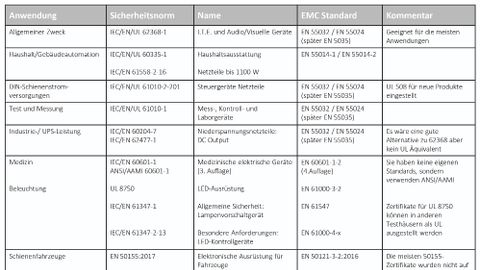
ZVEI has published its guideline "Selection of safety standards for power supplies" [1] with input from European power supply manufacturer Recom, which discusses the phase-out of EN 60950 and its potential successors. With increasing certification requirements in the future, some manufacturers are hoping for easier handling of upcoming standards that are specific to power supplies and are application independent, such as IEC 61204 with reference to IEC 62477, IEC 60204-7 and IEC 61010-2 -206. However, even with a future cross-application power supply standard, an application-specific standard and even IEC 60950 for export markets may still be necessary at the request of the customer.
Difficulties with IEC 62368 worldwide
An additional difficulty with the transition to IEC 62368 is that it is not yet viable. The third edition of IEC/UL 62368-1 is due to be introduced on the day IEC 60950 and IEC 60065 are withdrawn. However, EN 62368-1 is still in its second edition. As this will also lose its validity on December 20, 2020, the third edition needs to be published soon, which is expected to happen in 2020. Delays in approval were due to the introduction of a new system of harmonized standards advisors (HAS) tasked with improving the "quality and timely availability" of safety standards for the EU internal market [2].
Other countries such as the USA are pushing UL 62368 Edition 3, while Canada, China, Korea and Taiwan are pushing national variants. UL has also stated that after 2020 they will continue to accept UL 60950 certificates for products already on the market - provided there is no major revision. Europe, on the other hand, requires that all new product submissions, as well as existing product certifications, are adapted by the deadline of December 20, 2020.
A potentially unintended consequence of the IEC 62368 certification requirement is that the product must be specifically applicable for AV or consumer applications, even if it is only intended for industrial use. For shipments to China, this may result in the authorities then also requiring CCC certification for consumer products, even if the part is being shipped for industrial use. CCC certification is expensive, time consuming and can only be done in mainland China with full disclosure of valuable intellectual property, including design, PCB layouts and bills of materials with the associated risks.
Precisely plan the changeover to IEC 62368
The aim is to make it easier to navigate through the IEC 60950 and IEC 60065 "jungle" in future. But there are a few obstacles to overcome first. Companies should already be planning for the upcoming changes in detail, even if the publication of the 3rd edition of EN 62368-1, for example, is still a long way off. Suppliers such as Recom are helping by investing in the recertification of their products to IEC 62368. The technical sales team at distributor Schukat electronic also offers support for customers with queries about certifications and the upcoming change in standards, as well as design-in support for a possible switch from an IEC 60950-certified product to an application-specific or IEC 62368-certified replacement.
The authors:
Steve Roberts, Innovation Manager at Recom Power.
Frank Stocker, Field Application Engineer Power Supplies at Schukat electronic


You might also be interested in
Power supply units: Also approved for medical devices
With the DTM65-D and DTM65-C8 power supply series from TDK-Lambda, Hy-Line Power Components offers external AC/DC adapters with mains plug/cold appliance connection.
 read more...
Open-frame power supply units: UL/EN62368-1-zertifiziert
Cosel has announced four compact open-frame power supplies with UL/EN62368-1 certification. With power ratings between 30 and 100 W, the LHA30F, LHA50F, LHA75F and LHA100F power supplies extend the product range, which now covers the power range...
read more...New models for outputs from 24 to 480 W
Conrad Electronic is expanding its range of power supplies for applications in the fields of machine and control cabinet construction as well as manufacturing and process automation with the single-phase switching power supplies of the Sitop PSU6200...
read more...Lütze Group is acquired by Amphenol Corporation
The international Lütze Group will be acquired by the US-based Amphenol Corporation on October 1, 2024.
read more...Certified according to IRIS Rev.04
Rail technology specialist Lütze Transportation has successfully completed certification in accordance with ISO 22163:2023 / IRIS Rev.04. The certification underlines Lütze's commitment to meeting the highest quality requirements of the rail...
read more...UPS with high efficiency
The '93T' uninterruptible power supply (UPS) from Eaton has a rated output of 15 to 80 kVA and provides a stable power supply for critical applications such as server rooms and small data centers.
read more...DC/DC converter with wide-range input
Bicker Elektronik presents the 'DC300WS', a contact-cooled 300 W DC/DC converter with up to 98 % efficiency.
read more...Slim 1200 W for industry and medicine
Fortec Power offers the AC/DC power supply units of the 'NGB1200' series from Advanced Energy. They have ITE and medical safety approvals.
read more...22.5 mm wide electronic circuit breaker
The electronic 4-channel circuit breakers (ECBs) 'Pisa-M' from Puls are aids for protection and power distribution in applications with power requirements from 90 W to 480 W.
read more...