
Sagittarius
Turn four into one
Intelligent, digitally networked systems are the hallmark of Industry 4.0, whose largely self-organized production is based on constant interaction between people and machines. Single Pair Ethernet is a good basis for this.
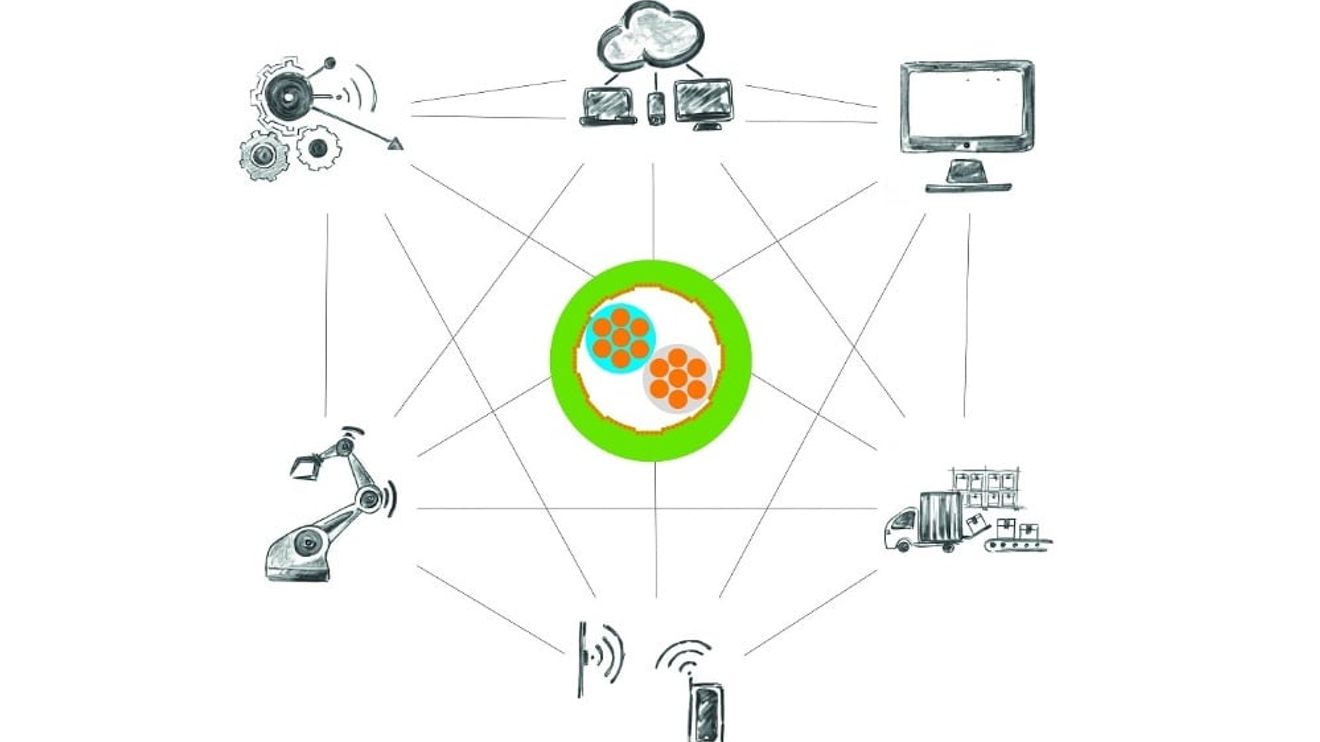
For the automation industry, the self-regulating factory means that the various interfaces must interact in real time. The merging of the physical and digital worlds is primarily taking place through the digitalization of production and requires a high degree of networking. As the volume of data produced is currently growing rapidly in the course of Industry 4.0, the transmission of ever larger volumes of data at ever higher transmission rates plays a particularly important role.
This 'networking boom' is the basis for the extremely rapid growth of Industrial Ethernet. In the last four years alone, the market share of Ethernet nodes for industrial applications has increased by more than 50%. These newly created networks enable data rates of up to 10 Gbit Ethernet over distances of up to 100 meters. However, this growth is at the expense of fieldbus technologies such as Interbus, Devicenet or Profibus. In 2018, Industrial Ethernet overtook traditional fieldbuses in terms of newly installed nodes in factory automation; in 2019, fieldbuses recorded negative growth for the first time.
However, to date, Ethernet has not been able to penetrate all areas of application for fieldbus technology with existing technologies - be it process technology with distances of up to 1 km or the transmission of simple status messages over short distances, for example within a control cabinet. The technology was lacking for the first application, while the second was technically but not economically feasible.
However, the trend towards compact devices with real-time transmission has become more and more prevalent over the years, and the space-saving argument is also becoming increasingly important. The trend towards miniaturization means that ever smaller volumes are available for network technology and the cables used. At the same time, the demand for possible data transmission rates is increasing. Single Pair Ethernet, or SPE for short, provides an answer to these requirements.
Industrial Ethernet cables
To understand the applications and advantages of data cabling reduced to a single wire pair, it is helpful to take a look at the history of Ethernet and industrial automation: fieldbus technology was developed in the 1980s. The various fieldbus protocols were not used for networking computers, but for the serial connection of sensors and actuators to the control and management level. With the development of Ethernet-based protocols such as Ethernet/IP, Profinet or Ethercat, real-time data transmission moved from office communication into the industrial environment. However, data transmission is still limited to a range of 100 m.
Ethernet is defined in a series of IEEE 802.3 standards. These standards define the specifications of the physical and data link layer for Ethernet. The most important 802.3 standards are
- 10Base-T (IEEE 802.3): 10 Mbps with category 3 twisted pair cabling
- 100Base-TX (IEEE 802.3u): Fast Ethernet, uses category 5, 5E or 6 twisted pair cabling.
- 1000Base-T (IEEE 802.3ab): Gigabit Ethernet, uses category 5 TP cabling.
- 10GBase-T (802.3.an): 10 Gbit/s connections via category 6A and 7 twisted pair cables.
All these standards are specified for transmission lengths of maximum 100 m.
The development of the standards situation reflects the increasing transmission rates. And why Single Pair Ethernet?
The origin of Single Pair Ethernet
Originally developed for the automotive industry with the aim of reducing weight and costs while increasing performance compared to the CAN bus, Single Pair Ethernet is now also gaining ground as a trend for industrial applications. This is because the increasing degree of automation and digitalization of industrial plants requires fast and future-proof further development of existing Ethernet connection solutions. SPE technology enables a continuous connection from the sensor to the cloud via a stranded copper wire pair - in applications in manufacturing, logistics or building automation. Among other things, SPE can be used to configure sensors from a laptop, regardless of their geographical location.
SPE supports standardized high-performance data and energy transmission via just one wire pair. The concept behind this is an extension of Industrial Ethernet (four twisted pairs are standard) by an additional physical layer down to the sensor technology. Instead of the usual copper data cables with two or four wire pairs, SPE enables data to be sent and received in one wire pair. In addition to data transmission, the two-wire technology also allows power to be supplied to end devices (Power over Data Line - PoDL). The IEEE 802.3bu standard applies here. In analogy to Power over Ethernet (PoE), it specifies the parallel provision of energy up to 50 W via single-pair Ethernet channels.
The following standards apply to Single Pair Ethernet:
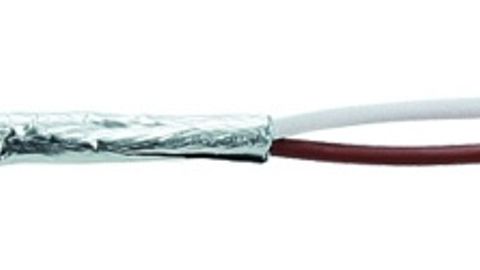
The 'Superflex' single-pair Ethernet cable with drag chain capability from Lütze has been available since 2019.
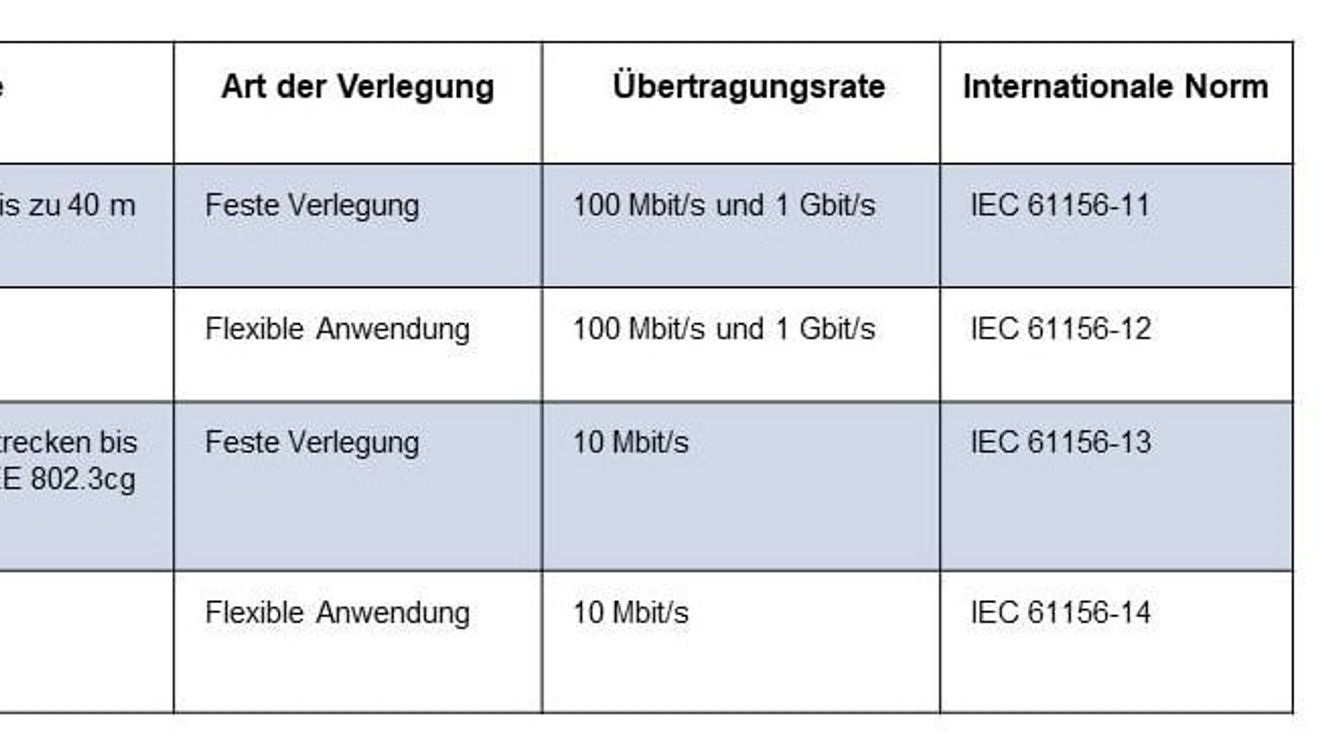
© Sagittarius- 100BASE-T1 (IEEE 802.3bw-2015 Clause 96): However, technologies such as semi-autonomous driving require even higher data rates, so the SPE standard for 100 Mbit/s was quickly followed by the gigabit variant.
- 1000BASE-T1 (IEEE 802.3bp): The standard for the transmission of 1 Gbit/s over up to 15 m (unshielded cables) or 40 m (shielded cables) was completed at the end of 2019.
- 10BASE-T1 (IEEE 802.3cg): The standard, which was adopted in 2019 and finally published on 23.01.2020, enables a transmission rate of up to 10 Mbit/s over a maximum distance of 1000 m.
The 10BASE-T1 standard (IEEE 802.3cg) is particularly relevant for many areas of industry, as almost all fieldbuses can be replaced by SPE with these key data.
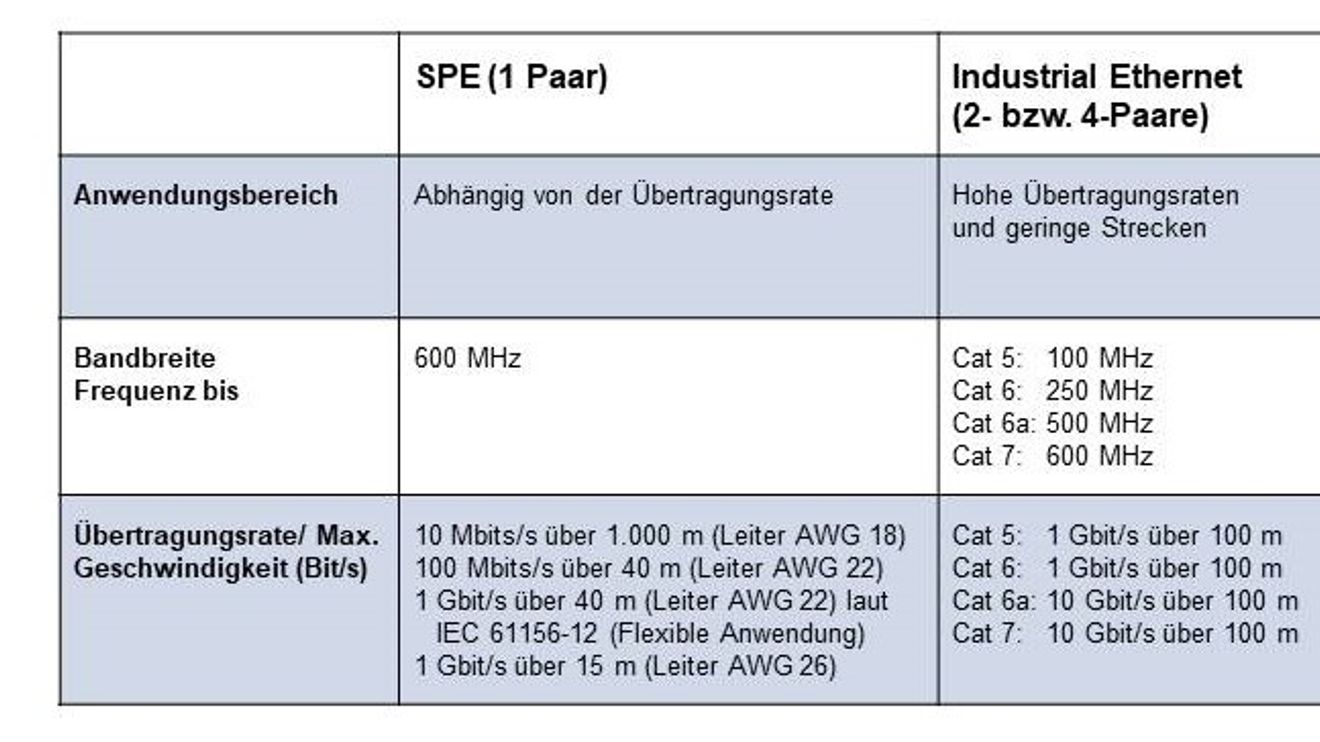
To implement the 100BASE-T1 and 1000BASE-T1 standards, it is necessary to significantly increase the bandwidth compared to conventional Industrial Ethernet Cat 5e data lines in order to implement the data rates via just one pair. For this reason, the cables are specified for a frequency of up to 600 MHz. Transmission rates of up to 1 Gbit/s (40 m or 10 m) can currently be realized. Real-time data transmission is also possible.
The cables play a key role in SPE technology. A distinction is made between fixed installation and moving applications. The IEC 61156 standard classifies single-pair Ethernet cables according to the type of installation, the maximum operating length and the data transmission rate. The IEC standards define the requirements for transmission.
SPE applications
However, high data rates are often not the main factor in industry. Long transmission lengths, simple handling and IP protection classes are often more important. SPE technology has the potential to close the gap between the control level and the field level, i.e. the sensor/actuator networks, and to almost completely replace fieldbus cables. With its different standards, SPE technology has the potential to cover two different application areas: both high transmission rates over short distances and medium transmission rates over long distances.
Typical applications of Single Pair Ethernet can be found in the following areas:
- Automation technology with applications in camera systems for quality monitoring, machine-to-machine communication(M2M) within a plant or in sensor or actuator connection in the sense of Industry 4.0 (1 Gbit/s over 40 m, conductor AWG 22, according to IEC 61156-12, flexible application).
- In robotics, where thinner cables offer more torsion/stroke cycles and the connection up to field level and enable remote control of the robot (1 Gbit/s over 15 m, AWG 26 conductor).
- A space-saving data infrastructure and thus secure communication can be realized in the control cabinet by using appropriate components.
- In railroad technology, the reduced weight and space requirements offer significant advantages (1 Gbit/s over 40 m, AWG 22 conductor).
- In the process industry in so-called hazardous areas, such as in the chemical industry or food & beverage. The process industry is given the opportunity to transmit Ethernet over distances of up to 1000 m. In this area, SPE technology has the greatest potential to replace fieldbus technology or analog technology (10 Mbits/s over 1000 m, conductor AWG 18).
- Automotive industry (1 Gbit/s over 15 m, conductor AWG 26).

The advantages of reducing the inner workings of a cable by more than three quarters and resulting in a cable that is half the weight of conventional four-pair data cables are obvious: lower weight and less space required, lower costs and simpler and more robust cabling. This means that SPE cables can also be installed where there is little space available for the cables - for example in a drag chain, in a robot or in a control cabinet. The trend towards downsizing continues with cables and connectors. In addition, SPE enables the use of a single system with Ethernet as the standardized language. Analogue communication paths and bus systems become superfluous, gateways and translators are no longer necessary and setup and parameterization are significantly simplified.

Many Industry 4.0 and IIoT applications are only possible with SPE as a key technology. Predictive maintenance, for example, requires a large number of additional sensors that need to be addressed efficiently. SPE offers a solution here thanks to real-time data transmission of up to 1 Gbit and simultaneous power supply of up to 50 W with Power Over Dataline (PoDL) via a single line and a common protocol.
SPE makes Ethernet consistent from the sensor to the cloud. In addition, the use of Time Sensitive Network (TSN) is possible and data can therefore be transmitted to the field level in real time.


You might also be interested in
Extended by modular support rail system
The Airstream mounting rail system from Lütze is suitable for users who want to assemble a mounting frame independently and easily on site.
 read more...
Easy to use
According to the supplier, the new Cat. 6A module carriers from Lütze allow data transfer points between the field and the control cabinet to be implemented more quickly and securely. One of the key features of the module rack is the significantly...
read more...Enclosure products for North America
Lütze offers switch cabinet products certified to the UL-50E standard for use on the North American market.
read more...Interface diversity
Unitronic has added the TRB 245 and TRB 255 industrial gateways from Teltonika Networks to its in-house 'Sensor2Cloud' portfolio. The TRB 245 is a small industrial LTE Cat 4 gateway with a variety of input/output, serial and Ethernet connections
read more...Supports CC-Link IE TSN
The Anybus product family from HMS Industrial Networks enables data exchange between field devices, machines and systems via common fieldbus and industrial Ethernet networks. The company has expanded the modular embedded family 'Anybus CompactCom'...
read more...RJ45 replaced
With the 'XTS' transport system, Beckhoff enables flexible machine concepts with highly individualized product transport. In the current generation, an Ethernet interface from Harting replaces the RJ45 interfaces of the computer cards. What are the...
read more...Under stress
Drag chain and robot applications are pure stress for the cables used, which have to cope with highly dynamic movements in all directions - in the tightest of spaces and often under extreme environmental conditions. How do suitable cables have to be...
read more...No radio without cable
Due to poor network coverage, a lack of real-time capability and unguaranteed bandwidth, the use of mobile communications in industry, especially in the automation environment, has so far been limited. 5G is set to change this.
read more...The key role of configuration
Time Sensitive Networking is gaining ground in convergent networks with critical applications and strict time requirements. But what needs to be considered in network planning? And why does configuration play a key role?
read more...