
Electronics housing
Comparison of manufacturing processes
In the production of electronic housings, the choice of the respective manufacturing process depends decisively on the series size. What are the typical processes and how do they differ?


Nowadays, standard housings are usually manufactured in large series using the plastic injection molding process. The picture shows an example of a corresponding mold and the finished housing (front).
© Bopla housing systemsDepending on the external influences to which they are exposed, standard enclosures are usually manufactured in large series in plastic or aluminum. Plastic enclosures are manufactured using the plastic injection molding process. The plastic is liquefied and injected under pressure into a metal mold, the injection mold. There, the plastic cools down, becomes solid again and can be removed as a finished housing part. Post-processing is generally not required.
Whether design edges are required, for example, or curves and bulges - the fully automated plastic injection molding process allows components to be individually shaped. Its greatest advantage is the low unit costs for series production. However, this is offset by relatively high tool costs, which usually only pay off from an annual quantity of 500 to 1000 units. The same applies to aluminum, zinc and magnesium die casting. These processes also only make sense for the production of large series due to the high tool costs.

Prototypes in the overview or according to the process used (from left to right): FDM, STL, vacuum casting, SLS, finished vacuum casting.
© Bopla housing systemsThe aluminum extrusion process is also suitable for series production. This technology can be used to produce profiles for aluminum profile housings of any length. The metal is pressed through a die using a punch. This determines the outer shape of the profile. Cavities can be created using differently shaped cores. The dies and cores can be individually designed. In this way, recessed areas for membrane keypads, grooves for holding circuit boards or mounting plates as well as wall brackets for fastening or cooling ribs can be molded directly into the profile. The cut-to-length enclosures can then be mounted using end caps. Compared to injection or die-casting tools, the costs for dies are relatively low, so that purchase quantities of 500 or 1000 kg of raw material, depending on the size of the profile, are worthwhile.
On trend - individual metal housings in small batch sizes

Vacuum casting mold with finished prototype - the mold created using STL precisely reproduces every detail
© Bopla housing systemsIn contrast to mass production, the production of individual housings in small batch sizes does not justify the investment in expensive tools. Processes such as plate milling and bending technology or punching and sheet metal bending technology are typically used here. Here, the housing parts are bent from a metal plate that has been cut to size and provided with the required cut-outs. As no or only simple 'tools' are required for this, sheet metal bending technology is already worthwhile for the production of batches of 50 housings or more.
Sheet aluminum as well as sheet steel or stainless steel can be used as the base material for sheet metal bending housings. Modifications to the enclosure are easier to implement than with the previously mentioned manufacturing processes. Therefore, series can also be developed that are based on a basic housing, but in which the housings differ, for example, in the number or arrangement of the recesses. Sheet metal bending technology is also suitable for larger housing formats.
The wall thickness of sheet metal bending enclosures starts at just 1 mm. With aluminum enclosures, this is reflected in a significantly lower weight compared to aluminum profile or die-cast enclosures of a similar size. Their wall thickness is typically between 2 and 4 mm.
The disadvantages of sheet metal bending technology lie in the limited design and the limited contouring, as free forms cannot be produced or can only be produced at great expense. For this reason, typical sheet metal bending housings - such as table housings for measuring devices - are characterized by flat surfaces, straight edges and recesses.
Plate milling and bending technology is always used at Bopla when a prototype or a small series of housings is needed quickly. First, the outer contours of the enclosure and the bending lines are milled into a metal plate. Bending along the bending lines is then carried out manually. No other tools are required here. Typically, plate milling and bending technology is used to produce prototypes for housing series, which can then go into series production using stamping and bending technology.
Prototypes and individual pieces made of plastic
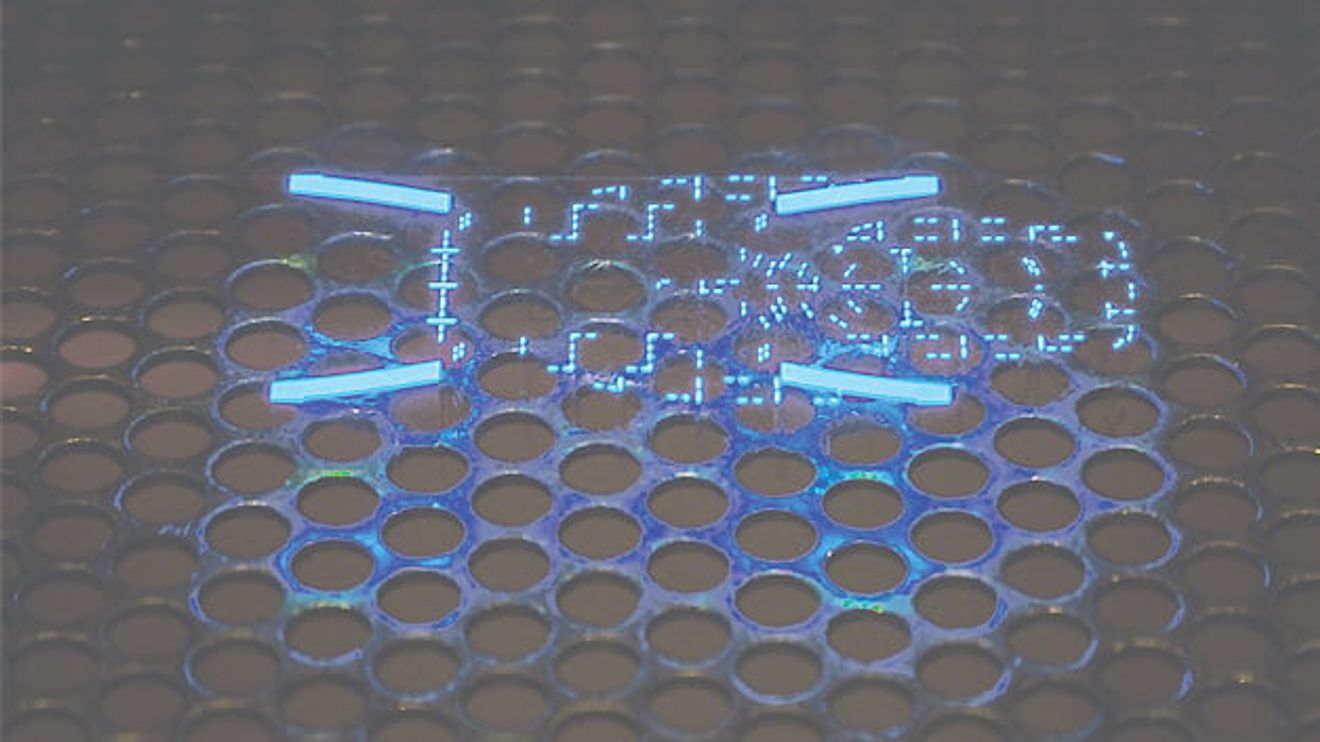
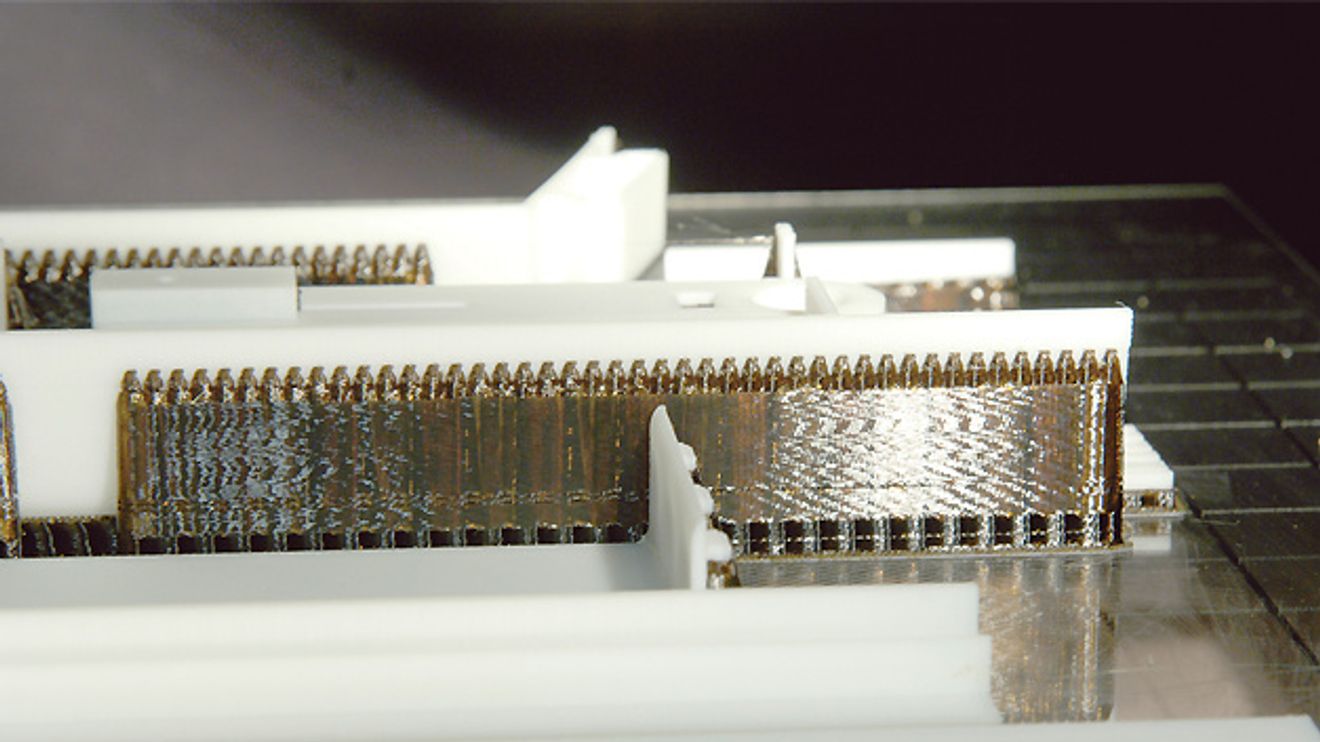
In the FDM method, the prototype (white) including support material (brown) is built up from a plastic thread.
© Bopla housing systemsNumerous processes exist for the production of classic prototypes. In addition to multi-jet modeling (3D printing), these include selective laser sintering (SLS), stereolithography (STL) and vacuum casting. In multi-jet modeling, the print head drops the molten material onto the substrate through several small nozzles. These droplets are pressed flat using a small roller and cured with a UV unit. Another additive process is 3D printing in the form of the FDM method or melt layering. Here, printing is carried out using plastic wires (filaments) wound onto spools, which are melted and applied to the substrate. Bopla uses this technology to produce initial installation samples and functional samples of newly developed housings. The part, including the support geometry, is built up layer by layer from a plastic thread. This cost-effective process is characterized above all by its speed. Housing prototypes can be produced in a much shorter time using FDM than with the other processes. However, the finished prototypes are less suitable for presentation purposes. The reasons for this are the rough surface as well as a lack of stability with delicate components and low precision. Nevertheless, the prototypes produced in this way give the user a first impression of the new housing at an early stage of the project and show where improvements may still need to be made.

In selective laser sintering (SLS), spatial structures are melted layer by layer from a powdered plastic using a laser.
© Bopla housing systemsIn selective laser sintering, spatial structures made from a powdered plastic (optionally high-strength and elastic, filled with metal or glass fibers) are melted layer by layer with a laser. This comparatively inexpensive process is particularly suitable for the production of especially complicated parts. No post-processing is required. However, the disadvantages here are the high mechanical effort and the production time, which depends on the volume. In addition, the surface is very rough due to the process. If the prototype is to be used as a presentation sample, a surface finish consisting of an adhesive primer is required to even out the surface unevenness, including painting.
The vacuum casting process is ideal for the production of high-precision presentation samples or small series of up to around 20 parts. A master model is produced in advance using the stereolithography process (STL). STL is the most accurate prototyping process and is absolutely true to detail. In the rapid manufacturing process, the workpiece is also built up in layers from a synthetic resin. However, the individual parts produced require post-processing by grinding off the support contours and sprues. The process is also more expensive than laser sintering, for example, and also takes a lot of time. To produce a vacuum casting mold, the STL prototype is finally encapsulated with silicone. Once the silicone mold has hardened, the mold is cut open and the prototype is removed from the mold. The silicone mold is then filled with a liquid casting resin under vacuum, the finished casting is removed after hardening and finished if necessary. The mold can also be used for further castings. All in all, vacuum casting is a proven process for reproducing prototypes quickly and cost-effectively and is typically used for the small series production of plastic parts. The vacuum prevents air pockets in the workpiece or between the mold and the component. Bopla usually uses this method to produce housing pre-series for field tests. In this way, valuable knowledge about the practical suitability of the newly developed housings can be gained at reasonable cost, which then flows into the final housing design.
Author:
Holger Ransiek is responsible for the development of special enclosures at Bopla.


You might also be interested in
Seita Hagihara is the new President
Yokogawa has appointed Seita Hagihara (49) as the new President of Yokogawa Europe B.V., effective January 1. He succeeds Takayuki Matsubara, who is moving to the role of CEO of the Yokogawa Group company KBC.
 read more...
Cooperation with Everactive
Rockwell Automation has announced a partnership with Santa Clara, California-based Everactive. The company is a provider of wireless and batteryless condition monitoring solutions for industrial customers.
read more...Acquisition of Wiferion
Puls takes over Wiferon and thus all existing contracts, trademark rights and patents of the wireless charging specialist. In the medium term, users will benefit from Puls' global production capacities.
read more...Thin clients in kiosk mode
The thin client firmware 'Visunet RM Shell' can be found on remote monitors and box thin clients from Pepperl+Fuchs, which facilitates set-up and operation with both virtualized and conventional PC-based process control systems. What does the sixth...
read more...Engineer Powerwoman 2023 chosen
Dr. Christina Franke has been named Engineer Powerwoman 2023. The announcement was made at the opening of the WomenPower career congress on April 21 in Hanover.
read more...Analyzing the emissions balance
The Microsoft Cloud for Sustainability helps companies gain a precise overview of their own greenhouse gas emissions and analyze the carbon footprint of their entire value chain.
read more...Configuring instead of programming
iTAC Software has equipped the iTAC.MOM.Suite production management system with new low-code functions.
read more...MES technologies for the smart factory
Software manufacturer Industrie Informatik is expanding the classic, modular MES into an integrative manufacturing platform.
read more...Developed for Microsoft operating systems
Genesis64 is an HMI-SCADA solution suite from Iconics developed for Microsoft operating systems. The suite works with OPC, BACnet, Modbus and open standard database connectivity.
read more...