
Three questions for... Emsisoft
"Security must not be an annoying add-on"
To ensure data security in companies, there are measures that could be implemented without effort, but often fall by the wayside for reasons of convenience. This includes the selection of passwords. Christian Mairoll on human error.
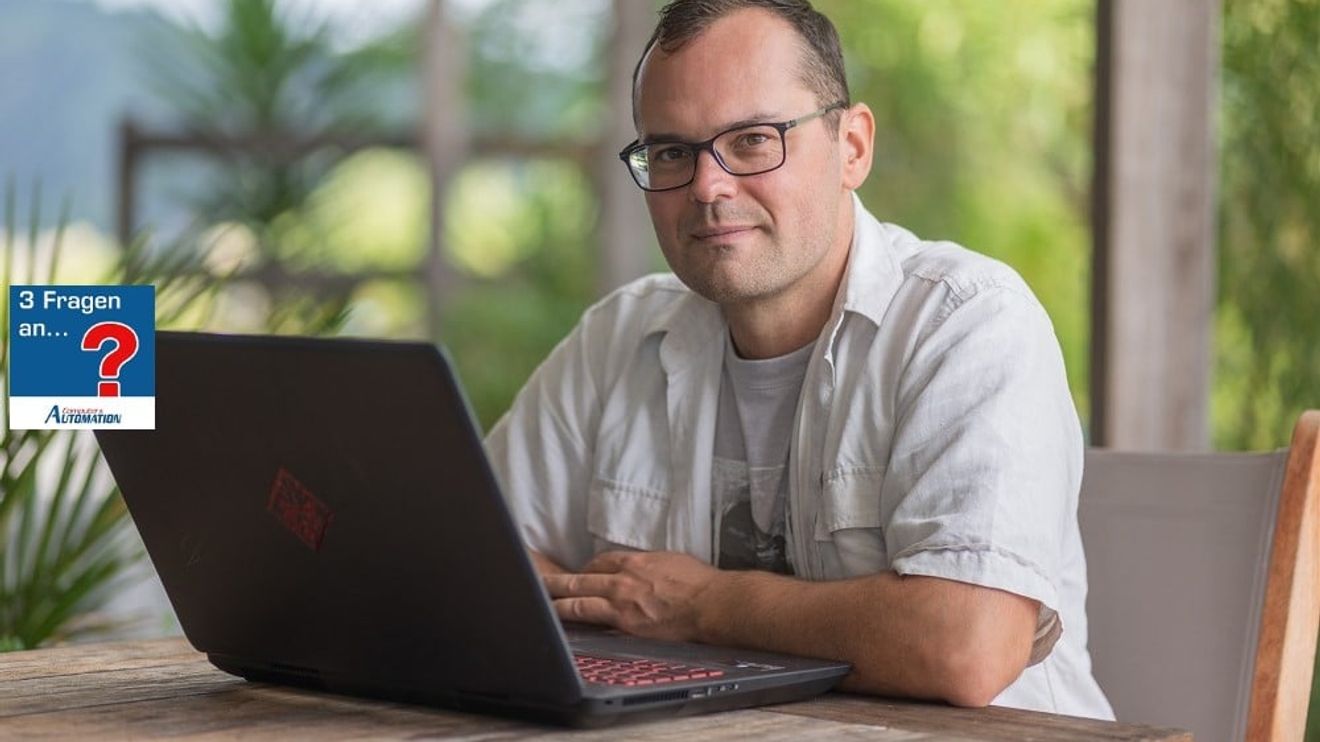
The choice of a password to protect data is varied, but often too predictable. People like to use their own name or initials combined with their birthday or year, the name of their pet, the current date of the day or, in the worst case, the classic "12345". In cases like these, Christian Mairoll, Managing Director of Emsisoft, is beating his hands over his head, because solutions to protect systems and access from unauthorized access are easy to implement.
Are German companies adequately prepared for potential cyber attacks and are their protective measures sufficient?
Mairoll: If you look at the current numbers of confirmed ransomware cases and the damage they have caused, you have to state quite clearly: No, German companies are unfortunately not adequately prepared for cyberattacks.
Emsisoft recently analyzed the direct and indirect costs of ransomware cases in the past year and came up with a conservative estimate of ransom demands of USD 148-593 million in Germany alone in 2019. The resulting business losses are also conservatively estimated at between USD 1 and 4 billion (the calculation method in detail).
Ransomware has been the biggest cybersecurity problem for several years, while classic malware categories such as viruses or rootkits have become almost negligible.
Regardless of the budget, which three security measures should companies implement to protect themselves from cyber attacks?
Mairoll: It can be observed that many companies rely too much on (sometimes very complex and expensive) purchased ready-made solutions, but often disregard common sense when it comes to basic precautions. The main gateways for malware are usually not technical gaps in firewall configurations, as one might assume, but outdated software and human error.
Specifically, we recommend implementing the following 3 security measures without ifs and buts: Multi-factor authentication - When servers are cracked and encrypted, it is mainly because attackers try common passwords and if a working one is found, there are no other security measures in place. Multi-factor authentication must therefore be mandatory for all services accessible via the Internet. Especially for servers that are accessible via RDP (Remote Desktop).
Strong passwords: Although it has been preached for decades that you should not use passwords that are too short, they are still used. People are lazy and therefore always prefer passwords that they can remember, which is fatal for security. Password managers solve the problem by storing virtually uncrackable long passwords behind a master password that is memorized.
Install software updates without delays: This tip is also not a real novelty, yet every day we see servers of sometimes very large organizations that have been cracked and encrypted simply because a security update that has been available for months was not installed on time.
The tips mentioned do not ultimately cost any significant amounts, but they make a huge difference.
Keyword security as a service: Should the manufacturing and process industry consider managed security services?
Mairoll: Yes, although I think we should differentiate between the reasons. If it's just about passing on responsibility to external service providers and saving costs, managed security can very quickly end in a fiasco. However, when it comes to integrating the knowledge of experts in order to establish better tested and documented security protocols yourself, I think it makes perfect sense to rely on managed security. Cloud-based solutions can significantly simplify and speed up administration, especially when it comes to the centralized management of endpoint security software. Your own IT admins always remain directly involved.
It is important to note here that security ultimately always remains the core task of your own company. Security must not be an annoying add-on in your own business model, but must always be included in the design of processes from the ground up.


You might also be interested in
A brief portrait of Christian Mairoll and the company Emsisoft
A brief portrait of Christian Mairoll and the company Emsisoft
 read more...
VDMA calls for the directive to be toned down
According to the EU Commission's plans, practically all industrial companies will be obliged to comply with extensive cybersecurity requirements in future. The VDMA criticizes the plans.
read more...The cybersecurity year 2021
The coronavirus pandemic will largely define the cybersecurity year 2021, according to the predictions of Imperva's security experts. Cyber criminals are benefiting from the uncertain and challenging situation for companies.
read more...SPS Connect 26.11. - 11:40 - 12:00 a.m.
The Next Cyber-Attack Could Be At Your Factory
As the surface of cyber attacks changes, the security risk and need for security solutions increases. It is imperative that factories adopt a resilient stance against cyber attacks.
read more...Security for OT and IT
As the degree of networking increases, so too do the security requirements. It is important to differentiate between cyber security and industrial security while still keeping an eye on the overall system.
read more...Rockwell Automation takes over Oylo
Rockwell Automation has announced the acquisition of Oylo, a private industrial cybersecurity service provider based in Barcelona, Spain.
read more..."Three questions for..." - the July edition
The paths of drive technology
Comprehensive networking opens up new possibilities for automation technology. In our online series "Three questions for..." we asked automation industry experts about the potential of the Industrial IoT for drive technology.
read more..."Three questions for..." - the May edition
Corona: Change as an opportunity
People react differently to the coronavirus and its consequences. What is it like in everyday working life? In the new part of our "Three questions for..." series, we look at this topic and asked automation experts for their opinions.
read more...Trends in robotics
Under the title "Three questions for ...", computer-automation.de is publishing short interviews with the leading figures in the automation industry on a regular basis this year. This month, the focus is on robotics.
read more...