
Operating and monitoring:
Smart mobility with a concept
Handy, portable, inexpensive and intuitive to use: there are many reasons for companies to use mobile devices as a communication tool. However, there are a few points to bear in mind when introducing a sustainable smart mobility concept.
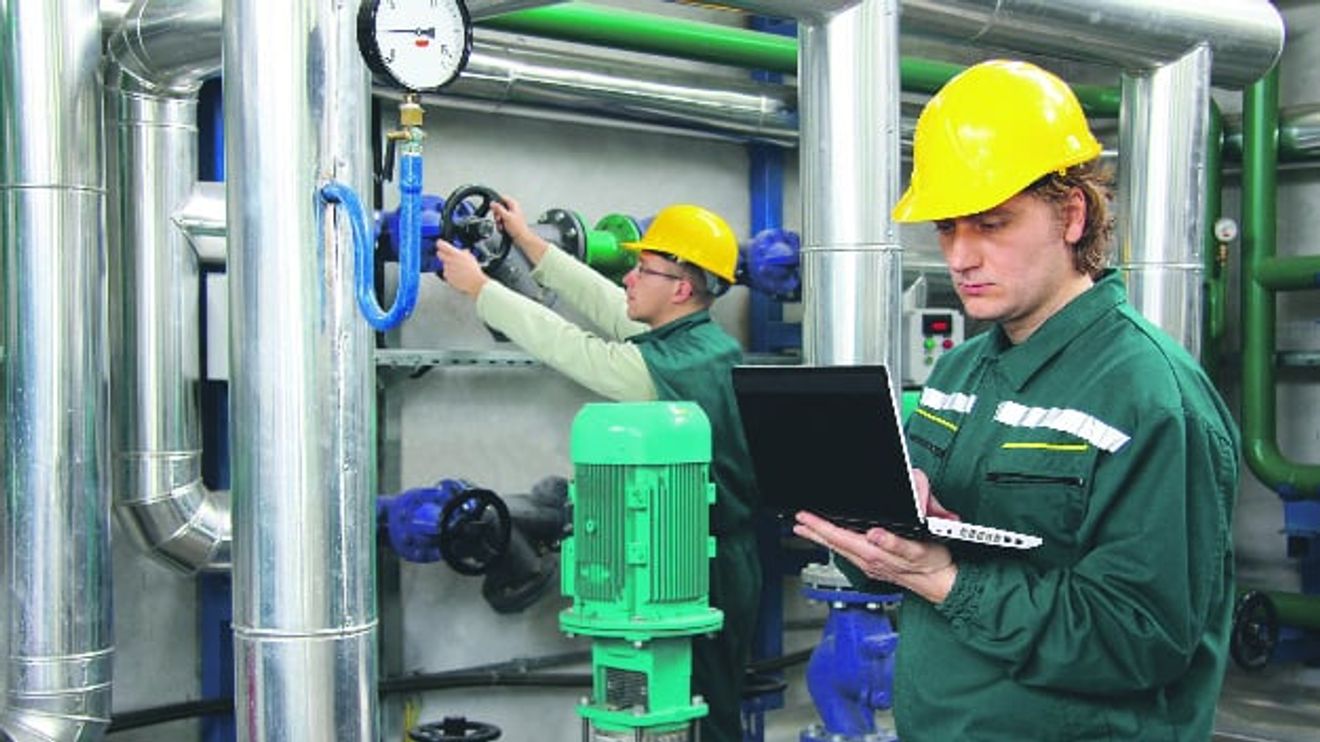
Smart mobility technologies can help to make production processes efficient and safe. For example, the production manager in a company with very large production halls can follow the individual steps of the production process at any time on their end device (e.g. smartphone, tablet, laptop) in real time and even intervene if necessary - without having to be on site themselves. A customized smart mobility application makes it easy to identify and rectify any problems or errors in the production chain. In addition, the material used and its processing can be checked precisely in order to localize the reason for failures or high reject rates in a timely manner. To do this, the application collects all the data accumulated during the shift and evaluates it. The outlier in the production chain is thus quickly found. Without a smart mobility solution, this would require much more manpower and time. The technology therefore contributes to cost savings - particularly in terms of material costs - while also driving improvements in quality and workflow.
Occupational safety and cost efficiency
Intelligently networked end devices not only support the optimization of work processes, they also ensure improved occupational safety for employees. Smart mobility concepts can even be used to detect and eliminate potential hazards in production facilities. Preventive maintenance reduces the frequency of accidents in the workplace: for example, users have checklists for the production facility available at all times on integrated mobile devices. If an employee notices a potential hazard, they can generate a maintenance order with just a few clicks and forward it quickly and easily to the technical service.
The core of smart mobility

Smart mobility concepts can be used to detect and eliminate potential hazards in production facilities. Thanks to Smart Mobility, the service team is well informed.
© AtosThe linchpin of such process optimization is usually a Mobile Enterprise Application Platform (MEAP). Cloud-based, it offers the necessary middleware and tools to centrally realize the implementation, testing, provision and management of professional mobile apps for production and maintenance applications. MEAP therefore meets two requirements: Firstly, the platform serves as a development environment for apps and consolidates backend web services for app management and their connection to the databases and applications in the company. Secondly, as a management console, MEAP enables the administration of security functions and access rights for users. A mobile device management platform (MDM) connected to MEAP is usually used to manage the end devices themselves with all the necessary configurations, settings and installed apps.
Focus on strategic development
From a technical perspective, Smart Mobility combines platform-based development and management environments for mobile applications with cloud infrastructures that are integrated into existing heterogeneous IT systems and company software. In tactical terms, smart mobility leads to a different view of a company's strategic development, as everyday processes, reaction speed and, last but not least, customer orientation are changing. It is important to keep an eye not only on your own company, but also on the mobile strategies of your competitors.
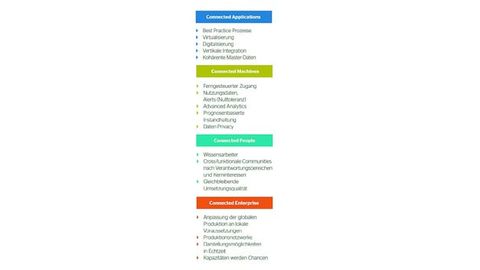
The future of production not only connects applications and the machines required for them. Knowledge workers and cross-functional communities will also benefit from the high degree of connectivity provided by smart mobility solutions.
© AtosExpert knowledge from a wide range of specialist areas is therefore required to implement a smart mobility strategy.
For central project management, we recommend a manufacturer-independent service provider or solution provider who not only has references for mobile business applications. A comprehensive understanding of their own business field, the specifics of the industry and the scale of the project is also essential.
What's more, many smart mobility projects can be implemented within a very short time in the form of cloud services and made available for a monthly fee. This means that for a very wide range of mobile applications, there are little to no investment costs for IT infrastructures. Many functionalities of a complete Smart Mobility Suite can be used on-demand, which is particularly beneficial for small and medium-sized companies. But large companies also benefit if their own data center is not burdened by additional systems for mobile communication.
What are the advantages of a smart mobility solution? There are three obvious advantages: integrated mobile devices can be used to monitor and control the production status remotely. The production manager always has a live overview of the individual processes thanks to real-time analyses. In addition, machine-to-machine integration allows inspections and any maintenance work to be carried out in an optimized manner, which not only increases efficiency but also improves occupational safety.
Author: Elmar Lichtenegger is Key Account Manager at Atos.
Smart mobility projects
As a specialized service provider for smart mobility projects, Atos relies on a five-stage process model:
Stage 1: Planning
A mobility strategy is developed together with the company in order to design the solution concept based on the requirements and to define the implementation plan in line with this.
Stage 2: Develop mobile applications
The design of the applications and their implementation includes requirements engineering, software development with tests for all necessary mobile platforms and the provision of the applications in the company's own app stores.
Stage 3: Platform solution for backend integration
Smartphone applications are integrated with the IT backend to ensure consistently available data from the company's own data center to the mobile device. This is usually done via Mobile Enterprise Application Platforms (MEAP), which are available as a cloud service.
Stage 4: Management of mobile devices
A mobile device management platform (MDM) centralizes the management of mobile devices, their settings and configurations as well as the security functions. The store is also integrated in this way in order to provide company-specific apps.
Level 5: Platform for contextual information
For context-related data, for example based on localization, interfaces are created to the corresponding content providers and the information is aggregated as required.
Examples from practice
For plant operators in the process industry, maintaining gas pipelines at an oil and gas company used to be a lengthy process. Today, smart mobility can improve workflow management: This is because maintenance orders are forwarded electronically directly to the team of workers. They receive their instructions on the move. The completed work can also be digitally confirmed immediately. Thanks to intelligent routing, several jobs can be completed in one day - and always by the team with the shortest travel time. Whereas in the past it took an average of four days for the final document to be in the system, maintenance and the administrative process behind it now take place in a relatively short period of time. Fewer media disruptions in the maintenance process result in significantly fewer errors. There are plenty of similar scenarios. A German lift manufacturer, for example, has installed SIM cards in its products in order to network them. Sensors provide the service team with information about impending wear and tear on individual parts or possible malfunctions. A cloud solution keeps those responsible in the company's technical service and development department informed at all times. At the same time, a detailed maintenance order is issued: The service team knows exactly which device type is affected, where the device is located and which components need to be repaired or replaced. The advantages: The lift operator learns about the service being carried out, but has no downtime. This is because the number of malfunctions remains low thanks to intelligent networking.


You might also be interested in
Same cables for AC and DC?
Are alternating current cables also suitable for direct current? Not always, as a working group at the TU Ilmenau has proven.
 read more...
Programming via drag & drop
One of the biggest obstacles to the acquisition of industrial robots in medium-sized manufacturing companies is the lack of skilled workers. With this in mind, a new operating system was developed that allows programs to be created easily via drag...
read more...Reduce costs and throughput times with cobots
They carry out pick & place tasks, screw and assemble parts and, last but not least, are used for packaging - we are talking about the eight collaborative robot arms that A. Jung has now integrated into its production lines for electrical...
read more...Schunk increases gripping force to 450 N
The series grippers previously certified for collaborative applications were usually limited in their gripping force. This is now a thing of the past: Schunk is now launching a large stroke gripper on the market that can achieve gripping forces of...
read more...What about 'Drive 4.0'?
Drives are the core component in industrial production. In combination with sensors and software, they enable the digitalization of the production process and thus the transparency of technical processes. In short: Industry 4.0 only works with...
read more...Project 'DC Industry' - Part 1
DC instead of AC in the production grid
Research and industry are working hard to redesign the power supply for industrial systems via a smart, open DC grid. The article describes the challenges of the 'DC Industry' project and the system specification developed so far.
read more...Artificial intelligence in the Simatic
Artificial intelligence (AI) - is opening a new chapter in the digital transformation of manufacturing. Implemented in the control system - and therefore directly on the machine - it helps to significantly reduce conventional programming and...
read more...A clear view thanks to the 19-inch IPC
Due to their great flexibility, industrial PCs in 19-inch format continue to enjoy great popularity - for example as the basis for pioneering testing technology applications.
read more...Engineering meets digital twin
Better planning with the digital twin: this is the principle that technology service provider Alexander Bürkle strives for in the engineering and assembly of switchgear. The prerequisite for this is a software platform that enables interdisciplinary...
read more...