
Industrial Thin Clients
Centralized versus decentralized
Industrial PCs with high computing power are specially designed for harsh industrial conditions. How is their 'competition' in the form of thin client technology designed to operate in environments with extended operating temperatures and 24/7 operation?
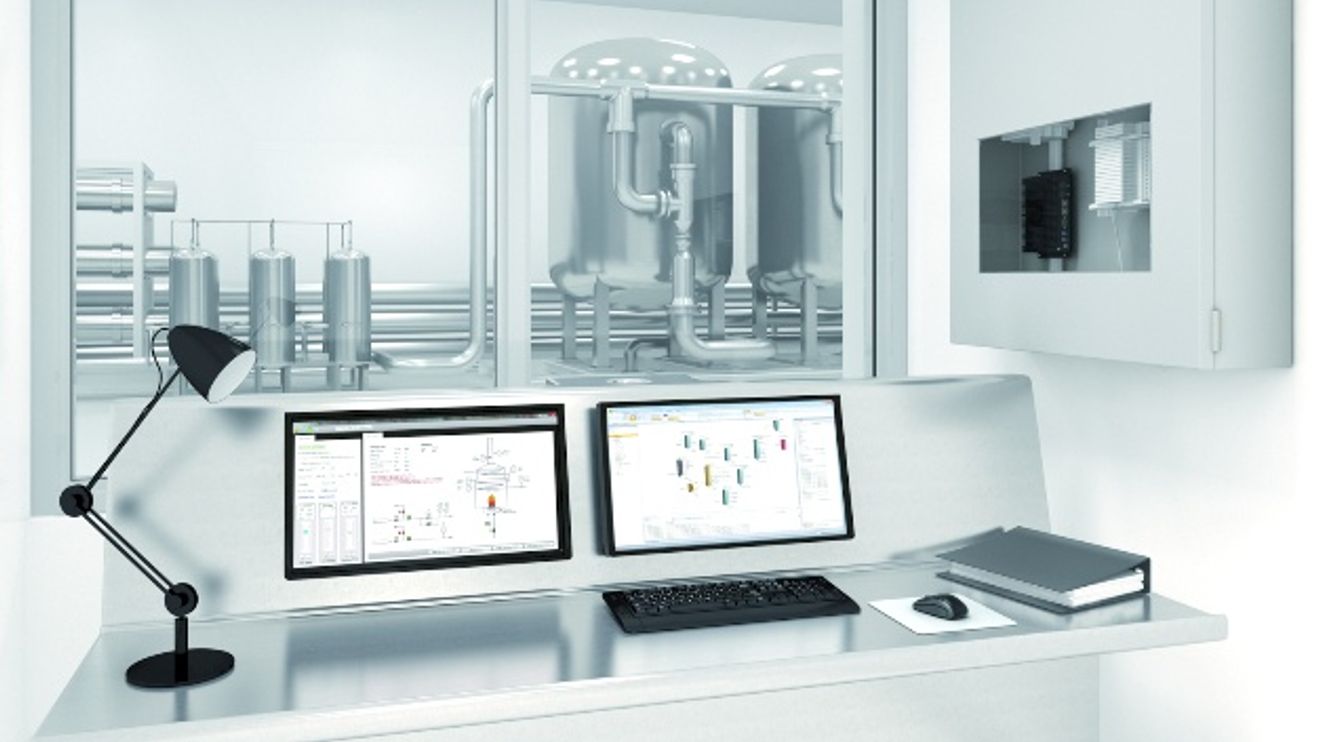
The requirements for industrial thin clients range from extended operating temperatures to a robust, fanless design. In terms of technology, however, the hardware of office and industrial thin clients does not differ in the slightest: the hardware of both clients allows users to access applications and information running on remote host servers via LAN, WAN or the Internet. Computing power is only required once on the server and can be used by all thin clients in the network. Communication takes place via specialized protocols such as the 'Microsoft Remote Desktop Protocol' (RDP), the 'Virtual Network Computing' protocol (VNC) or the 'Citrix Independent Computing Architecture' protocol (ICA). The compressed data sent between host and thin client can be processed using energy-saving processors. This leads to an overall reduction in hardware costs. The longevity of the thin clients also minimizes costs, insofar as application software updates have no impact on the devices. In addition, the embedded operating systems are supported for longer than desktop operating systems; regular costs for new hardware are therefore eliminated.
However, despite the cost efficiency and long life cycle of thin client technology, conventional industrial PCs also have their 'raison d'être' in production environments: In contrast to the lightweight industrial thin clients, industrial PCs are devices that have high-performance processors and large memory capacities. Industrial PCs designed for harsh industrial conditions are particularly suitable for applications with local control or for image analysis where high performance is required. Users therefore need to weigh up the advantages and disadvantages of the individual technologies and the conditions depending on the application scenario.
The necessary infrastructure

The system concept of IPCs is decentralized - in contrast to that of thin clients, which are arranged in a central system.
© Pepperl+FuchsA network in which the thin clients are available as a terminal is essential for the use of thin client technology. Users use it to access the remote server, for which sufficient physical space must be available. Depending on requirements, the thin clients can be industrial box thin clients or units with an integrated monitor that can be installed directly in the field.
Data security and safety

At a glance - Comparison of the aspects to be considered when selecting suitable hardware in the process environment.
© Image: Computer & AUTOMATION, Source: Pepperl+FuchsAs no data is stored on the thin clients themselves, there is no risk of data theft or loss. Additional data backups are stored centrally on the host server. This is not the case with industrial PCs: Here, the data is stored locally, i.e. decentralized. This means that direct attacks are possible and the risk of data loss or theft is increased.
This aspect also plays an important role when it comes to security: as the principle of thin clients means that data is rarely fed in or read out locally, the security risk is reduced. With industrial PCs, security standards must be increased through additional functions such as blocking USB ports in the firmware - as there are usually no data servers when using PCs, users are reliant on importing external data directly onto the PC via a USB stick.
A question of the life cycle
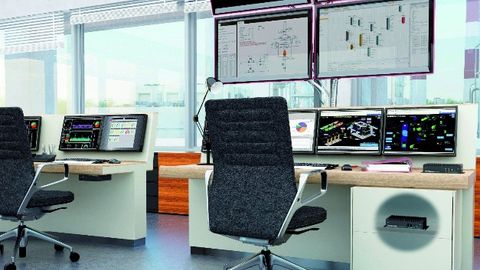
Industrial box thin clients such as the 'BTC12' from Pepperl+Fuchs are flexible in terms of installation options and meet the requirements of production environments.
© Pepperl+FuchsDue to the fanless design and the lower computing power of the thin clients, less heat is generated and, as a result, ultimately less wear and tear. Updates also have no influence on the existing hardware: if, for example, more memory is required for an application due to an update, this has no effect on the thin client; this only has an influence on the server on which the application is executed and stored.
The hardware of an industrial PC, on the other hand, must be adapted. The growing requirements at regular intervals can quickly push the hardware to its limits, meaning that replacement is often the only sensible solution. As a result, the hardware of thin clients has a significantly longer service life than that of high-performance computers.
Administration and maintenance
Thin clients offer only a few configuration settings, so their administration is very straightforward - the main configuration of the applications takes place on the central server. With industrial PCs, local application configuration and local data maintenance are often indispensable. Although additional Windows tools simplify this administration, the effort involved is several times greater compared to the central administration of thin clients.
Due to the simple equipment - for example the small amount of RAM - the costs of thin client hardware are comparatively low. In the event of a defect, it makes sense to simply replace the devices, as this can be done without affecting the application and data storage. The replaced device can be used immediately after establishing a connection with the server.
This is not the case with industrial PCs: due to the high hardware costs, it is usually advisable - if possible - to replace individual defective components, which can involve downtime and high costs. If the hardware has to be replaced completely, this means setting up data and applications locally again.
Author:
Natalie Hangel is Product Marketing Manager HMI in Process Automation at Pepperl+Fuchs in Mannheim.


You might also be interested in
Tablet for the Ex area
With the 'Pad-Ex 01 P12', Pepperl+Fuchs is launching a new tablet for professional use in potentially explosive atmospheres in Zone 2/22, Division 2.
 read more...
Flow of goods made transparent
With the 'IUR-F800-V1D-4A*', Pepperl+Fuchs is expanding its RFID portfolio with a UHF reader specifically for use in gate applications in logistics.
read more...HANNOVER MESSE DAILY Day 4
The top news from the fourth issue: Robert Habeck at the trade fair tour +++ Technological AI highlights from Beckhoff +++ Radar sensor technology in focus at Pepperl+Fuchs +++ ASi-5 counter module as an active distributor from Bihl+Wiedemann +++...
read more...followed up! - with Dr. Gunther Kegel
"Recognizably alien to the industry"
More and more regulations and bureaucracy are being imposed on companies. In an interview, ZVEI President Dr. Gunther Kegel criticizes politicians and calls for consistent action.
read more...Sensors plus evaluation unit for SIL 3 and PL e
To determine a safe absolute position, Pepperl+Fuchs relies on a combination of the 'PUS' evaluation unit with the 'safePXV' or 'WCS' sensors.
read more...Automatic check of your own resonance frequency
The RFID read/write devices 'IQH3-FP-V1' and 'IQT3-FP-IO-V1' from Pepperl+Fuchs perform identification tasks based on high-frequency RFID technology (13.56 MHz) standardized in accordance with ISO 15693.
read more...Configurable HMI systems
The modular platforms of the HMI portfolio from Pepperl+Fuchs offer individual solutions for applications from non-hazardous areas to Zone 1.
read more...The e-paper special: looking for products of the year 2024
They've earned it: all 96 nominated products from 12 categories in their own e-paper. Browse through the individual areas and make your personal selection. You can also find out more about the companies and their solutions in the accompanying video...
read more...Securely networked even in the Ex zone
With the intrinsically safe 'Smart-Ex 03', Pepperl+Fuchs presents a 5G and Wi-Fi 6-capable smartphone for flexible use in public and private networks. Christian Uhl, Head of Communication at Pepperl+Fuchs, explains the special features.
read more...