

"PaintVisco"
Fraunhofer project determines properties of coatings virtually
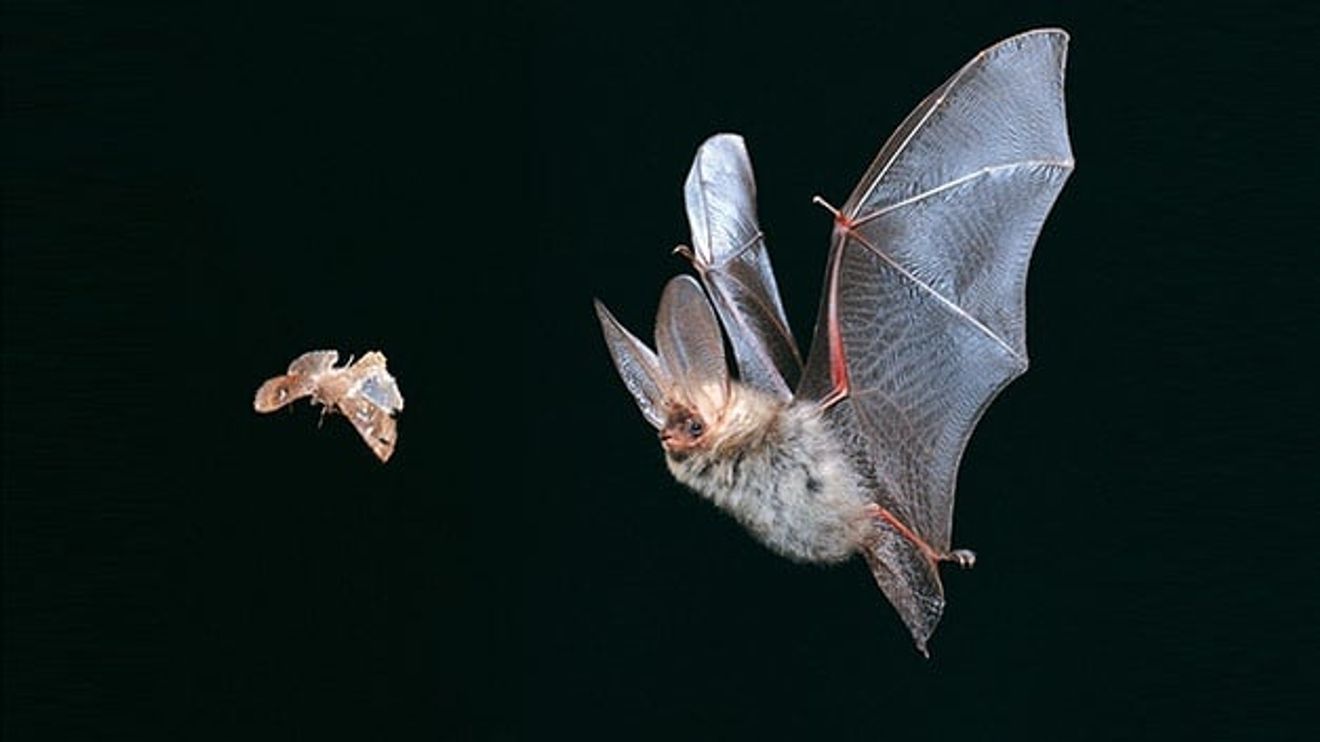
In the "PaintVisco" project, researchers at Fraunhofer IPA are modeling the development and processing of paints. The bat was the model for the development of a new simulation program that can be used to virtually determine the exact properties of paints.
Coatings are viscoelastic. This means that they change their properties depending on time and temperature: Initially they behave more like liquids, later more like solids. Viscoelasticity, in turn, is crucial for predicting the leveling, i.e. the ability of a coating to compensate for unevenness.
A wealth of data is required to simulate this complex behavior of paints. The measuring devices that provide this data are called rotational rheometers. They determine the flowability of paints by causing a thin liquid paint sample to rotate or vibrate with an attached disk and then measuring the force required for deformation. However, existing devices prevent the solvents from evaporating, meaning that the results are only of limited use to the paint industry. This is why Dr. Fabian Seeler, a researcher at the Fraunhofer Institute for Manufacturing Engineering and Automation (IPA), and his team have developed a new measuring technique.
They copied the measuring principle from the bat. The bat uses short ultrasonic calls for orientation: each call contains low and high frequencies that are reflected by the environment and merge smoothly into one another. The bat uses the echo to recognize where obstacles or prey are located, for example. By repeating the call, the bat can track how the distance to an obstacle changes over time or how the prey moves.
The PaintVisco rheometer also works with smoothly merging frequencies. The frequencies with which the paint sample is deformed are varied. By repeating the sequence of frequencies, the change in viscoelastic paint properties during setting can be recorded. Dr. Seeler emphasizes that this signal form makes it possible to determine all the data required for the progression prediction within a very short time.
With the virtual paint laboratory, the researchers at Fraunhofer IPA can now also take solvent evaporation into account: In their rheometer, the paint layer is no longer deformed by a closed disk, but by a construction of several rings. The openings between the rings allow the solvent to evaporate.


You might also be interested in
Sensor platform for AI testing in SMEs
KNIME is free software for analyzing large amounts of data. The KNIME2Edge platform is designed to enable companies to get started with AI technology without having to invest a large amount of resources and specialist staff at the outset.
 read more...
Focus on digital change
In May 2022, Bernhard and Michael Juchheim stepped down from the operational management of Jumo in order to focus on their role as shareholders. In addition to Dimitrios Charisiadis, Managing Director since 2020, Steffen Hoßfeld became Managing...
read more...Determined by DMS
In a material test, the properties and structures of a material are determined in the form of parameters using various physical or chemical tests and measurements. Reliable helpers in this process: strain gauges.
read more...Robotics Institute Germany co-founded
Fraunhofer IPA is a co-founder of the Robotics Institute Germany, which aims to bundle Germany's cutting-edge research into AI-based robotics.
read more..."Manufacturing-X data room preliminary study" presented
Manufacturing-X is seen as the next step on the road to Industry 4.0, but how could a data room be designed for the data ecosystem? A study presented by VDMA and ZVEI gets to the bottom of this question.
read more...How companies use data for product development
Where do companies stand when it comes to collecting data from products and using it to develop new products? Researchers from the Fraunhofer Institute for Manufacturing Engineering and Automation IPA have investigated this in a study.
read more...The digital value stream analysis
A research team from Fraunhofer IPA is digitizing value stream analysis together with the Stuttgart-based software provider Ifakt. This should enable this optimization method to be carried out in the future with significantly less effort and almost...
read more...The top articles in January 2022
Obstacles and opportunities characterize the top 10 most-read articles in January. Click through the obstacles in companies and find out what opportunities the year 2022 has in store.
read more...Intelligent sensor detects leaks
To simplify the search for leaks in compressed air systems, a researcher from Fraunhofer IPA is working with Sick to develop an additional leakage service for an intelligent flow sensor. Self-learning algorithms evaluate the measurement data.
read more...