
Gaia-X - Status Quo
The role of the national Gaia-X hubs
The organizational structure of Gaia-X is based on three pillars: the Gaia-X Association, the national Gaia-X Hubs and the Gaia-X Community. Peter Kraemer, Coordinator of the Gaia-X Hub Germany, explains the role of the German Gaia-X Hub.

Mr. Kraemer, Gaia-X Hubs are the central and country-specific contact points for companies, stakeholders, initiatives, associations and public institutions that want to contribute to the success of the Gaia-X project. What feedback are you already getting from these groups?
Peter Krämer: Every day we experience anew that Gaia-X moves people. More than 1,000 people from over 500 organizations are involved in our working groups and are working on the question of how Gaia-X can create added value. Of course, this requires a solid understanding of what the deliverables of Gaia-X actually are, and we are currently working on this. Ultimately, the network effects will take effect, i.e. the principle that the more players are involved, the better a system becomes, and this also applies to Gaia-X without restriction. The interest remains overwhelming.
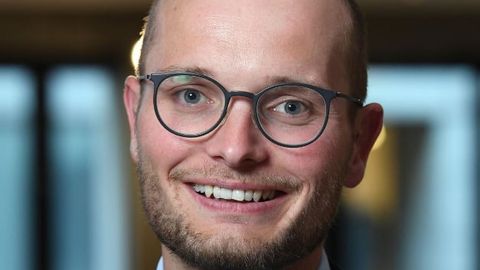
Peter Kraemer: "For me personally and for the German Gaia-X Hub, the involvement of SMEs is an important criterion for the market success of Gaia-X."
© Gaia-XWhy should a company join a Gaia-X Hub?
Gaia-X is an enabler technology that will enable companies to access reference architectures to solve common challenges. In the Gaia-X Hub, these challenges are identified and it is determined how they can be overcome with Gaia-X. This is and will always be a bottom-up process because the communities themselves know best what is needed - which is why the hubs are designed to be low-threshold in order to enable as many companies as possible to participate in the process.
Real market requirements are at the heart of the design of Gaia-X as an interoperability and sovereignty instrument. The emergence of innovative ecosystems is spurred on by common standards and mechanisms for data storage and processing; as a European data infrastructure, Gaia-X relies on the expertise and experience available in the domains to provide an adaptive and agile reference architecture. As an integrative project that builds on existing technological solutions for common challenges, Gaia-X strives to take into account solutions already developed on the market in order to minimize barriers to entry. Legacy systems will therefore have a future as data sources feeding into the system.
Technological, regulatory and governance-related requirements are specified on the basis of use cases and business cases and channeled through the German Gaia-X Hub to the relevant committees of the Gaia-X Association as the guardian of the Grail.
Let's assume that a company has neither the manpower nor the interest to actively participate in the development of the Gaia-X project. Why, how and when should an automation or mechanical engineering company get involved with the topic?
The data economy is coming and can no longer be stopped. In just a few years, it will be impossible to imagine industry without the use of data, and the sooner companies get to grips with this topic, the better. Gaia-X will offer massive leverage, especially for SMEs, as reference architectures will provide a transparent path to sovereign digital services.
For me and the German Gaia-X Hub, the involvement of SMEs is an important criterion for the market success of Gaia-X. For their special requirements, the German Gaia-X Hub provides an offer for networking and cooperation in order to develop the specifications of Gaia-X on a broad scale, but also on an industry-specific basis. In order to ensure the transfer of technological developments into implementation, exchange formats are being established and processes structured that enable SMEs to participate in the project - also in order to establish a comprehensive understanding of Gaia-X in the first instance.


You might also be interested in
European cloud service providers launch Structura-X
28 European organizations launch the Structura-X initiative. The digital companies and cloud providers want to use it to offer services that meet the requirements of Gaia-X. The new cloud infrastructure is intended to overcome the fragmentation of...
 read more...
From TSN testbed to convertible production
With the TSN Testbed, the ISW in Stuttgart is supporting the establishment of a deterministic and open network standard in production facilities. Florian Frick describes the status quo.
read more...Automation specialists benefit from Gaia-X
Beckhoff has been involved in the European Gaia-X project from the very beginning. Gerd Hoppe from Corporate Management at Beckhoff explains why a transparent digital ecosystem like Gaia-X is so important to the automation manufacturer.
read more...The call for Gaia-X
Data protection and compliance, but also transparency regarding access to data - these criteria are playing an increasingly important role in the selection of cloud providers. The European GAIA-X initiative is therefore increasingly attracting the...
read more...The four-way alliance DSBA
GAIA-X, BDVA, FIWARE, and IDSA form an alliance called DSBA to accelerate the digital transformation of the data economy. The aim is to realize data spaces with one voice and a common framework.
read more...The winners of the sponsorship competition
6 industrial use cases for Gaia-X
What can Gaia-X do in practice? The BMWi is funding the development of application examples that illustrate the technological and economic benefits of GAIA-X with 122 million euros. We show the six data ecosystems for industry that won prizes in the...
read more...Siemens presents AI product for engineering
At Hannover Messe 2024, Siemens is presenting the first generative artificial intelligence (AI) product for engineering in an industrial environment. The Industrial Copilot, a generative AI-supported assistant, is seamlessly connected to the TIA...
read more...Partnerships for computer vision solutions
Basler and MVTec are cooperating independently with Siemens. The new partnerships will enable customers to integrate machine vision applications directly into their existing automation technology.
read more...Strong finish to the 2023 financial year
According to Siemens, revenue and order intake increased by 10% and 6% respectively on a comparable basis in the fourth quarter of 2023. In the Industrial Business, Siemens recorded its highest earnings and profitability figures ever.
read more...