
Gaia-X - Status Quo
Automation specialists benefit from Gaia-X
Beckhoff has been involved in the European Gaia-X project from the very beginning. Gerd Hoppe from Corporate Management at Beckhoff explains why a transparent digital ecosystem like Gaia-X is so important to the automation manufacturer.
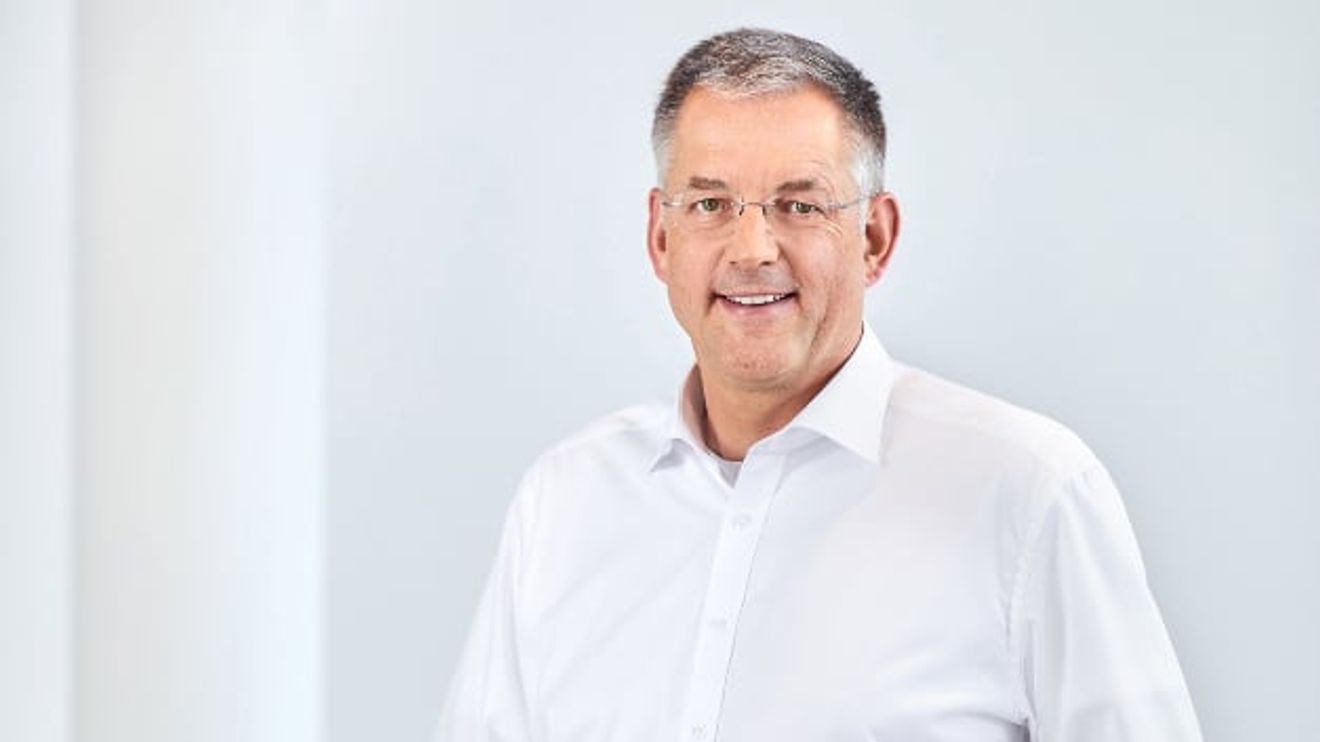
The Beckhoff company and you personally have been very involved in the Gaia-X project from the very beginning. What was your motivation for this and how important do you think it is in general for automation companies to get involved here?
Gerd Hoppe : The dominant B2C cloud providers are missing a lot when it comes to implementing digital business models. Regardless of whether we are talking about the necessary sovereignty over data, geography and legislation aspects or the exchange of users and providers for data and services within a domain and beyond. Europe can definitely set the tone here! And our Industry 4.0 initiative has laid a wonderful foundation for such a possible European approach to data spaces. That is already a good basic motivation to get involved.
What's more, the cross-domain, European and user-centered way of working are definitely convincing arguments for the participation of automation. Automation means abstraction, that's in the nature of things, and automation permeates all user domains: automation experts have therefore also made strong contributions to the architecture of Gaia-X and will benefit significantly from Gaia-X.
Gaia-X is above all a politically driven topic! How does this affect the progress of the project?
Europe can benefit from politically supported economic and industrial initiatives in order to establish uniform standards according to European principles in line with the size of our economic area. As far as Gaia-X is concerned in this context, Germany and France have made a good start. Hubs for Gaia-X have already been established in almost all European countries and are shaping the organization of users in all domains for Gaia-X, which, according to its statutes, should also be a user-centric organization.
It is also clear that European projects are European, colorful and multi-layered, with a large number of participants in the project. This complexity means that progress is only moderately rapid, but this is ultimately the fault of the participants, not the politicians.
When do you expect Gaia-X to actually become a viable alternative to the large proprietary cloud providers?
Several Gaia-X initiatives are currently developing initial stacks for identity and trust in the form of beta implementations; pilot applications for use cases are being tested as funded projects. However, due to the size of the task, it will still take some time, especially as Gaia-X grows with the digitalization of user domains. And yet: 2022 is planned on the association's 5-year roadmap as the year for the first implementations, 2023 as the year of growth in the market.
What do you recommend to your competitors and your customers? When should you start looking at Gaia-X? And how can they get started with this topic?
Ultimately, companies should simply take a close look at their own products: if these products are to include digital value-added services, then there are various implementation alliances and funding projects in which cloud and data interaction based on Gaia-X principles are being tested in practice and which you can join. The Gaia-X framework will implement these initiatives and projects, as available. And we have examples where this is already working very well: the Catena-X initiative in the automotive sector is currently achieving great implementation speed, but the Open Industry 4.0 Alliance is also organizing the implementation of cloud interoperability for manufacturing logistics and the process industry - a very practical approach.
In addition, participation in the national Gaia-X Hub can ensure that the needs of your own user domain are taken into account. Interestingly, the cooperation between the participants is very fruitful, especially through the exchange outside of their own domain.


You might also be interested in
Interview with Michael Moser, DSAG e.V.
One roof for all business networks?
Under the umbrella of Manufacturing-X, SAP is working to digitize supply chains in the industry. Michael Moser, DSAG Board Member for Production & Supply Chain Management, provides an assessment of Manufacturing-X activities from the perspective...
 read more...
European cloud service providers launch Structura-X
28 European organizations launch the Structura-X initiative. The digital companies and cloud providers want to use it to offer services that meet the requirements of Gaia-X. The new cloud infrastructure is intended to overcome the fragmentation of...
read more...That is far from sovereign!
SAP and Arvato Systems have announced plans to build a "sovereign" cloud platform for German authorities and ministries. How sovereign can such a project be? A statement from Holger Dyroff, COO and Managing Director of Owncloud.
read more...A sovereign cloud solution
SAP Germany wants to establish a company with Bertelsmann subsidiary Arvato Systems that will operate cloud locations based on Microsoft Azure in Germany, which will be used exclusively by the public sector. What DSAG thinks about the project.
read more...The role of the national Gaia-X hubs
The organizational structure of Gaia-X is based on three pillars: the Gaia-X Association, the national Gaia-X Hubs and the Gaia-X Community. Peter Kraemer, Coordinator of the Gaia-X Hub Germany, explains the role of the German Gaia-X Hub.
read more...The call for Gaia-X
Data protection and compliance, but also transparency regarding access to data - these criteria are playing an increasingly important role in the selection of cloud providers. The European GAIA-X initiative is therefore increasingly attracting the...
read more...The four-way alliance DSBA
GAIA-X, BDVA, FIWARE, and IDSA form an alliance called DSBA to accelerate the digital transformation of the data economy. The aim is to realize data spaces with one voice and a common framework.
read more...The winners of the sponsorship competition
6 industrial use cases for Gaia-X
What can Gaia-X do in practice? The BMWi is funding the development of application examples that illustrate the technological and economic benefits of GAIA-X with 122 million euros. We show the six data ecosystems for industry that won prizes in the...
read more...The e-paper of issue 07/2024
Read in the current issue of Computer&Automation how ChatGPT can provide support in the conception phase, how LLMs are used in code analysis and whether TSN can be considered as a backbone for virtualized control systems.
read more...