
Bosch CI
Know your own needs
Bosch Connected Industry has set itself the goal of bringing the software into the field. One tool for this is the 'Nexeed Industrial Application System'. Matthias Fontius explains the differences to existing solutions and why digitalization cannot be generalized.
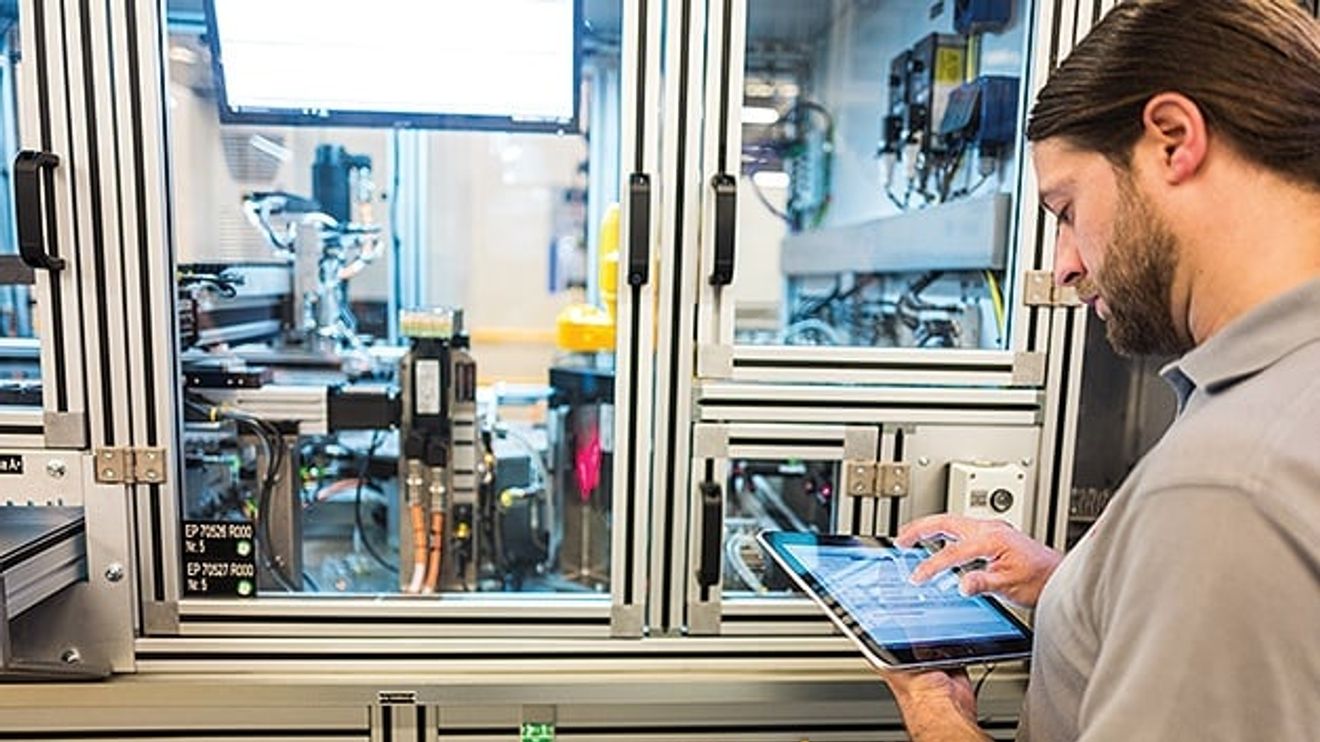
What exactly is the Nexeed Industrial Application System?
Fontius: The Nexeed Industrial Application System is a software system for manufacturing and intralogistics that is geared towards practical requirements. Anyone can put together exactly the solution they need for specific improvement projects from different application areas and modules - and can scale it up successively across plants.
Each user has an individual view of what is most important for their respective area of responsibility: quality engineers are interested in exact compliance with gap dimensions down to the millimetre, production managers focus on the highest possible overall system effectiveness, while material flow planners want to make their transport routes ever more efficient. That's why the Nexeed Industrial Application System provides the right information for everyone - whether at detailed or meta level. It is based on standardized, lean processes and combines lean management with IIoT.
What distinguishes the system from others on the market and what is your goal?

Matthias Fontius, Senior Manager Technical Sales at Bosch Connected Industry
© Bosch Connected IndustryFontius: The Nexeed Industrial Application System is based on Bosch's strategy as a leading user and leading provider of Industry 4.0 solutions. In other words, we develop our solutions in direct cooperation with our customers - but initially in our own factories. After testing and validation, we naturally also offer our solutions to customers from various industries.
Thanks to our domain expertise in production and logistics, we offer tried-and-tested, directly applicable solutions. Scalability is fundamental: each customer can control the speed and scope of implementation themselves. All modules are interoperable, access the same data and work together optimally. In addition, open interfaces ensure maximum flexibility so that customers can implement their own innovations based on the Nexeed Industrial Application System even faster.
Will users still need their own MES?
Fontius: There is already a Nexeed MES in use in more than half of all Bosch plants worldwide. The Nexeed Industrial Application System is the logical further development of this solution. We are gradually transferring the modules from the MES to the new system so that they are also available to customers outside Bosch. In the target state, the Nexeed Industrial Application System will therefore include the functionalities of the Nexeed MES, eliminating the need for an additional MES.
What hardware requirements must be met? Are starter kits available?
Fontius: That depends very much on the current level of digitalization in production. At best, the controller can communicate data directly to the Nexeed Industrial Application System. Older machines, on the other hand, need sensors and a gateway to catapult them into the digital age.
In our experience, customers like to test the application on a pilot, i.e. a very specific use case. Accordingly, we have developed starter kits for both areas - production and intralogistics. The starter kit offer begins with a workshop. Here, our experts talk to the people directly affected about their specific pain points, work with them to find solutions and identify a suitable use case. Of course, we offer demo licenses and everything that goes with them. However, it is much more important to determine the exact requirements together, especially when starting out with digitalization - and to find the right solution based on this.
How is the implementation carried out - step by step or as part of an initial effort?
Fontius: Each customer can decide that for themselves. Complete greenfield factories can be digitized or existing (brownfield) factories can be upgraded. We always base our projects on the question of how we can generate concrete added value with our solutions for improvement projects.
But no matter what the higher goals are, e.g. increased efficiency, competitiveness, etc., ultimately everyone involved must support the solution. This is particularly important to us in consulting and implementation. That's why a comprehensive digitalization strategy also includes change management and employee training - so that management and staff pull together and everyone is on board with the digital journey from the outset.


You might also be interested in
Bosch wants to convert all products to AI
The technology group Bosch wants to equip its entire product range with artificial intelligence (AI) or use AI in production by 2025.
 read more...
Two years of the ctrlX platform - the update!
Through the world of automation using app technology - driven by this vision, Bosch Rexroth introduced the automation platform ctrlX in 2019. The aim is to establish an industrial ecosystem using the open platform and an app store.
read more...A milestone on the road to implementation?
The implementation of the vision of Industry 4.0 is still slow! The 1.0 release of the open source reference implementation Eclipse BaSyx is set to give the transformation wings with immediate effect - an application report.
read more...Automation trends from Bosch Rexroth
Platform economy is the top trend in 2021
Bosch Rexroth has defined the automation trends for 2021. Openness, simplicity and flexibility are in demand. The demand for needs-based solutions for high added value is growing.
read more...Bosch wants to convert all products to AI
The technology group Bosch wants to equip its entire product range with artificial intelligence (AI) or use AI in production by 2025.
read more...SPS Connect 24.11. - 16:45 - 17:05
The digital understanding twin
Digital twins transform raw data into understandable and accessible information for domain experts and software developers.
read more...Rethinking the value stream
Until now, flexibility and efficiency have been opposing process parameters in industrial value streams: The use of modern IoT technologies offers new opportunities to resolve this old contradiction in a 'smart' way.
read more...Eric Brabänder takes over as CEO of Empolis
Eric Brabänder took over as CEO of Empolis on July 1, 2026. The long-time product and AI expert succeeds Andreas Klüter at the helm of the software company.
read more...Inosoft Acquires Swiss Subsidiary
Inosoft GmbH is acquiring Swiss-based Inosoft AG in its entirety. Thomas Helmbold will become the new managing director, and the company's headquarters will move to Thayngen.
read more...