

New series: Three questions for ...
What will 2020 bring?
Under the title "Three questions for ...", computer-automation.de is publishing short interviews with the leading figures in the automation industry on a monthly basis this year.

We address industry-relevant topics with current relevance and ask questions, the answers to which are intended to provide a look behind the scenes. Sometimes factual and analytical, sometimes with a twinkle in the eye. You too can look forward to the statements of our interview partners.
The series begins with:
Philip Harting, CEO Harting Technology Group
Michael Otto, Chief Regional Officer Germany at Kuka
Dr. Gunther Kegel, CEO Pepperl+Fuchs
Jens Holzhammer, Managing Director Moxa Europe
Klaus Rottmayr, Member of the Management Board at Spectra
Harting: "An entire industry is facing a gigantic upheaval"
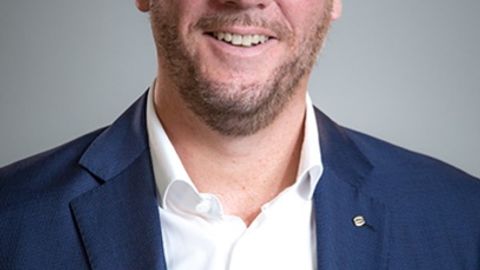
As CEO of the Harting Technology Group and holder of several honorary positions in the electrotechnical associations, Philip Harting answers three questions about the forecasts for 2020 in this short interview.
The ZVEI is expecting zero growth for 2020, what is your forecast?
Harting: According to the Federal Statistical Office, the German economy grew by just 0.6% in 2019. Most institutes also see only weak growth for 2020. We are therefore calculating rather cautiously and expect another sideways movement this year, or at best a slight increase.
What do you see as the biggest challenge in 2020?
Harting: We clearly see it in the global trade conflicts. Global trade growth has been stagnating for some time now, and the large number of trade conflicts is weakening investment momentum. This is being felt first and foremost by Germany's foreign trade-oriented industry, including Harting. Added to this are the upheavals in the automotive and supplier industry in connection with the climate protection debate and e-mobility. An entire industry is facing a gigantic upheaval that nobody knows how it will end.
What product developments are you planning for this year?
Harting: Against the backdrop of the upheavals and changes in the market already mentioned, the challenge is to constantly adapt to these changes. Among other things, we are seeing developments towards concrete standards in the industry. This affects specific interfaces as well as the entire data communication structure.
On the one hand, we are driving forward the new Single Pair Ethernet (SPE) market with the T1 Industrial product. Further new variants for the cyber-physical systems of the future will emerge here. On the other hand, the topic of software is also becoming increasingly important for us. With our edge computing device Mica, we will develop further solution packages in the field of Auto-ID or Industrial Cloud. Open source technology and OPC-UA communication concepts are the relevant drivers of the standards here.
Kuka: "Digitalization and automation are global megatrends"

Kuka expected sales of around 3.2 billion euros for the 2019 financial year. Even before the annual financial statements are published in March 2020, Michael Otto, Chief Regional Officer Germany at Kuka, explains the company's goals and news for the new year.
The ZVEI is expecting zero growth for 2020. What is your forecast?
Otto: Digitalization and automation are global megatrends. We want to be the first choice for intelligent automation. In principle, we are well on the way to achieving this vision. After all, nobody offers such a broad spectrum of automation expertise as Kuka. However, it is of course essential that we keep a close eye on the general economic situation.
Where do you see the biggest challenge in 2020?
Otto: With a view to the German market, we want to develop new business models related to the digital transformation. The focus here is on the question of how we can increase the transparency of a production plant. We are creating interfaces to read out data, which we will then analyze in a targeted manner using our process expertise in order to generate added value.
What product developments are you planning for this year?
Otto: Just a few days ago, we launched the new KR Iontec, a robot for any task in the medium payload class from 30 to 70 kg. With a maximum reach of 3,100 mm, it has the largest working range in its class. The successor to the KR 60-3 is also extremely flexible. It can be used in any installation position, allows payload conversion with the robot installed and can be flexibly adapted to different production processes at the touch of a button using our motion mode software add-ons.
Pepperl+Fuchs: "Expansion of renewable energies for the necessary ecological impact"
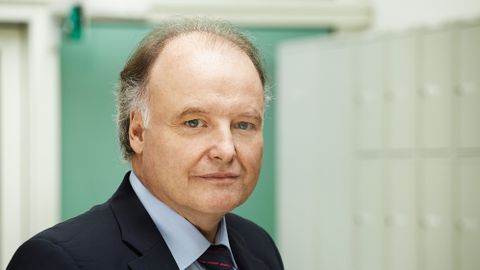
Dr. Gunther Kegel is celebrating 30 years with Pepperl+Fuchs this year and has experienced and shaped many technical developments in sensor technology during this time. Reason enough to ask him for an assessment of his anniversary year.
The ZVEI is expecting zero growth for 2020. What is your forecast?
Kegel: It's very difficult to make a forecast for the entire, really broad-based electrical engineering sector in Germany. All sectors that did business with and around automotive manufacturing in 2019 had to deal with declining business. Other sectors - intralogistics, for example - still recorded growth. Economic indicators in the three regions of the world are currently showing slightly positive developments. There is at least some respite in the trade dispute between the USA and China, we will get clarity on Brexit in the coming weeks and a war in the Middle East has been averted so far. So the starting conditions are not that bad. We ourselves closed 2019 with 7.8% growth and are aiming for growth of around 6% in 2020.
What is the biggest challenge for you in 2020?
Kegel: The biggest economic burden is the uncertainty in many areas, which is making it difficult for investors and consumers alike to make decisions. A look at our most important economic sector, the automotive industry, makes this clear. For manufacturers, the only way forward is battery-based electromobility because other technologies, such as fuel cells or CO2-neutral synthetic fuels, are not yet available. However, battery-based electromobility only makes sense for some of the mobility requirements and requires a significant expansion of renewable energies in order to have the necessary ecological impact. So what can be done? I have the impression that buying a new car has never been so unsatisfactory. It is problematic that the decision to buy a car is losing its emotionality and being reduced to a consideration of basic utility.
What product developments are you planning for this year?
Kegel: We are primarily planning innovations in the areas of connectivity and sensor technology 4.0. Each new sensor will be equipped with a digital interface and a software environment that also contains the individual I4.0 administration shell and can be integrated into the I4.0 networks with our modules. The new 2D and 3D LiDAR sensors are certainly outstanding, as are the joint development APL - Advanced Physical Layer - and our latest generation of Zone 1-capable smartphones.
Moxa: "Double-digit growth and doubling turnover"
By recently becoming a member of the VDMA, Moxa has reaffirmed its affiliation with mechanical engineering and factory automation. Managing Director Jens Holzhammer describes the course that has now been set for 2020.
The ZVEI is expecting zero growth for 2020, if necessary. What is your forecast?
Holzhammer: We are relaxed about 2020, as we are excellently equipped for the current topics and trends that are driving the industry - both in terms of product development and personnel. In this respect, we will continue our tradition: we want to achieve double-digit growth in the next five years - as in the past - and double our turnover.
What is the biggest challenge for you in 2020?
Holzhammer: We have a broadly diversified product portfolio in which we want to develop further. This includes topics such as 5G and the expansion of IPC platforms. In general, we aim to be one of the technology leaders, particularly in the areas of cybersecurity and IIoT. From 2020, we will restructure our business divisions in order to make better use of synergy effects on the product side. For example, we will combine all our wireless and wired switches into one business unit. So the topics for the future are clear and we have the necessary product range; now we have to get the growth on the road.
What product developments are you planning for this year?
Holzhammer: We are currently working very intensively on the impact 5G will have on our products and solutions. We are already experimenting with prototypes such as 5G-capable gateways. We are also expanding our range of IIoT and cybersecurity components and IPCs. In addition to Trend Micro (in our joint venture TXone), we are working closely with Microsoft.
Spectra: "Great variety in the shortest time with the highest quality"
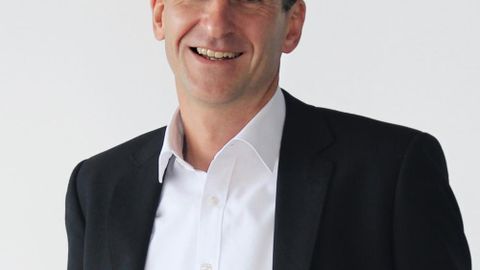
The global economic situation has proved unpredictable in recent months. Spectra Managing Director Klaus Rottmayr talks about how to operate successfully on the market despite this.
The ZVEI is expecting zero growth for 2020 if necessary. What is your forecast?
Rottmayr: The German Electrical and Electronic Manufacturers' Association is basing this statement on an industry average. This forecast is probably correct, considering the uncertainties that have been affecting the general economic situation for some time.
We, on the other hand, are assuming slight growth for Spectra. The reason for this is that we are well represented in some growth markets. These include, for example, "industrial image processing" and "edge computing" with the hype topic of "artificial intelligence". Special and individual computer systems are required for these applications. And this is precisely Spectra's core competence.
What is the biggest challenge for you in 2020?
Rottmayr: For us, there are essentially two major challenges, which we face anew every year.
On the one hand, we have to react as quickly and effectively as possible to unforeseen disruptions to the economic situation. And this is becoming increasingly difficult, as such disruptive influences are occurring more and more frequently.
On the other hand, we are happy to take on the second challenge of "meeting our customers' requirements in the best possible way". The task here is to provide a wide variety in the shortest possible time with the highest quality.
What product developments are you planning for this year?
Rottmayr: In addition to ongoing product developments, we will be expanding our range this year, especially in the 'Panel PC System' area with a series of 'Web Clients' and in the 'Communication' area with new products for wireless data transmission such as LoRa and NB-IoT. In addition, new computer systems based on AMD and specifically for image processing and AI applications are planned.


You might also be interested in
A brief overview of Jens Holzhammer and the Moxa company
A brief overview of Jens Holzhammer and the Moxa company
 read more...
A brief overview of Klaus Rottmayr and the Spectra company
A brief overview of Klaus Rottmayr and the Spectra company
read more...HMI and PLC in one
The all-in-one control units of the 'Uni-Stream' series from Spectra combine a touch display and the control unit with numerous combinations of analog and digital inputs and outputs in a compact housing.
read more...SPS Connect 24.11. - 16:20 - 16:40
"Intelligent Supermarket" Digital Kanban Management System
Kanban systems are indispensable in manufacturing companies and have many advantages. Nevertheless, error-prone, manual workflows and a low level of digitization cloud the picture.
read more...SPS Connect 11/24 - 10:20 - 10:40 a.m.
Corona - catalyst for digitalization?
In his keynote speech, Dr. Gunther Kegel, Chairman of the Board/CEO at Pepperl+Fuchs, will address the effects of the coronavirus pandemic and the digital transformation.
read more...Three questions for...Stormshield
"Industry 4.0 only via IT and OT security"
While IT is usually protected by security measures, the OT area is often neglected in many industrial companies. Uwe Gries knows that unsecured, intelligently networked machines and processes are open gateways for cyber attacks.
read more...Three questions for...Rockwell Automation
"Comprehensive system protection via Security-as-a-Service"
Constantly changing forms of cybercrime make it difficult for companies to defend themselves against attacks. Once an attack has been successfully fended off, a new, previously unknown digital adversary may already be lurking. Arno den Elzen sheds...
read more...3 questions for...Schubert System Elektronik
"Partner at eye level"
If companies rely on IIoT concepts in plants, the choice of suitable security plays a major role as networking increases. For Marcus Finkbeiner, the trend topic of edge computing is of central importance for a secure process along the value chain.
read more...Three questions for... Microsoft
"Lack of emergency management in German companies"
Cyber attacks cause billions in damage and the number of attacks is constantly increasing. Due to a lack of protective measures, SMEs are a particular focus of attacks and have enormous potential for improvement. Thomas Frahler on the status quo.
read more...