

Supercomputer
EU starts the race to catch up
The fastest computers in the world are currently in countries such as China and the USA. According to the EU Commission in Brussels, this is not only bad for the image of the European Union. Now a race to catch up is to begin - with a billion euros.
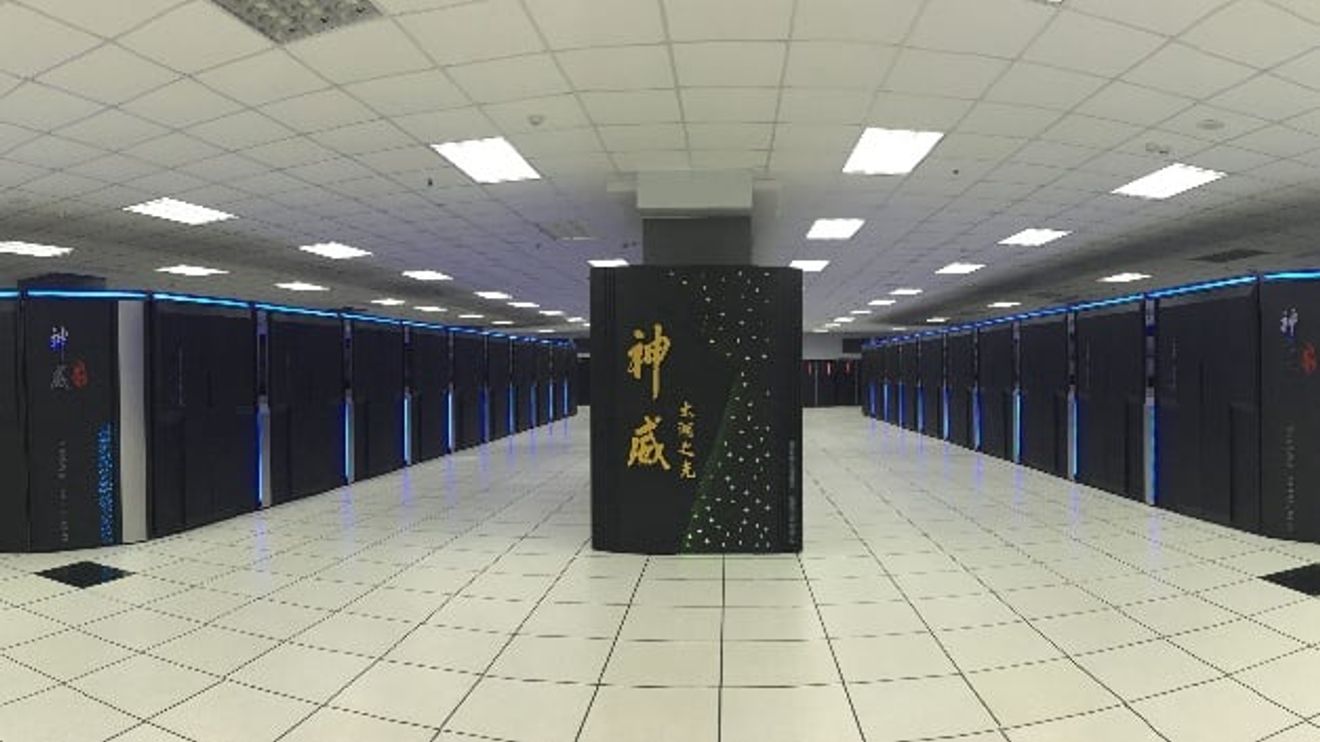
The European Union is to receive new supercomputers for one billion euros. On Thursday, the EU Commission presented a plan to build an infrastructure of supercomputers. This should be able to perform at least one trillion (10 to the power of 18) computing operations per second by 2023 at the latest. To bridge the gap until then, the plan envisages the purchase of two somewhat slower supercomputers.
The new supercomputers would be able to process huge amounts of data in real time. According to the Brussels authority, this could make the electricity and water supply more efficient or improve the prediction of hurricanes, earthquakes and climate change. In the field of medicine, supercomputers are already helping to make faster diagnoses and simulate the effects of new drugs.
According to the EU Commission, EU countries are currently far too dependent on the computing power of supercomputers located outside the EU in countries such as China, Switzerland, the USA or Japan. This "lack of independence" poses a threat to business secrets, data protection and the strong right to privacy in Europe, the authority explained.
In this context, EU Vice-President Andrus Ansip pointed out that not a single one of the ten best supercomputers in the world is currently located in an EU country. "The EU must catch up in this tough race," he demanded. Supercomputers are the "engine of the digital economy".
The new European supercomputer system is to be financed with 486 million euros from the EU budget and an approximately equal amount from the national budgets of European countries. Further project funding could come from the private sector.
"A better European supercomputer infrastructure (...) is of central importance for the digitalization of industry and increasing the competitiveness of the European economy," explained Digital Commissioner Mariya Gabriel. According to experts, the use of supercomputers can, for example, shorten the usual product cycles in the automotive industry from an average of 60 to 24 months.
In the latest list of the fastest supercomputers ("Top 500"), China was the clear leader. The country ranked 202 systems there, while the USA, the leader until recently, only had 143. China also operates the fastest computer in the world. With 93 petaflops (quadrillions of calculations per second), 'Sunway' works at the national supercomputing center in Wuxi, China, keeping its rivals well behind. China is also in second place with 'Tianhe-2' (33.9 petaflops). In third place is 'Piz Daint' (19.6 petaflops), a facility from Switzerland. The planned European infrastructure would surpass the current number one with 1 exaflops.


You might also be interested in
IBM cooperates with industry
IBM wants to drive quantum research forward together with industry and has also gained Daimler as a partner. The automotive group wants to research how quantum technology can be used to develop potential applications for the automotive industry.
 read more...
DLR Institute launched to analyze huge amounts of data
A new DLR institute was opened in Jena at the end of August 2017. It will focus on the analysis and handling of large amounts of data generated in the course of digitalization.
read more...Half a billion euros for supercomputers
Around half a billion euros is to be invested in supercomputers and their infrastructure in Baden-Württemberg by 2024. According to Science Minister Theresia Bauer in Stuttgart, the state wants to expand its leading position in the field of...
read more...HPE presents 'The Machine' prototype
A prototype from the research program 'The Machine' is set to turn developments from 60 years of computer history on their head. It is hoped that memory-driven computing will have great potential, especially in the field of big data.
read more...Battle for the EU as an industrial location
Von der Leyen sees need for billions
The sums involved are in the hundreds of billions. Industries of the future, such as clean energy production, are being courted worldwide. Following an initiative by Ursula von der Leyen, the EU is now facing intensive debates.
read more...European Parliament votes in favor of a standard charging cable
Less electronic waste, lower costs for consumers and less environmental pollution - this is what standardized charging cables are supposed to deliver. MEPs from all political parties have agreed to the project. However, industry representatives are...
read more...EU Commission wants to protect victims of artificial intelligence
According to the EU Commission, anyone who suffers damage due to artificial intelligence should be able to claim compensation more easily in future. According to the Commission, this should also increase confidence in new technologies.
read more...Dispute over patent protection
EU launches new WTO case against China
China is intimidating European companies with litigation bans. The EU no longer wants to stand idly by and watch.
read more...VDMA joins European Clean Hydrogen Alliance
The VDMA is a member of the European Clean Hydrogen Alliance. Its aim is to promote climate-neutral hydrogen in Europe.
read more...