
Intel under pressure
Apple plans its own Mac CPUs
Intel's presentation of its latest processors at the beginning of the week was really spoiled. Just a few hours earlier, it had become known that major customer Apple was planning to equip its Macs only with its own CPUs in future.
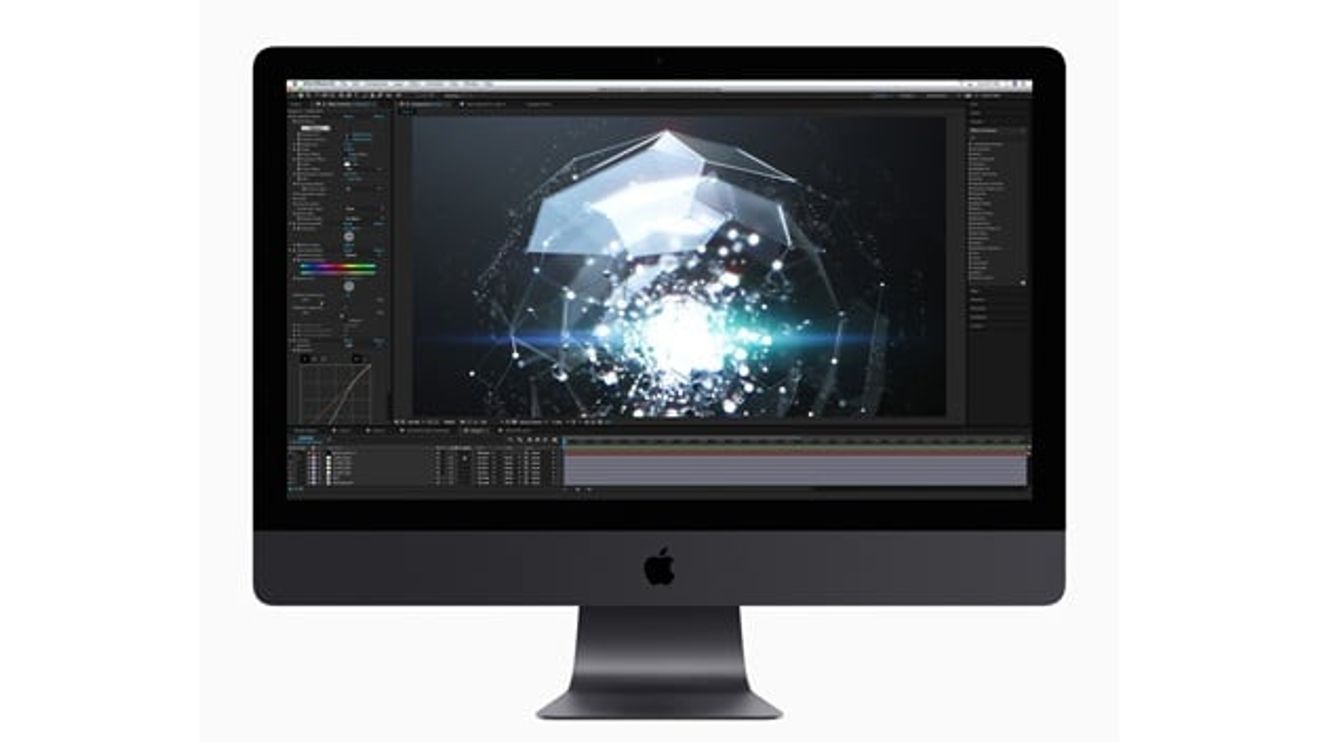
After several difficult months in the rough waters of the CPU security vulnerabilities 'Meltdown' and 'Spectre', chip giant Intel had actually planned a small resurrection of sorts for the Easter period. The presentation of more than 20 new processors of the current eighth Core i generation 'Coffee Lake' and four new chipsets from the associated 300 series were intended to ensure this. However, despite some very exciting products in this new lineup, such as the first Core i9 for notebooks (Core i9-8950HK), new Xeon models for servers and workstations and particularly energy-saving U models with 'Iris Plus' GPU, nothing came of it.
Intel's premium customer Apple, of all things, was to blame. Just a few hours before the event, it leaked out that Apple wants to say goodbye to Intel CPUs in all Mac computers from 2020. According to insider plans reported by the business information service Bloomberg, Apple's own processors from its development labs will take their place in future. In view of the fact that Apple is responsible for around five percent of Intel's annual turnover, this is a major setback that immediately caused Intel shares to fall significantly on the stock markets.
However, Apple's plans are not only likely to hurt Intel financially, but the departure of the premium customer is even more damaging to its image. After all, the separation is symptomatic of Intel's current problems and their causes.
Project 'Kalamata'
It was only in 2006 that Apple said goodbye to the IBM PowerPC processors it had been using in its Macs and opted for Intel from then on. However, when Apple presented its most important product, the iPhone, a year later, the new partner had no suitable chip to offer. Despite much effort, Intel has still not managed to bring competitive SoCs onto the market for ultra-mobile devices such as smartphones and tablets that could stand up to the dominant platforms based on ARM architecture.
And it is precisely this failure that is now catching up with the giant for the second time. The reason for Apple's switch to its own chip basis lies in its efforts to significantly improve the compatibility and interoperability of its own products across the boundaries of the PC and mobile world. The basis for this project, which runs internally under the name "Kalamata", is the smooth interaction of hardware and software, which is to be achieved by developing all products and their most important components in the best possible way during development. For example, it should become a matter of course to be able to use iOS apps on Macs.
Ultimately, Apple is continuing to push its strengths and unique selling points and wants to achieve what Microsoft failed to do to the extent planned with Windows 10: create a uniform basis of hardware, operating system and software that brings desktops and notebooks together with smartphones and tablets.


You might also be interested in
New smartwatch runs autonomously
On September 12, Apple presented new products at its developer conference in the Steve Jobs Theater of the newly opened Apple Park. The company presented the new 'Series 3' smartwatch, which is now more independent of the iPhone.
 read more...
First TSN certification program
AVNU's TSN certification program is the first of its kind to certify Time Sensitive Networking (TSN) capabilities, specifically the 802.1 TSN standards developed by IEEE SA.
read more...Sonja Pierer heads the German business
In addition to her position as Country Manager of the Sales and Marketing Group (SMG), Intel has appointed Sonja Pierer as the new Managing Director in Germany.
read more...Sonja Pierer manages the German business
In addition to her role as Country Manager of the Sales and Marketing Group (SMG), Intel has appointed Sonja Pierer as the new Managing Director in Germany.
read more...Sysgo at the embedded world 2024
Cooperation for safe cobot solution
Sysgo, Nexcobot and Vectioneer are working together with Intel to develop a platform that serves as the basis for cobots. The platform will be presented at the upcoming embedded world.
read more...The Ultra Ethernet Consortium
The Ultra Ethernet Consortium (UEC), which has now been launched, aims to establish a new Ethernet-based communication stack architecture to meet the growing demands on networks for AI & High Performance Computing.
read more...Real-time behavior with dynamic cycle changes
A trend towards consolidating various applications on industrial PCs has been observed for years. This trend is supported by modern processors that can regulate the clock rate per core and are characterized by low-latency switching behavior.
read more...With a focus on edge & cloud computing
The e-paper of issue 03/23
Sustainability is at the top of the embedded community's agenda. Prof. Dr. Peter Fromm from Darmstadt University of Applied Sciences explains in an interview why embedded technologies are becoming the key to a sustainable future - in cars, in...
read more...Neuromorphic hardware saves energy
A newly published study shows that neuromorphic technology for large deep learning networks is up to sixteen times more energy efficient than other AI systems.
read more...